

| Young-Joon Park | 14 Articles |

Objectives
In May 2025, clusters of salmonellosis were identified in 7 cities in the Republic of Korea, all associated with consumption of identical bakery products. This investigation aimed to characterize the outbreak, identify potential contributing factors, and inform strategies for preventing similar multi-facility foodborne outbreaks. Methods: A case series study was conducted among individuals who consumed Manufacturer H’s Product I and Product II on May 15–16, 2025 at 7 facilities (n= 1,235). Clinical specimens from symptomatic individuals, retained food samples, and environmental samples were collected and tested. Food-exposure histories were assessed, and active case finding was implemented across all supplied facilities. Traceback investigations were conducted at the manufacturer, distributor, and egg farms. Human and food isolates underwent pulsed-field gel electrophoresis (PFGE) and whole-genome sequencing (WGS). Results: A total of 323 cases met the outbreak case definition (attack rate, 26.2%), of which 48 were laboratory-confirmed. Salmonella Enteritidis was isolated from both clinical specimens and retained bakery products. PFGE patterns were indistinguishable between human and food isolates, and WGS demonstrated high genetic relatedness. These findings confirmed a common-source outbreak linked to the implicated bakery products. Conclusion: This outbreak underscores the value of integrating epidemiological investigation, active case finding, and molecular typing to identify common food vehicles in outbreaks involving widely distributed manufactured foods. Coordinated collaboration between public health and food safety authorities is essential for the effective detection, response, and prevention of multi-facility foodborne outbreaks. Citations
Citations to this article as recorded by


Objectives
In the Republic of Korea, the previous surveillance system for zoonotic tuberculosis (TB) involved the X-ray testing of humans in contact with Mycobacterium bovis-infected livestock. In contrast, the updated surveillance system incorporates the genotyping of cultured Mycobacterium isolates for high-risk occupational groups. This study aimed to systematically document the detection, diagnosis, assessment, and response in the epidemic investigation of zoonotic TB in a laboratory worker in the Republic of Korea. Methods M. bovis was confirmed using spoligotyping and whole genome sequencing. Clinical characteristics were reviewed through epidemiological investigation and interviews with the affected individual. Transmission routes and secondary spread were assessed via field epidemiological investigations and contact evaluations using chest X-ray and interferon gamma release assay for latent TB infection. Results A 56-year-old laboratory worker presented with chest X-ray findings compatible with TB and subsequently tested positive for M. bovis. She had no clinical or family history of TB and remained asymptomatic. She completed a 6 month treatment regimen of isoniazid, rifampin, ethambutol, and pyrazinamide without hospitalization. Although no direct transmission pathways for zoonotic TB were identified, her work in a laboratory, processing specimens for zoonotic TB, indicated potential laboratory related exposure. Conclusion This case underscores the importance of stringent use of personal protective equipment among high-risk occupational groups and the implementation of an enhanced surveillance system to report zoonotic TB. These findings highlight the need for a One Health approach and proactive surveillance, emphasizing the necessity of refining and strengthening surveillance systems for precise monitoring and an effective response. Citations
Citations to this article as recorded by

Objectives
No study has yet analyzed risk factors to determine whether students with confirmed coronavirus disease 2019 (COVID-19) infections may affect students at neighboring schools. Therefore, this study aimed to determine risk factors for COVID-19 transmission among schools within a community in the Republic of Korea. Methods An epidemiological investigation was conducted among 696 students and school staff members at 3 schools where COVID-19 clusters began on October 15, 2021. Interviews, visit history surveys, a facility risk assessment, and closed-circuit television were used to identify risk factors. The statistical significance of risk factors was also evaluated. Results We confirmed 129 cases (18.5%) among the individuals exposed to COVID-19 at the 3 schools, many of whom had a history of visiting the same multi-use facilities. The odds ratio of having visited multi-use facilities such as karaoke rooms was 1.90 (95% confidence interval, 1.03–3.50); the number of visits to a karaoke room and the visit durations were significantly higher among confirmed cases than non-confirmed cases (p=0.02 and p=0.03, respectively). Conclusion Having a history of visiting karaoke rooms often and spending a long time there were risk factors for COVID-19 infection and inter-school transmission. Thus, it is necessary to investigate the status of multi-use facilities frequently visited by adolescents and consider incorporating them into the scope of school quarantine to prevent infectious diseases at schools in a community.
Objectives
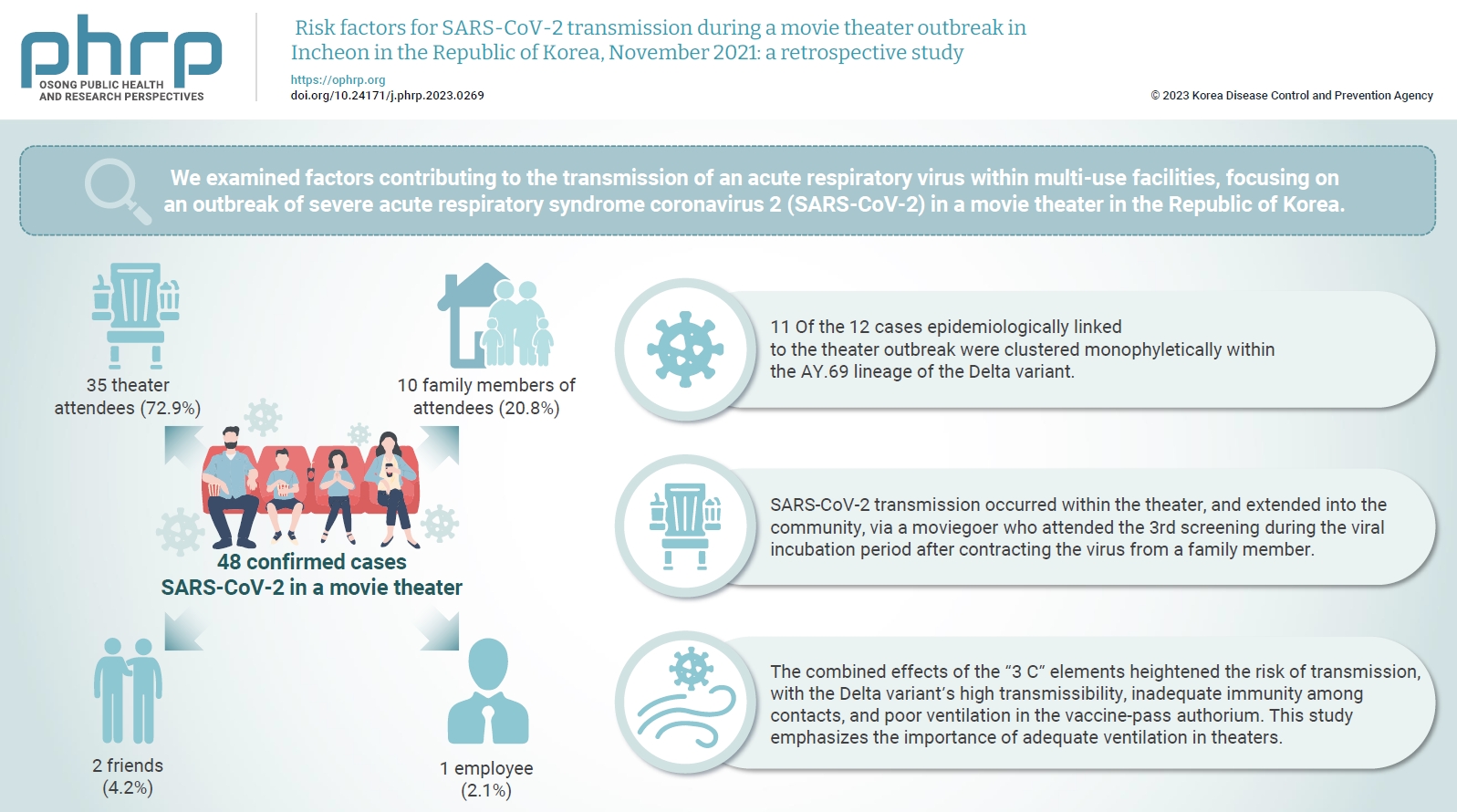
We examined factors contributing to the transmission of an acute respiratory virus within multi-use facilities, focusing on an outbreak of severe acute respiratory syndrome coronavirus 2 (SARS-CoV-2) in a movie theater in the Republic of Korea. Methods: This retrospective cohort study involved a descriptive analysis of 48 confirmed cases. Logistic regression was applied to a cohort of 80 theater attendees to identify risk factors for infection. The infection source and transmission route were determined through gene sequencing data analysis. Results: Of the 48 confirmed cases, 35 were theater attendees (72.9%), 10 were family members of attendees (20.8%), 2 were friends (4.2%), and 1 was an employee (2.1%). Among the 80 individuals who attended the 3rd to 5th screenings of the day, 35 became infected, representing a 43.8% attack rate. Specifically, 28 of the 33 third-screening attendees developed confirmed SARSCoV-2, constituting an 84.8% attack rate. Furthermore, 11 of the 12 cases epidemiologically linked to the theater outbreak were clustered monophyletically within the AY.69 lineage. At the time of the screening, 35 individuals (72.9%) had received 2 vaccine doses. However, vaccination status did not significantly influence infection risk. Multivariate analysis revealed that close contacts had a 15.9-fold higher risk of infection (95% confidence interval, 4.37–78.39) than casual contacts. Conclusion: SARS-CoV-2 transmission occurred within the theater, and extended into the community, via a moviegoer who attended the 3rd screening during the viral incubation period after contracting the virus from a family member. This study emphasizes the importance of adequate ventilation in theaters. Citations
Citations to this article as recorded by
Objectives
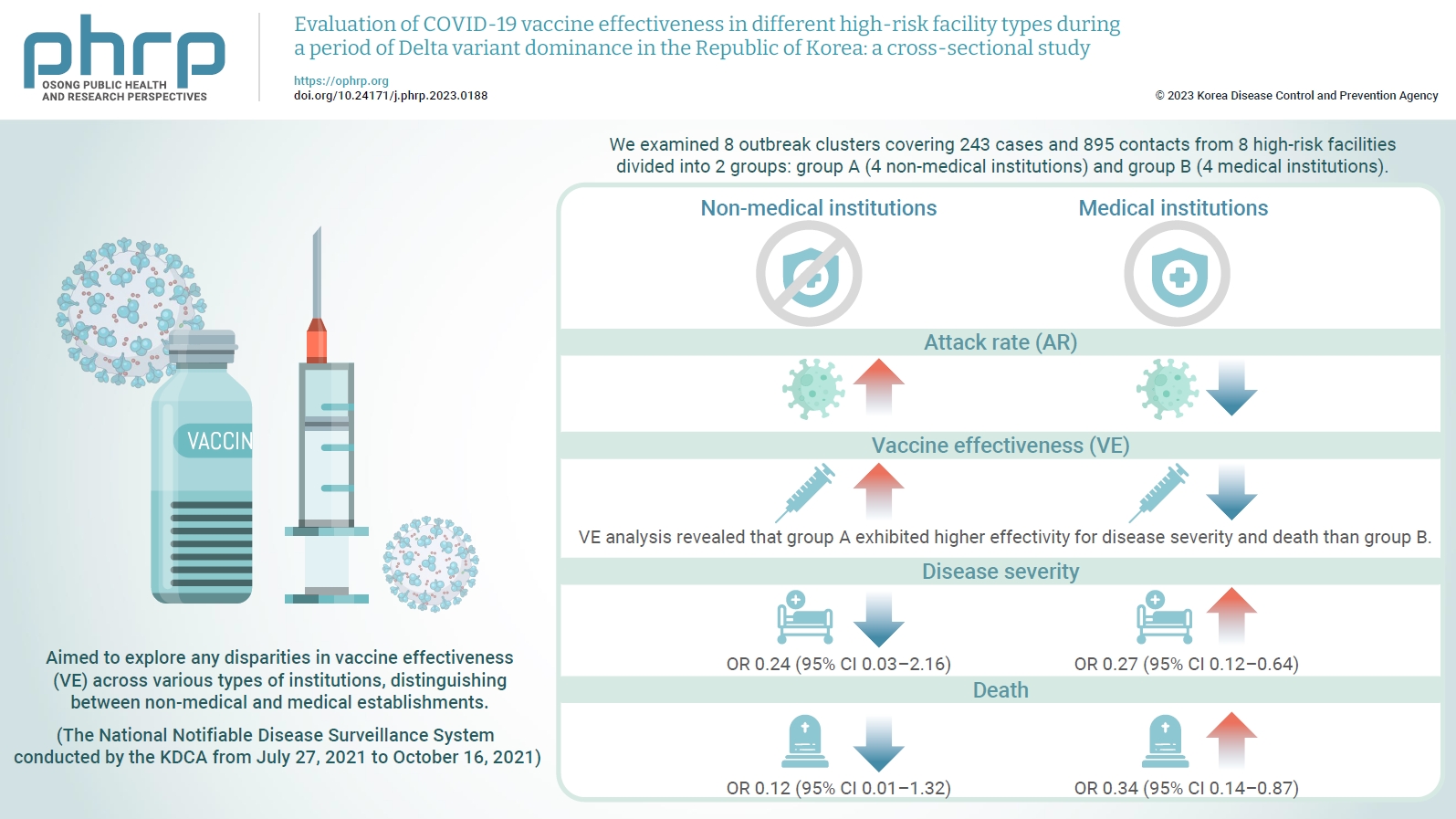
We evaluated the effectiveness of coronavirus disease 2019 vaccination in high-risk facilities in the Republic of Korea during the period when the highly transmissible Delta variant was prevalent. Additionally, we aimed to explore any disparities in vaccine effectiveness (VE) across various types of institutions, specifically distinguishing between non-medical and medical establishments. Methods: We examined 8 outbreak clusters covering 243 cases and 895 contacts from 8 high-risk facilities divided into 2 groups: group A (4 non-medical institutions) and group B (4 medical institutions). These clusters were observed from July 27, 2021 to October 16, 2021 for the attack rate (AR) and VE with respect to disease severity. A generalized linear model with a binomial distribution was used to determine the odds ratio (OR) for disease severity and death. Results: AR was notably lower in group B (medical institutions). Furthermore, VE analysis revealed that group A exhibited higher effectivity for disease severity and death than group B. The OR for disease severity was 0.24 (95% confidence interval [CI], 0.03–2.16) for group A and 0.27 (95% CI, 0.12–0.64) for group B, with the OR for death at 0.12 (95% CI, 0.01–1.32) in group A and 0.34 (95% CI, 0.14–0.87) in group B. Conclusion: Although VE may vary across institutions, our findings underscore the importance of implementing vaccinations in high-risk facilities. Customized vaccination programs, tailored response plans, and competent management personnel are essential for effectively addressing and mitigating public health challenges.
Objectives
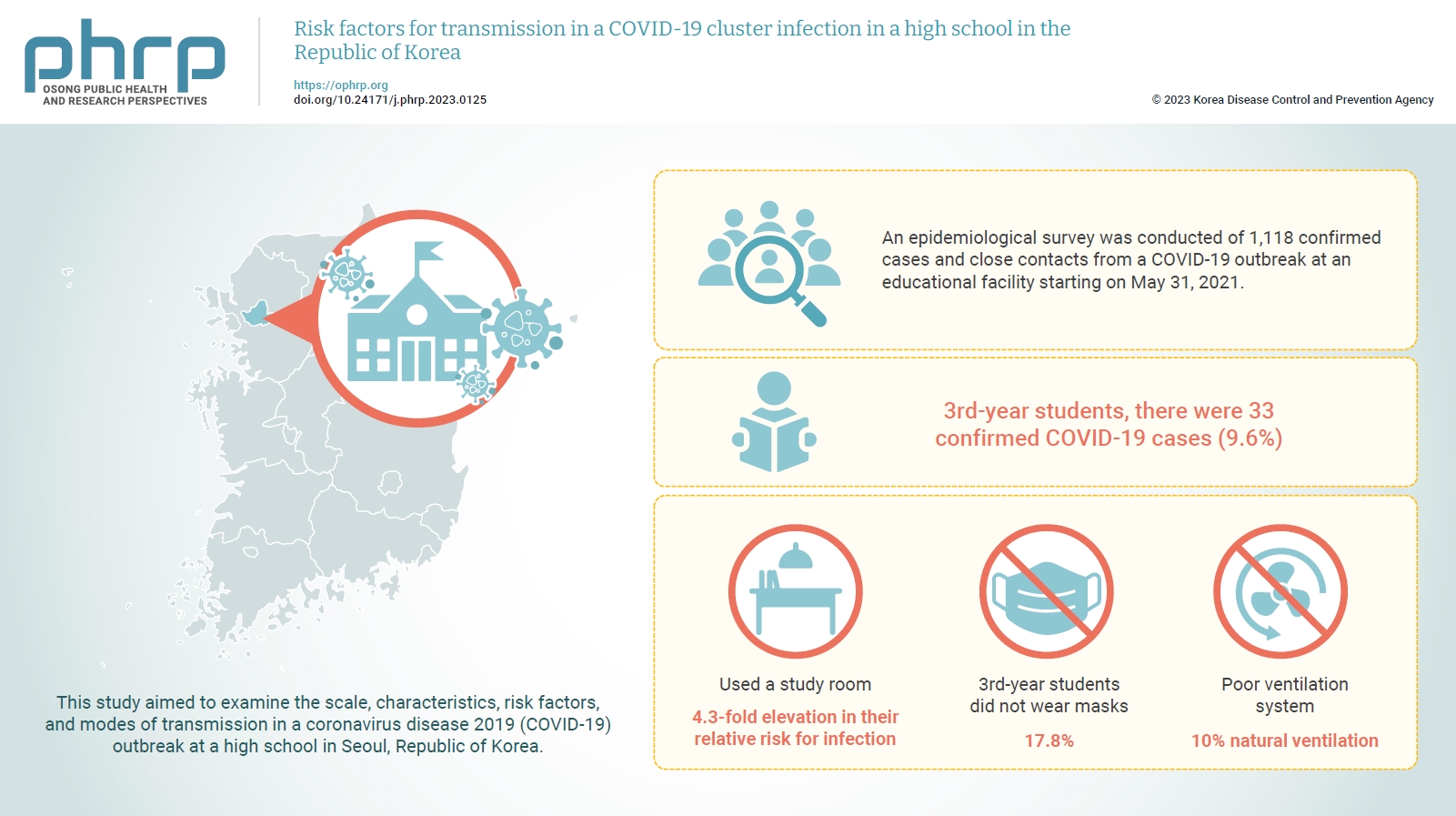
This study aimed to examine the scale, characteristics, risk factors, and modes of transmission in a coronavirus disease 2019 (COVID-19) outbreak at a high school in Seoul, Republic of Korea. Methods An epidemiological survey was conducted of 1,118 confirmed cases and close contacts from a COVID-19 outbreak at an educational facility starting on May 31, 2021. In-depth interviews, online questionnaires, flow evaluations, and CCTV analyses were used to devise infection prevention measures. Behavioral and spatial risk factors were identified, and statistical significance was tested. Results Among 3rd-year students, there were 33 confirmed COVID-19 cases (9.6%). Students who used a study room in the annex building showed a statistically significant 4.3-fold elevation in their relative risk for infection compared to those who did not use the study room. Moreover, CCTV facial recognition analysis confirmed that 17.8% of 3rd-year students did not wear masks and had the lowest percentage of mask-wearers by grade. The air epidemiological survey conducted in the study room in the annex, which met the 3 criteria for a closed space, confirmed that there was only 10% natural ventilation due to the poor ventilation system. Conclusion To prevent and manage the spread of COVID-19 in educational facilities, advance measures that consider the size, operation, and resources of each school are crucial. In addition, various survey methodologies should be used in future studies to quickly analyze a wider range of data that can inform an evidence-based quarantine response. Citations
Citations to this article as recorded by

Objectives
This study aimed to assess the contact tracing outcomes of severe acute respiratory syndrome coronavirus 2 (SARS-CoV-2) Omicron sub-lineages BA.4, BA.5, and BA.2.75 within Republic of Korea, and to generate foundational data for responding to future novel variants. Methods We conducted investigations and contact tracing for 79 confirmed BA.4 cases, 396 confirmed BA.5 cases, and 152 confirmed BA.2.75 cases. These cases were identified through random sampling of both domestically confirmed and imported cases, with the goal of evaluating the pattern of occurrence and transmissibility. Results We detected 79 instances of Omicron sub-lineage BA.4 across a span of 46 days, 396 instances of Omicron sub-lineage BA.5 in 46 days, and 152 instances of Omicron sub-lineage BA.2.75 over 62 days. One patient with severe illness was confirmed among the BA.5 cases; however, there were no reports of severe illness in the confirmed BA.4 and BA.2.75 cases. The secondary attack risk among household contacts were 19.6% for BA.4, 27.8% for BA.5, and 24.3% for BA.2.75. No statistically significant difference was found between the Omicron sub-lineages. Conclusion BA.2.75 did not demonstrate a higher tendency for transmissibility, disease severity, or secondary attack risk within households when compared to BA.4 and BA.5. We will continue to monitor major SARS-CoV-2 variants, and we plan to enhance the disease control and response systems. Citations
Citations to this article as recorded by
Objectives
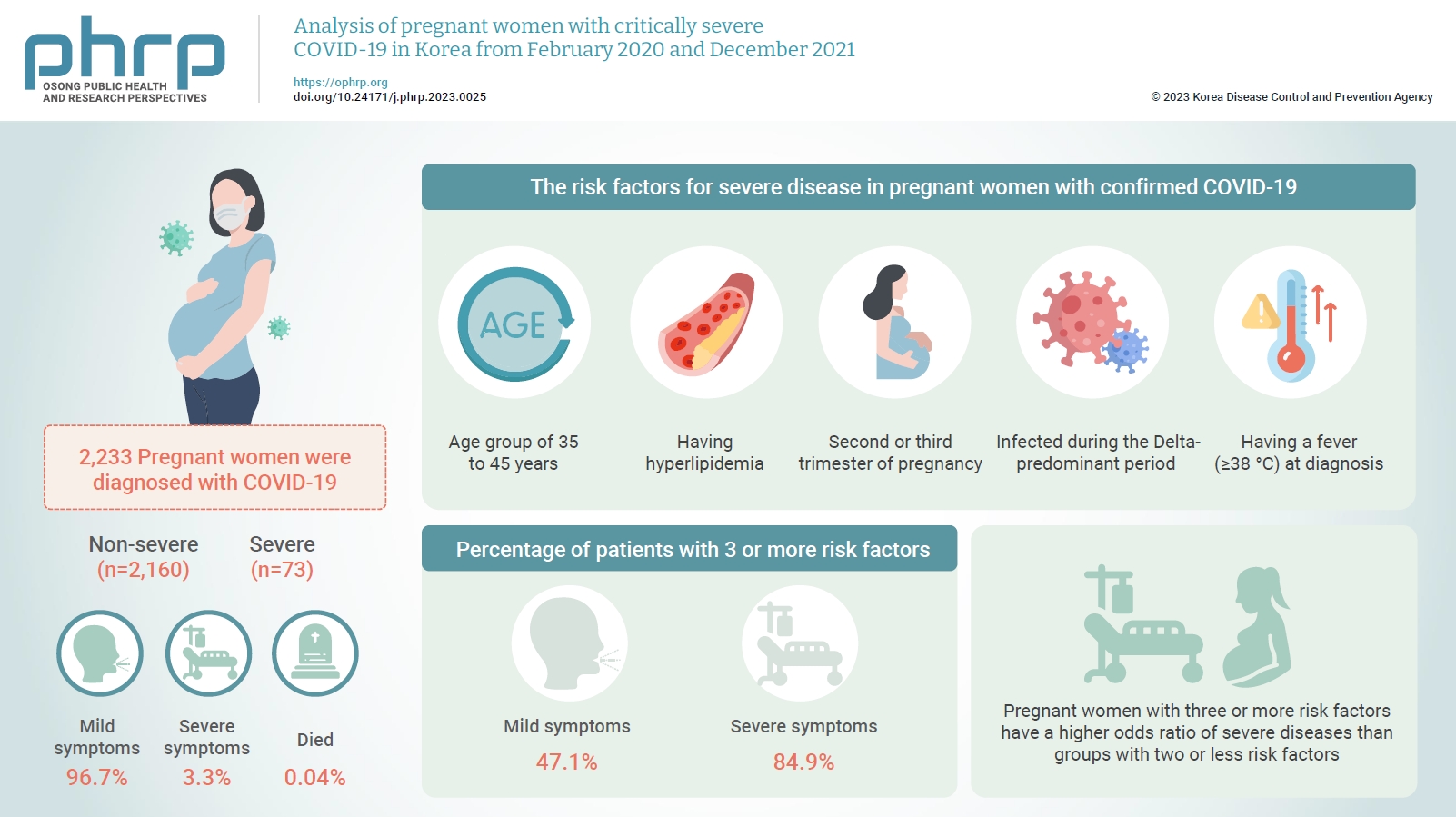
This study aimed to describe the characteristics and risk factors for severe disease in pregnant women infected with coronavirus disease 2019 (COVID-19) from the early days of the COVID-19 epidemic in Korea to the predominant period of the Delta variant. Methods A retrospective cohort study was conducted among pregnant women diagnosed with COVID-19 between February 2020 and December 2021. Logistic regression analysis was performed to compare severe and mild cases after adjusting for pregnant women’s age, nationality, infection route, outbreak area, infection period, symptoms, underlying disease, smoking status, trimester, and COVID-19 vaccination status. Results In total, 2,233 pregnant women were diagnosed with COVID-19 by December 2021. Among these, 96.7% had mild symptoms, 3.3% had severe symptoms, and 0.04% died. The risk factors for severe disease in pregnant women with confirmed COVID-19 were being in the age group of 35 to 45 years, having hyperlipidemia, being in the second or third trimester of pregnancy at the time of COVID-19 diagnosis, being infected during the Delta-predominant period, and having a fever (≥38 °C) at diagnosis. Furthermore, 47.1% of patients in the mild group and 84.9% of patients in the severe group had 3 or more risk factors. Conclusion Pregnant women with COVID-19 mainly experienced mild symptoms, but those with risk factors were at a higher risk of developing severe symptoms. Therefore, treatment and follow-up management should be thoroughly implemented.
Objectives
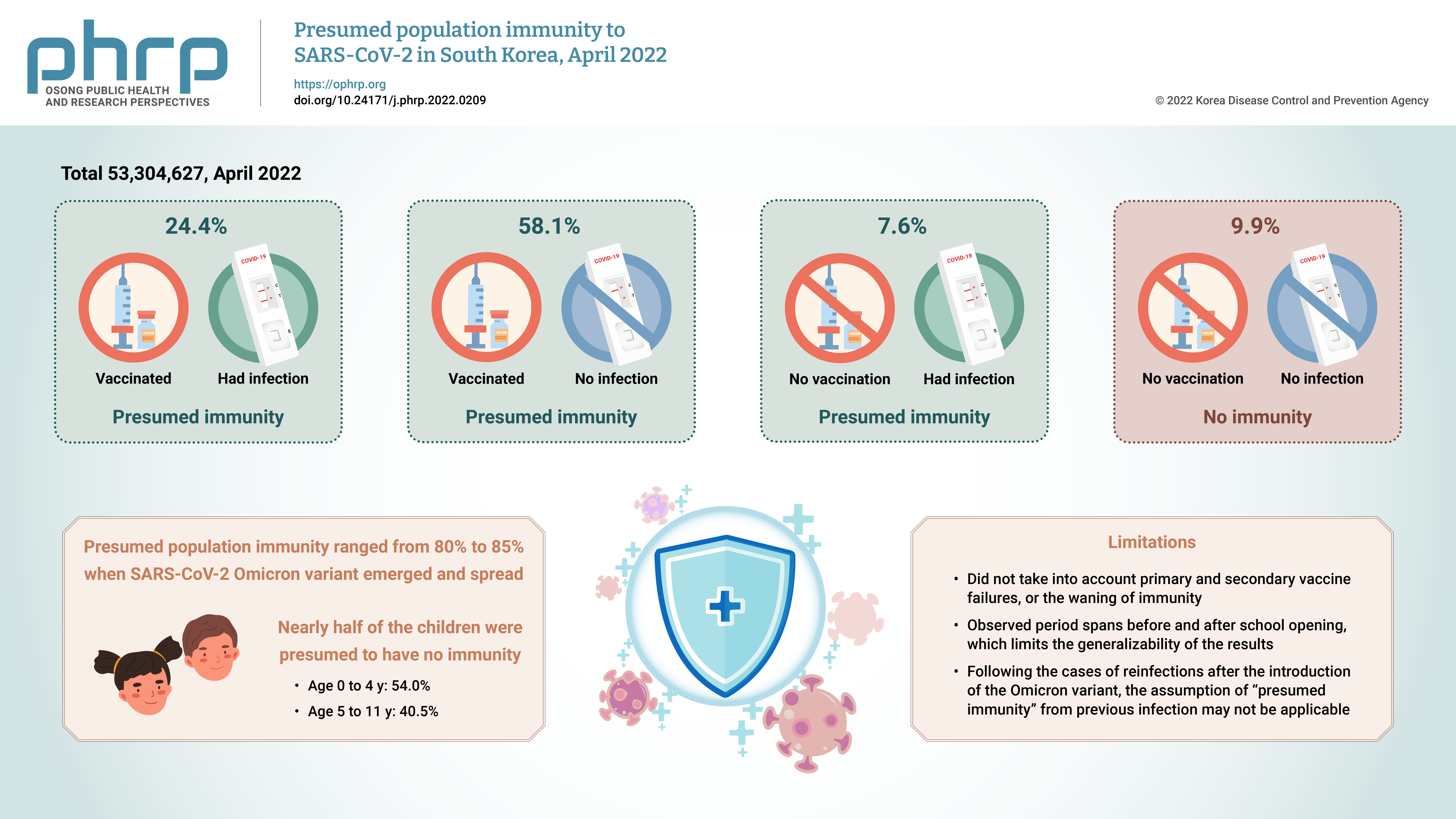
We estimated the overall and age-specific percentages of the Korean population with presumed immunity against severe acute respiratory syndrome coronavirus 2 (SARSCoV-2) as of April 2022 using the national registry. Methods We used the national coronavirus disease 2019 (COVID-19) infection and vaccination registry from South Korea, as described to define individuals with a previous history of COVID-19 infection, vaccination, or both, as persons with presumed immunity. Results Of a total of 53,304,627 observed persons, 24.4% had vaccination and infection, 58.1% had vaccination and no infection, 7.6% had infection and no vaccination, and 9.9% had no immunity. The SARS-CoV-2 Omicron variant emerged at a time when the presumed population immunity ranged from 80% to 85%; however, nearly half of the children were presumed to have no immunity. Conclusion We report a gap in population immunity, with lower presumed protection in children than in adults. The approach presented in this work can provide valuable informed tools to assist vaccine policy-making at a national level. Citations
Citations to this article as recorded by
Objectives
It is crucial to establish the characteristics of coronavirus disease 2019 (COVID-19) outbreaks at army training centers to develop preventive measures. Therefore, this study aimed to determine the COVID-19 transmission patterns and risk factors in a sequence of outbreaks at an army training center from June to August 2021. Methods This study included 1,324 trainees at an army training center where outbreaks occurred from June to August 2021. The outbreak was qualitatively analyzed according to the period, attack rate, demographic characteristics, vaccination history, and living areas. An aerodynamic experiment was performed to evaluate aerosol transmission in living areas. Results Three outbreaks occurred at the army training center from June to August 2021. The first, second, and third outbreaks lasted for 32, 17, and 24 days, and the attack rates were 12.8%, 18.1%, and 8.9%, respectively. Confirmed cases were distributed in all age groups. Recruits and the unvaccinated were at higher risk for COVID-19. The aerodynamic experiment verified the possibility of aerosol transmission within the same living area. Conclusion COVID-19 transmission at army training centers should be minimized through quarantine and post-admission testing during the latency period as part of integrated measures that include facility ventilation, vaccination, indoor mask-wearing, and social distancing. Citations
Citations to this article as recorded by
<p>Since a novel beta-coronavirus, severe acute respiratory syndrome coronavirus 2 (SARS-CoV-2) was first reported in December 2019, there has been a rapid global spread of the virus. Genomic surveillance was conducted on samples isolated from infected individuals to monitor the spread of genetic variants of SARS-CoV-2 in Korea. The Korea Disease Control and Prevention Agency performed whole genome sequencing of SARS-CoV-2 in Korea for 1 year (January 2020 to January 2021). A total of 2,488 SARS-CoV-2 cases were sequenced (including 648 cases from abroad). Initially, the prevalent clades of SARS-CoV-2 were the S and V clades, however, by March 2020, GH clade was the most dominant. Only international travelers were identified as having G or GR clades, and since the first variant 501Y.V1 was identified (from a traveler from the United Kingdom on December 22<sup>nd</sup>, 2020), a total of 27 variants of 501Y.V1, 501Y.V2, and 484K.V2 have been classified (as of January 25<sup>th</sup>, 2021). The results in this study indicated that quarantining of travelers entering Korea successfully prevented dissemination of the SARS-CoV-2 variants in Korea.</p>
Citations
Citations to this article as recorded by
Objectives
In December 2010, there was an outbreak of acute febrile respiratory disease in many Korean military camps that were not geographically related. A laboratory analysis confirmed a number of these cases to be infected by the pandemic influenza A(H1N1) 2009 (H1N1pdm09) virus. Because mass vaccination against H1N1pdm09 was implemented at the infected military camps eleven months ago, the outbreak areas in which both vaccinated and nonvaccinated individuals were well mixed, gave us an opportunity to evaluate the effectiveness of H1N1pdm09 vaccine through a retrospective cohort study design. Methods A self-administered questionnaire was distributed to the three military camps in which the outbreak occurred for case detection, determination of vaccination status, and characterization of other risk factors. The overall response rate was 86.8% (395/455). Case was defined as fever (≥38 °C) with cough or sore throat, influenza-like illness (ILI), and vaccination status verified by vaccination registry. Crude vaccine effectiveness (VE) was calculated as “1 − attack rate in vaccinated individuals/attack rate in nonvaccinated individuals”, and adjusted VE was calculated as “1 – odds ratio” using logistic regression adjusted for potential confounding factor. A number of ILI definitions were used to test the robustness of the result. Results The attack rate of ILI was 12.8% in register-verified vaccinated individuals and 24.0% in nonvaccinated individuals. The crude VE was thus calculated to be 46.8% [95% confidence interval (CI): 14.5–66.9]. The adjusted VE rate was 46.8% (95% CI: –9.4 to 74.1). Various combinations of ILI symptoms also showed similar VE rates. Conclusion We evaluated the effectiveness of H1N1pdm09 vaccine in the 2010–2011 season in an outbreak setting. Although the result was not sensitive to any analytical method used and ILI case definition, the magnitude of effectiveness was lower than estimated in the 2009–2010 season. Citations
Citations to this article as recorded by
The polio outbreak in China in 2011 makes it necessary to revise the 2010 polio National Action Plan (NAP) in Korea. The revised plan was provided after evaluation of the 2010 NAP, literature reviews, and expert advice. It was discussed and confirmed by the Polio National Certificate Committee (NCC).The revised NAP (2012 NAP) has structured the action to take by patient phase and the role of each institution. It also provides the specified classification and management actions on the contacts. It includes a new recommendation of onetime additional immunization for the contacts regardless of the immunization history. The 2012 NAP could provide an effective countermeasure if there are imported poliomyelitis patients in Korea.
Citations
Citations to this article as recorded by
This study was designed to identify factors associated with hepatitis A immunization status and seropositivity in Korean children. In-person interviews, reviewing their vaccination cards and testing hepatitis A antibody were conducted with 389 children aged 1–3 years and 544 children aged 6–8 years. In all age groups, earlier birth order was the only significant factor in children receiving either single or both doses of the vaccination. And completion of the second dose of vaccination was a prerequisite for increased seropositivity. Additionally, household income had a positive impact on seropositivity only in children aged 6–8 years. Our findings suggest that presence of an economic barrier is the underlying cause of the decreased hepatitis A vaccination services in Korea. Therefore, hepatitis A vaccine should be included in the essential National Immunization Program.
Citations
Citations to this article as recorded by
|
|


