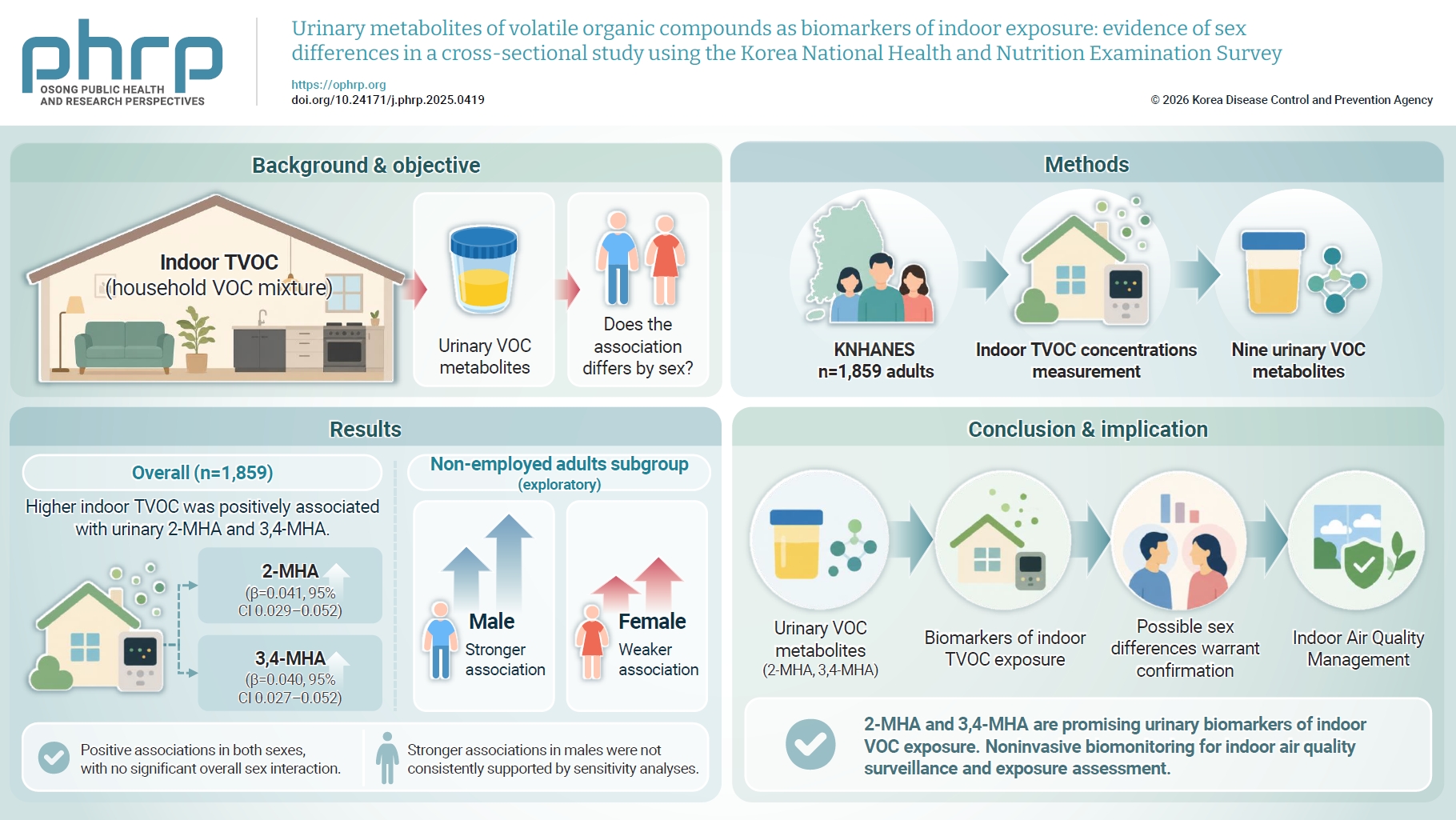
Objectives This study examined associations between indoor total volatile organic compound (TVOC) concentrations and urinary volatile organic compound (VOC) metabolites in Korean adults, focusing on potential sex-specific differences. We hypothesized that higher indoor TVOC exposure would be associated with higher urinary VOC metabolite concentrations and that these associations would differ by sex. Methods: We conducted a cross-sectional analysis of the 2020–2021 Korea National Health and Nutrition Examination Survey, which included the Republic of Korea’s first population-based indoor air quality survey. The analysis included 1,859 adults aged ≥19 years who participated in the indoor air quality survey from July 2020 to August 2021. Indoor TVOC concentrations (μg/m³) were measured using standardized protocols. Nine urinary VOC metabolites were quantified, creatinine-adjusted, and log-transformed. Multivariable linear regression with sex-stratified, exploratory subgroup (non-employed adults), and sensitivity analyses was performed. Results: Indoor TVOC concentrations were positively associated with urinary 2-methylhippuric acid (2-MHA; β= 0.041; 95% confidence interval [CI], 0.029–0.052) and 3- and 4-methylhippuric acid (3,4-MHA; β= 0.040; 95% CI, 0.027–0.052) in both sexes (p for interaction = 0.990 and 0.728), and these associations were robust to sensitivity analyses. Among non-employed adults, estimates were larger in males (2-MHA, β = 0.110 vs. 0.024; 3,4-MHA, β = 0.130 vs. 0.031; p for interaction = 0.016 and 0.008), but this interaction was inconsistent across sensitivity analyses. Conclusion: Urinary 2-MHA and 3,4-MHA may serve as biomarkers of indoor VOC exposure in both sexes; a possible sex difference among non-employed adults was inconsistent across sensitivity analyses and requires confirmation.
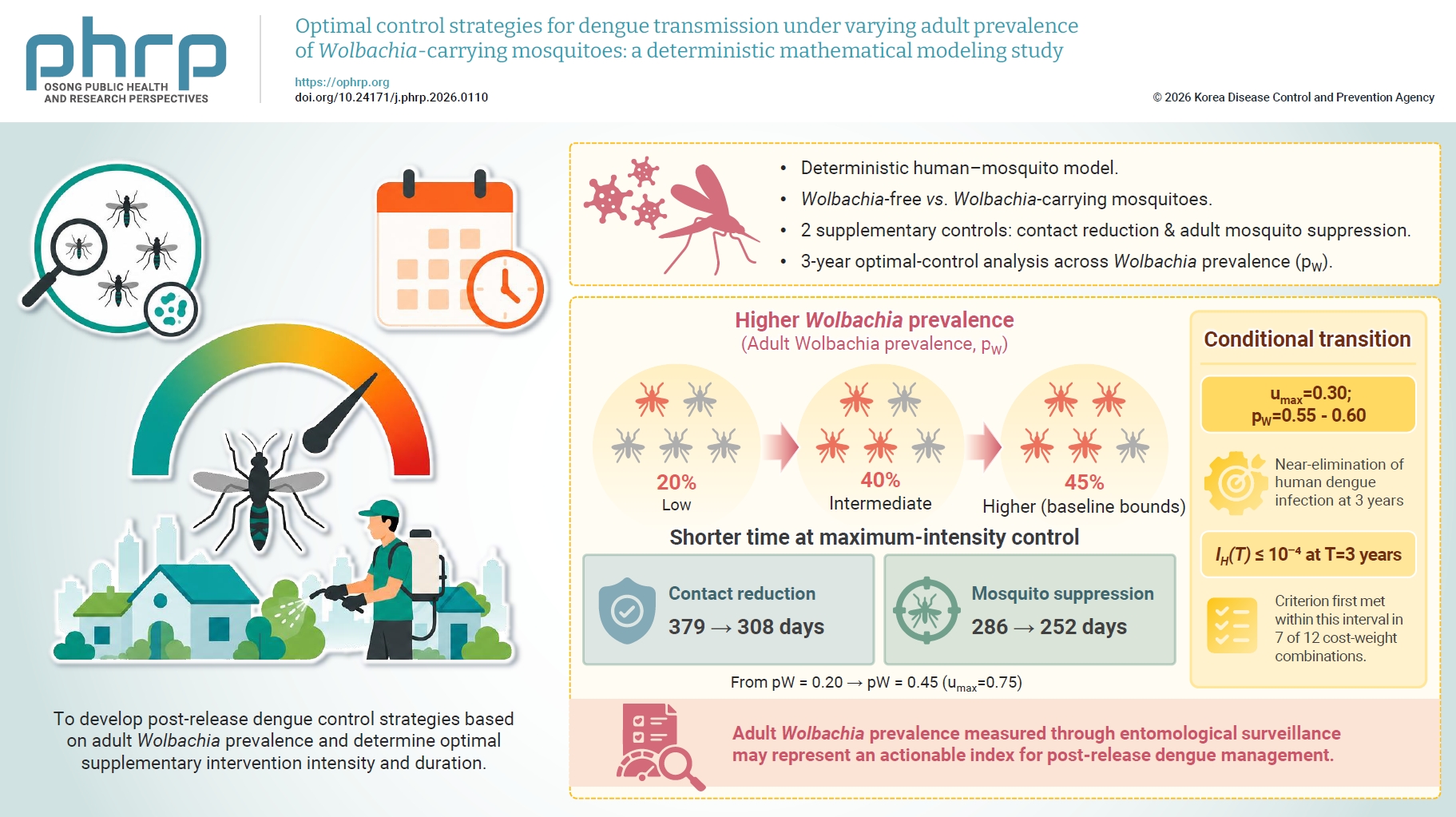
Objectives This study aimed to develop prevalence-informed post-release dengue control strategies for settings in which Wolbachia-carrying Aedes aegypti mosquitoes have become established through population replacement and to quantify how optimal supplementary intervention intensity and duration vary with adult Wolbachia prevalence, pW. Methods: A deterministic human–mosquito model was formulated that included Wolbachia-free and Wolbachia-carrying mosquitoes and incorporated cytoplasmic incompatibility, maternal transmission, and reduced vector competence. Two bounded supplementary controls were optimized over a 3-year horizon: reduction of effective human–mosquito contact and conventional adult mosquito suppression, represented by increased adult mortality. A quadratic-cost optimal-control problem was solved numerically using the Pontryagin maximum principle and a forward/backward sweep algorithm. Outcomes were compared across representative pW scenarios and prevalence scans. Results: The optimal policies applied high-intensity supplementary control early in the planning horizon and then relaxed control as infection pressure declined. Higher pW reduced the uncontrolled infection burden, decreased the incremental benefit of additional intervention, and shortened the duration of maximum control. In coarse scans with umax=0.30, the terminal dengue infection near-elimination indicator, defined as IH (T)≤10–4 at T=3 years, changed between pW=0.45 and pW=0.50 for all tested cost-weight combinations. A separate refined continuation example demonstrated non-monotonic mean control use and a sharp decrease in cumulative incidence. Conclusion: Adult Wolbachia prevalence measured through entomological surveillance may represent an actionable index for post-release dengue management. The identified transition band is a model-based planning indicator, not a universal field threshold or evidence of mosquito population elimination.
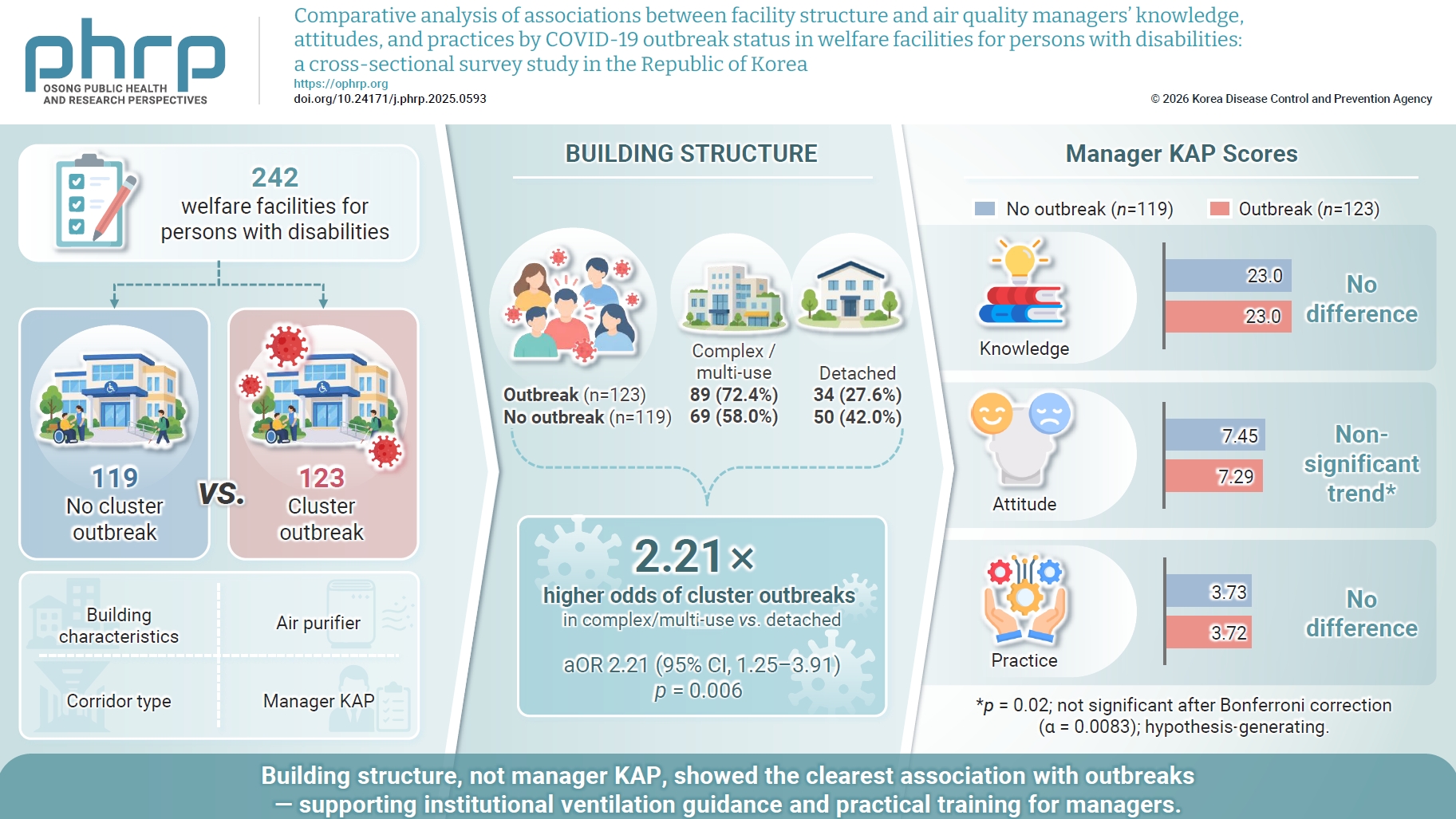
Objectives This study investigated associations between building structure and managers’ knowledge, attitudes, and practices (KAP) regarding indoor air quality in welfare facilities for persons with disabilities, comparing facilities with and without coronavirus disease 2019 (COVID-19) cluster outbreaks. Methods: A web-based survey was conducted among managers of 242 welfare facilities for persons with disabilities in the Republic of Korea. Facilities were recruited from a national sampling frame of approximately 3,000 facilities, yielding a response rate of 8.1%. The 80-item questionnaire assessed building characteristics and air quality-related KAP scores. Logistic regression was used to identify factors associated with cluster outbreaks. Results: Of the 242 facilities, 50.8% had experienced cluster outbreaks. Facilities in complex/multi-use buildings had higher odds of outbreaks than those in detached buildings did (adjusted odds ratio, 2.21; 95% confidence interval, 1.25–3.91; p=0.006). For managerial factors, facilities with outbreaks tended to have lower attitude scores (p=0.02); however, this association did not remain statistically significant after Bonferroni correction (adjusted α=0.0083). No significant differences were observed in knowledge or practice scores. Conclusion: Building structure, particularly complex/multi-use configuration, was associated with COVID-19 cluster outbreaks. Managerial KAP scores were not definitively associated with outbreaks under the conservative significance threshold, but the observed trends suggest that institutional support, ventilation guidance, and practical training for facility managers may help strengthen future infection-prevention efforts.
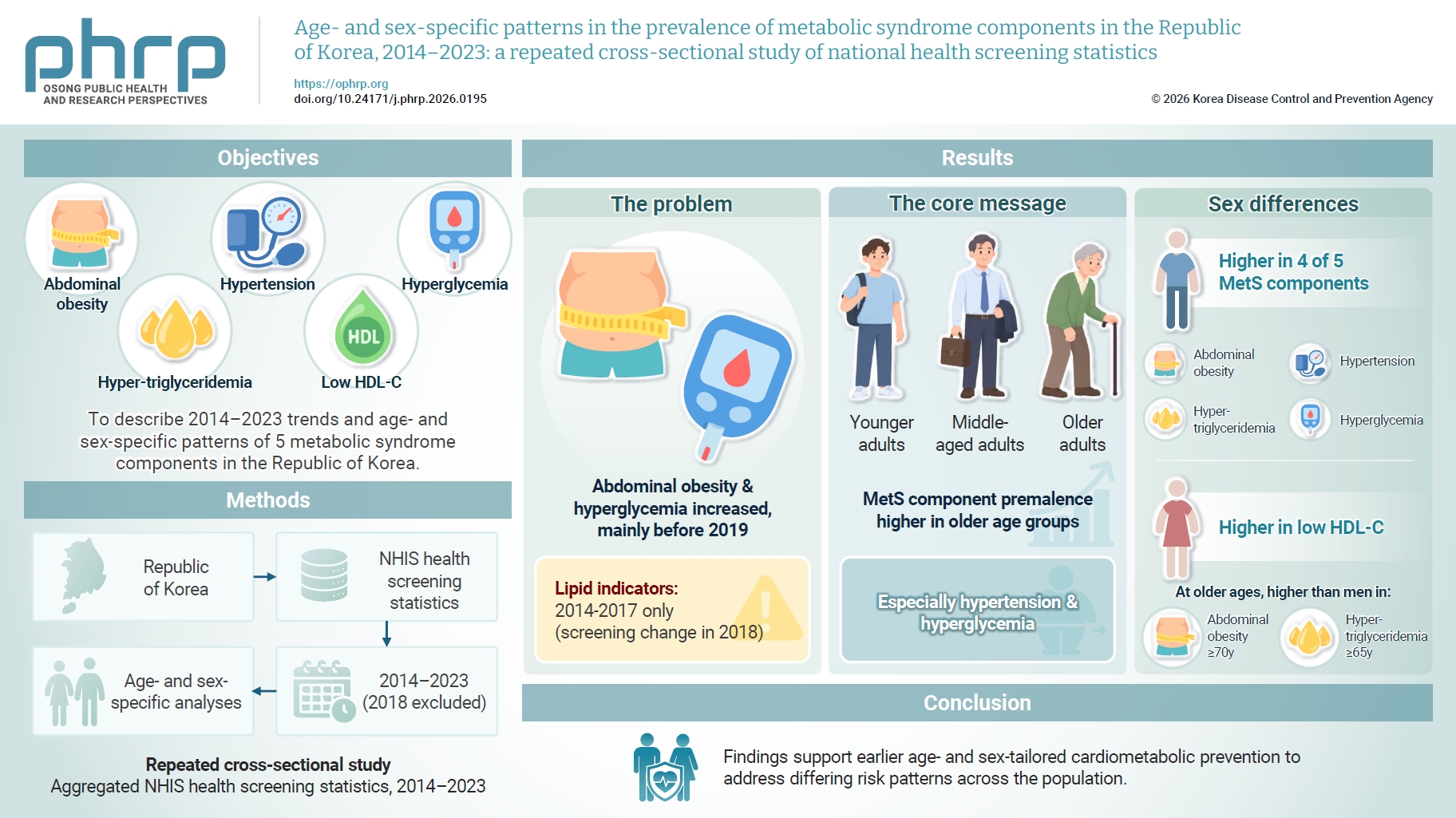
Objectives This study described 10-year trends in the prevalence of 5 metabolic syndrome (MetS) components and examined age- and sex-specific patterns in the Republic of Korea using aggregated national health screening statistics from 2014 to 2023. Methods: This repeated cross-sectional study used publicly available aggregated data from the National Health Screening Statistical Yearbook of the National Health Insurance Service. Annual prevalence estimates were summarized overall and by age group and sex. Linear and segmented regression summarized trends, and age- and sex-standardized prevalence was estimated. The 2018 yearbook tabulated risk factors only for examinees receiving the dyslipidemia panel (restricted from 2018 to men aged ≥24 years and women aged ≥40 years); therefore, 2018 was excluded, and lipid indicators were analyzed for 2014–2017. Results: From 2014 to 2023, crude prevalence increased for abdominal obesity (21.0% to 25.5%) and hyperglycemia (34.7% to 40.1%), mainly before 2019, and for hypertension (42.3% to 45.1%), although less after age standardization. In 2014–2017, hypertriglyceridemia increased (30.0% to 32.2%), whereas low high-density lipoprotein (HDL) cholesterol changed little (22.5% to 22.1%). Prevalence was higher in older age groups, especially for hypertension and hyperglycemia. Men had a higher prevalence of 4 components, and women of low HDL cholesterol. Conclusion: MetS components showed heterogeneous temporal, age-specific, and sex-specific patterns in Korean national health screening statistics. Increases in abdominal obesity and hyperglycemia, mainly before 2019, support earlier age- and sex-tailored cardiometabolic prevention, whereas lipid indicators were comparable only for 2014–2017. Individual-level longitudinal studies are needed to clarify these trends.
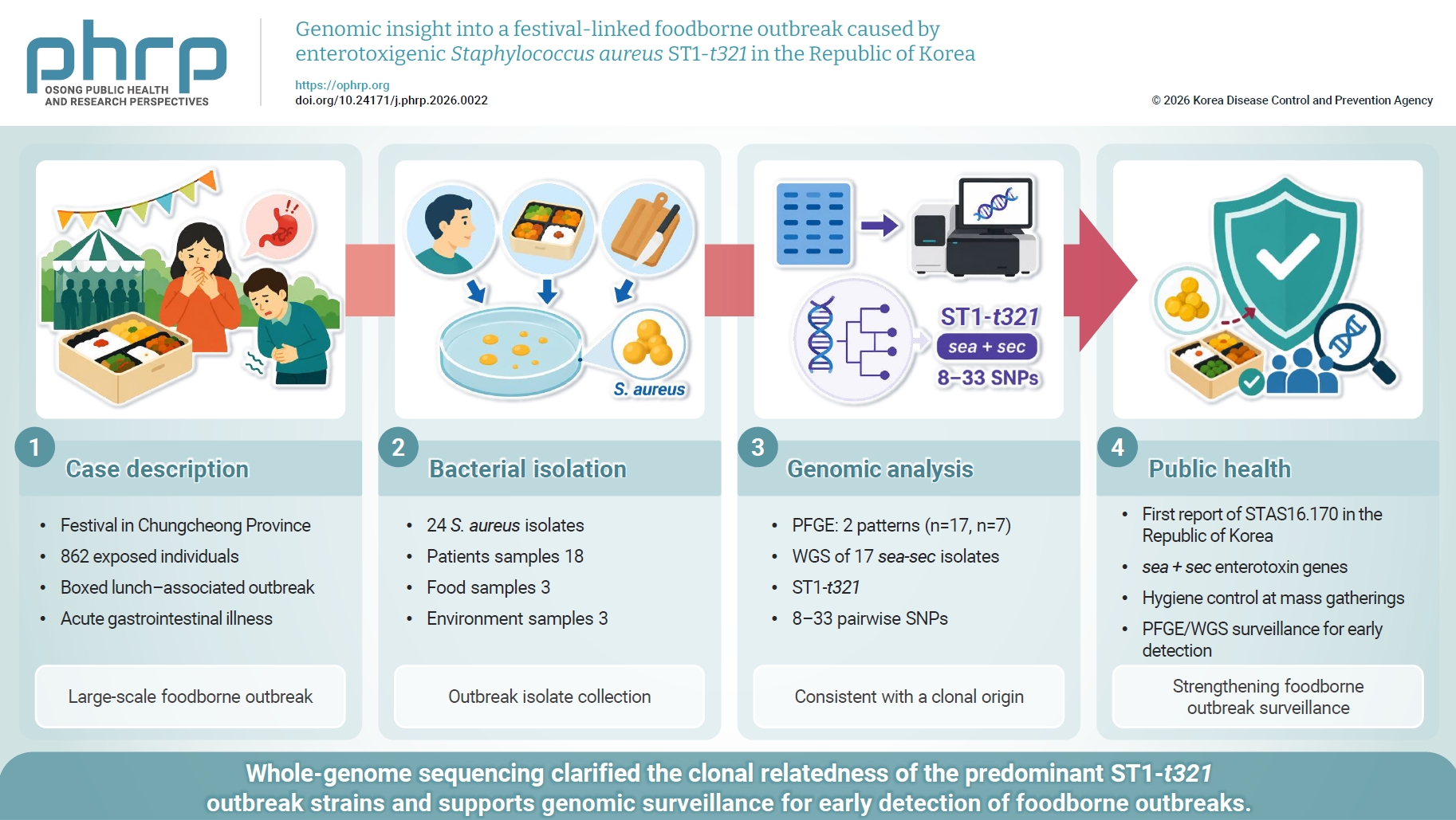
Objectives This study investigated a large-scale foodborne outbreak caused by Staphylococcus aureus during a local festival in the Republic of Korea and performed genomic and molecular epidemiological analyses using whole-genome sequencing (WGS). Methods: Microbiological identification was performed using clinical, food, and environmental samples. Molecular characterization included pulsed-field gel electrophoresis (PFGE), multilocus sequence typing, and spa typing. WGS was conducted to evaluate clonal relatedness, virulence factors, and antimicrobial resistance genes. Results: A total of 141 suspected cases and 18 laboratory-confirmed cases were identified, and 24 S. aureus isolates were recovered (18 from patients, 3 from food samples, and 3 from environmental samples). All 17 isolates included in the genomic analysis carried the sea and sec genes and belonged to ST1-t321, with pairwise differences of 8–33 SNPs, consistent with a clonal origin. These isolates exhibited a previously unreported PFGE pattern (STAS16.170) in the Republic of Korea. Virulence profiling identified hemolysin genes (hlgA, hlgB, hlgC), leukocidin genes (lukD, lukE), and immune evasion genes (sak, scn). In addition, all isolates were methicillin-susceptible and lacked mecA and mecC. Conclusion: This large-scale foodborne outbreak demonstrated that a single contaminated food source can result in widespread illness during mass gatherings. Genomic analysis clarified the clonal relatedness of the outbreak strains and highlighted the value of genomic surveillance for the early detection and prevention of S. aureus outbreaks.



 First
 Prev


