Introduction
Surrogacy governance across Africa is highly fragmented, ranging from court-supervised statutory systems to regulatory silence that permits informal and commercially opaque arrangements [
1]. This variability has important implications for maternal health, clinic accountability, psychosocial well-being, and children’s legal identities, particularly in sub-Saharan Africa, where maternal mortality remains disproportionately high [
2]. In settings where assisted reproductive technology (ART) services are unevenly regulated and inconsistently accessible, surrogacy may expose women and children to preventable medical, legal, and documentation-related harms [
3,
4].
Current debates often frame surrogacy primarily as a private contractual or reproductive-rights issue, giving insufficient attention to its broader public health and bioethical dimensions. This Perspective argues that surrogacy regulation should be understood as a bioethics-informed public health obligation that requires safeguards against exploitation, unsafe clinical practice, and legal uncertainty. We propose a governance framework that distinguishes altruistic, compensated, and commercial surrogacy and links ethical principles to enforceable protections, including clinic licensing, independent counseling and legal advice, judicial or quasi-judicial review, compensation transparency, anti-exploitation measures, and parentage and birth registration protections.
From Private Contract to Public Health Governance
ARTs have expanded globally, but the institutional protections needed to make surrogacy safe and ethically defensible have not developed evenly across African settings [
3–
11]. Treating surrogacy as a purely private agreement mischaracterizes its risk profile: pregnancy is not a neutral service transaction, and surrogacy in under-resourced health systems may intensify foreseeable maternal harms, especially where antenatal continuity, emergency referral capacity, and psychosocial support are inconsistent [
2,
6]. The ethical and policy question is therefore not whether surrogacy is “good” or “bad,” but whether governance can prevent foreseeable harm while protecting reproductive choice, child welfare, and legal certainty for intended parents.
Africa’s fertility-care context strengthens the public health case for regulation. Infertility care in much of sub-Saharan Africa is often treated as a lower priority than other reproductive-health needs despite clear demand; ART services remain concentrated, with persistent shortages of skilled personnel and limited training opportunities [
12,
13]. Where access is uneven, markets tend to develop in private and informal spaces, and policy often reacts to scandals rather than shaping standards proactively. This reactive cycle is visible in the continent’s emerging “repronubs” and “repropreneurs,” where commercial actors may expand services before enforceable safeguards are in place [
14]. A credible regulatory agenda must therefore be conceptually precise, empirically grounded, and institutionally realistic.
Existing discussions of surrogacy in Africa often frame the issue as a private moral controversy, a reproductive-rights debate, or a narrow legal problem. This paper advances a different claim: surrogacy should be understood as a bioethics-informed public health governance issue because regulatory failures can produce predictable maternal, psychosocial, legal, and child-welfare harms that extend beyond private contracting. By integrating ethical analysis with population-level risk assessment and governance mechanisms, this Perspective proposes a policy-usable framework that links normative principles directly to enforceable safeguards suited to diverse African regulatory contexts.
This article is a conceptual and policy-oriented Perspective rather than a comprehensive comparative legal analysis of surrogacy regulation across African jurisdictions. Its purpose is not to provide an exhaustive doctrinal examination of national legal systems, but to develop a bioethics-informed public health framework that can guide regulatory thinking across diverse and evolving African contexts. The paper therefore uses selected jurisdictional examples illustratively to identify recurring governance challenges related to maternal health, consent, exploitation, clinic oversight, and child welfare. Given the rapid evolution and uneven availability of surrogacy legislation and ART governance across the continent, the analysis focuses primarily on normative and regulatory principles rather than detailed statutory comparison. The framework proposed here is intended to support future legal, empirical, and policy development by linking ethical principles to practical governance safeguards that can be adapted to differing institutional capacities.
A Continental Regulatory Spectrum with Real Economic Incentives
Regulatory diversity is not merely a legal anomaly; it also creates an incentive framework that shapes pricing and risk allocation. South Africa has the most coherent statutory model in Africa: surrogacy agreements require High Court pre-approval, and commercial compensation is prohibited, although expense reimbursement is allowed. However, this model has structural limitations. The financial and logistical requirements of High Court pre-approval may disadvantage lower-income intended parents, while the genetic-link rule excludes prospective parents who cannot provide gametes.
The prohibition on compensation rests partly on moral grounds, but it may also push some arrangements into informal markets. In addition, the judicial intensity of the South African model raises questions about whether it can be replicated in countries with more limited administrative and court capacity. Other African jurisdictions illustrate different points along this regulatory spectrum: Ghana has contract-based arrangements with local, court-supported pre-birth parentage mechanisms in practice; Kenya presently operates without a dedicated statutory framework, leaving surrogacy arrangements reliant on general contract law; however, the Assisted Reproductive Technology Bill 2022, which mandates altruistic-only surrogacy and prohibits commercial arrangements, passed the National Assembly in November 2025 and is currently pending Senate concurrence before proceeding to presidential assent [
15]. Nigeria has an ambiguous legal landscape and reported evidence of exploitative parentage mechanisms [
16,
17]; Uganda has a history of informal practice, including documented surrogate compensation and high
in vitro fertilization costs; and Rwanda has legislative momentum but incomplete legal enforceability.
Table 1 summarizes selected African surrogacy governance positions and indicative costs [
1,
16–
19]. Prices vary by clinic, jurisdiction, legal process, and scope of services. The cost estimates were developed from publicly available sources, including Growing Families and KinPath Surrogacy.
Ethical Foundations: Beyond Principlism to Relationally Meaningful Consent
A convincing normative argument must avoid 2 errors: romanticizing autonomy as a single, context-free attribute and denying agency by assuming that any financial consideration is inherently coercive.
At least 4 dimensions of consent can be identified in a governance-ready ethical analysis. Formal consent is the legal fact of agreement; it is necessary, but it is not sufficient. Informed consent requires comprehension of medical risks, legal terms, financial terms, and post-birth arrangements. Relational autonomy asks whether the surrogate’s choice is made under conditions that permit refusal and renegotiation. Voluntariness is compromised in contexts of asymmetry when undue influence or inducements overpower meaningful choice. This distinction matters because compensation alone does not invalidate consent. Ethical concern arises when financial arrangements are opaque, coercive, or unsupported by independent counseling and enforceable protections [
5–
9].
Payment models also need to be distinguished. In altruistic surrogacy, compensation is limited to expense reimbursement, which may reduce the risk of commodification but can also contribute to scarcity and movement into informal markets. Compensated surrogacy may be ethically defensible when compensation is transparent, proportionate, and regulated to reflect legitimate medical, temporal, and economic burdens without creating coercive financial inducements. This distinction is not merely academic: it helps avoid criminalizing legitimate surrogacy in weakly regulated settings while also preventing commercial exploitation from being normalized [
16,
20,
21].
Why Surrogacy Is a Public Health Issue: Accountability, not Sentiment
Surrogacy becomes a public health issue when it generates preventable harms that cannot be managed solely through private law. Sub-Saharan Africa’s maternal mortality ratio remains approximately 442 per 100,000 live births, far above the Sustainable Development Goal target of 70; these baseline vulnerabilities mean that any pregnancy-related intervention requiring heightened monitoring must be governed with particular care [
2]. Unregulated surrogacy may intensify avoidable risks by fragmenting antenatal care, weakening referral pathways, and allowing clinics or intermediaries to prioritize commissioning interests over maternal well-being [
6,
7]. Systematic reviews of its outcomes among surrogates’ report that hypertensive disorders are present in 3.2-10% of pregnancies [
8], but the evidence base is limited to regulated jurisdictions, and there is almost a complete lack of studies of cross-border or informal arrangements [
8].
Furthermore, surrogate pregnancies performed outside the supervision of a clinical protocol—marked by sporadic surveillance and lax adherence to obligatory referrals could magnify these relative risks. In such settings, the exploitation risks documented in transnational gestational surrogacy become particularly acute, as asymmetric power relations and inadequate oversight may compromise both maternal health and informed decision-making [
6]. The obligation to protect children from such preventable harms is established under the Convention on the Rights of the Child, which mandates safeguards to ensure every child's right to health, dignity, and protection from exploitation [
7]. On the other hand, placing surrogacy within the parameters of a reliable maternal-health surveillance system, by reference to known perinatal benchmarks, is necessary to prevent these avoidable harms.
In addition to financial harm, psychosocial harm is governance-sensitive. Public health ethics further strengthens the argument by reaffirming obligations to reduce harm and promote equity: when predictable harms are disproportionately experienced by economically vulnerable surrogates, governance inaction is an ethically significant omission rather than neutral tolerance [
22].
Access barriers to ART reinforce this point. Training and practice patterns in in vitro fertilization clinics in sub-Saharan Africa indicate uneven workforce quality and capacity, as well as inconsistent infrastructures of care. South Africa serves as a major training hub with a small number of specialist clinics, whereas much of the rest of sub-Saharan Africa has little or no specialization, and in vitro fertilization care is often deprioritized. In this context, surrogacy regulation is not oversight of a niche service; it is a patient-safety intervention that establishes minimum standards for clinic accreditation, psychosocial screening, and adverse-event accountability.
Transnational Markets, “Repronubs,” and the Politics of Regulatory Arbitrage
Transnational surrogacy markets are not merely economic phenomena; they show how regulatory fragmentation generates cross-border public health and ethical vulnerabilities that individual states cannot manage through private contract law alone. Cross-border reproductive travel is not incidental, but a predictable consequence of regulatory and economic disparities between jurisdictions. The direction of reproductive travel within African surrogacy markets is heterogeneous. In some contexts, demand is driven by wealthy domestic intended parents operating within highly stratified national health systems; in others, lower regulatory barriers and comparatively lower costs attract international commissioning parents seeking regulatory flexibility or reduced transactional costs. The resulting vulnerabilities arise from both internal socioeconomic inequality and transnational regulatory arbitrage. Whittaker and colleagues use the terms “repronubs” and “repropreneurs” to describe nodes where transnational demand meets local entrepreneurship, with Ghana as a well-recognized case study, often before full statutory regulation is in place. Long-term follow-up studies indicate that children born through surrogacy arrangements develop well when parentage and disclosure are handled transparently [
23].
Nigeria illustrates how governance failure can undermine legitimacy. “Baby factory” ecosystems, in which pregnancy and child transfer are entangled with exploitation, have eroded public trust and blurred distinctions between surrogacy and trafficking-like practices, making prosecution difficult and polarizing ethical debate [
16,
17,
21–
24]. The critical lesson is not that surrogacy is intrinsically abusive; rather, regulatory silence invites actors who profit from opacity, coercion, and weak enforcement. Similar dynamics have been described in discussions of trafficking risks and contract disputes in cross-border surrogacy when statutory frameworks are absent or fragmented [
10,
11,
21].
Regional coordination may help reduce cross-border exploitation, documentation inconsistencies, and regulatory arbitrage. Regional organizations such as the African Union, together with international processes addressing parentage and surrogacy, can help fill these gaps by establishing minimum standards for parentage recognition, documentation, and citizenship, in line with the Convention on the Rights of the Child [
7] and the Convention on the Elimination of All Forms of Discrimination against Women. Such cooperation can narrow regulatory gaps by harmonizing minimum standards for documentation, parentage recognition, and anti-exploitation enforcement.
Child Welfare and Intended Parents: A Complete Regulatory Frame
A surrogate-only lens is ethically inadequate. Birth registration processes and pathways for establishing parentage must therefore be clear and predictable, particularly where cross-border travel is common. Standardized birth registration and reliable post-birth documentation are needed so that children do not bear the most enduring consequences of regulatory uncertainty and so that parenthood is not contested because documentation is delayed or inconclusive.
Intended parents also have valid interests that should be regulated without displacing the welfare of the surrogate or child. Legal uncertainty can create prolonged uncertainty and liability for commissioning parents, while unlicensed clinics may involve less ethical intermediation, unclear price transparency, and inconsistent medical practice. A strong regulatory system weights these interests appropriately through reforms such as independent legal advice, judicial or quasi-judicial review, and clinic accreditation procedures, ensuring that these requirements are enforced rather than merely aspirational [
6–
14,
16,
20,
21,
24].
In this regard, the analysis focuses mainly on heterosexual intended parents to reflect the extent of the same-sex prohibitions in the laws of most African states. South Africa is an exception as the Children's Act 38 of 2005, explicitly provides for commissioning parents of the same sex and same-sex marriage has been allowed since 2006. Also, the discussion of regulations does not ignore the possibility of exclusion as a result of parentage and access rights. Emerging regulatory frameworks should nonetheless be examined to determine whether their parentage and eligibility provisions create discriminatory exclusions, even within current legal constraints.
A Policy‑Usable Framework: Ethics Mapped to Safeguards
A conceptual diagram must do more than label overlapping domains; it must show how normative principles become governance instruments.
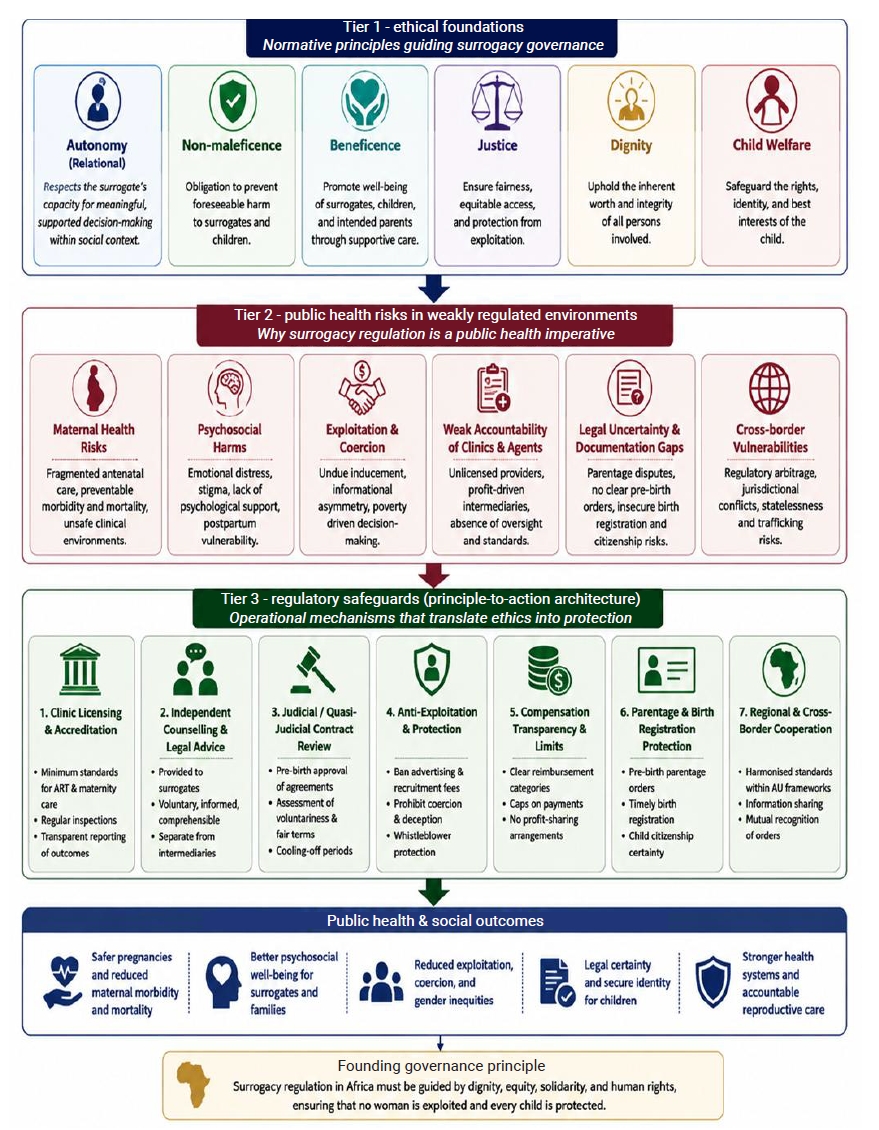
Figure 1 therefore maps ethical principles to the specific safeguards that operationalize them: consent procedures and independent counseling for relational autonomy; clinical licensing and maternal safeguards for non-maleficence; anti-exploitation enforcement and compensation transparency for justice; limits on profit-driven intermediation and dehumanizing terms for dignity; and parentage and birth registration protections for child welfare. These distinctions are not merely conceptual; they determine the safeguards required in a workable governance framework.
Conclusion
Africa’s surrogacy landscape illustrates how ethical principles, public health obligations, and reproductive governance converge in contexts marked by legal fragmentation. Strengthening regulatory safeguards is not only a regional imperative, but also part of a global shift toward cross-border child-protection norms, as reflected in Hague discussions on parentage and regulatory reforms in India, Nepal, and Cambodia. The framework proposed here may help African policymakers avoid harms observed in unregulated markets while tailoring protections to local institutional capacities. By grounding surrogacy governance in autonomy, justice, and child welfare, African states can build systems that are ethically coherent and globally aligned. This Perspective underscores the need for coherent, rights-based legislation before demand expands further into informal markets. Rather than treating ethics, maternal health, and legal governance as separate domains, this framework integrates them into a single regulatory architecture that translates bioethical principles into practical public health safeguards adaptable to diverse African institutional settings.
Recommendations
Legislate a 3-tier surrogacy model that distinguishes altruistic, compensated, and commercial arrangements, with proportionate safeguards and clear prohibitions on exploitative intermediation. Compensated arrangements should be limited to transparent, regulated reimbursement and proportionate compensation for time, medical burden, lost income, and pregnancy-related effects, while prohibiting open-market bidding, profit-driven brokerage, and uncapped financial inducements characteristic of commercial surrogacy markets.
Require independent counseling and legal advice as minimum safeguards for informed and relationally meaningful consent, supported by plain-language materials and appropriate cooling-off periods.
License and accredit ART clinics that provide surrogacy services, including mandatory standards for screening, antenatal monitoring, referral pathways, psychosocial follow-up, and adverse-event reporting.
Implement judicial or quasi-judicial review of surrogacy agreements, calibrated to institutional capacity, to secure legal clarity on parentage before embryo transfer.
Codify compensation transparency and payment caps to ensure that compensation reflects legitimate burdens without functioning as a coercive inducement, including disclosure of intermediary fees and contractual terms.
Strengthen anti-exploitation enforcement targeting coercive recruitment, trafficking-like practices, and unregulated intermediary networks operating within informal surrogacy markets.
Protect children’s legal identity through clear rules on parentage determination, standardized birth registration procedures, and reliable post-birth documentation, including cross-border protections against statelessness.
Advance regional coordination through African Union model guidelines and cross-border agreements that establish minimum standards for clinic oversight, documentation, parentage recognition, and anti-exploitation enforcement.
Principle-to-Protection Architecture for Surrogacy Regulation in Africa
Integrated Bioethics-Public Health Regulatory Framework for Surrogacy Governance in Africa. The diagram in
Figure 1 synthesizes 3 analytical tiers: (1) normative ethical foundations guiding surrogacy governance; (2) population-level public health risks generated by regulatory gaps; and (3) actionable safeguards that translate ethical commitments into enforceable protections. By linking principles to mechanisms such as independent counseling, clinic accreditation, judicial review, anti-exploitation enforcement, compensation transparency, and documentation protections, the framework provides a policy-usable architecture for African surrogacy regulation grounded in autonomy, equity, harm reduction, and child welfare.
HIGHLIGHTS
• Africa’s surrogacy landscape is legally fragmented and requires jurisdiction-sensitive governance.
• Surrogacy should be regulated as a bioethics-informed public health issue, not only as a private contractual arrangement.
• Ethical governance must distinguish formal consent from informed, voluntary, and relationally meaningful consent.
• Cross-border reproductive travel and price differentials create risks of regulatory arbitrage and exploitation.
• This paper proposes a policy-usable framework that links ethical principles to enforceable regulatory safeguards.
Article information
Ethics Approval
Not applicable.
Conflicts of Interest
The author has no conflicts of interest to declare.
Availability of Data
Not applicable.
Figure 1.Principle-to-protection architecture for surrogacy regulation in Africa. This conceptual model shows how a bioethics-informed public health lens reframes surrogacy as a governance obligation rather than a private contractual transaction. Tier 1 articulates the ethical foundations for regulation; Tier 2 identifies structural maternal, psychosocial, legal, and cross-border risks produced by regulatory fragmentation; and Tier 3 outlines proportionate safeguards that operationalize ethical commitments as enforceable regulatory instruments. The framework provides a scalable, context-sensitive roadmap for strengthening surrogacy governance, improving maternal and child protections, and reducing exploitation across diverse African jurisdictions.
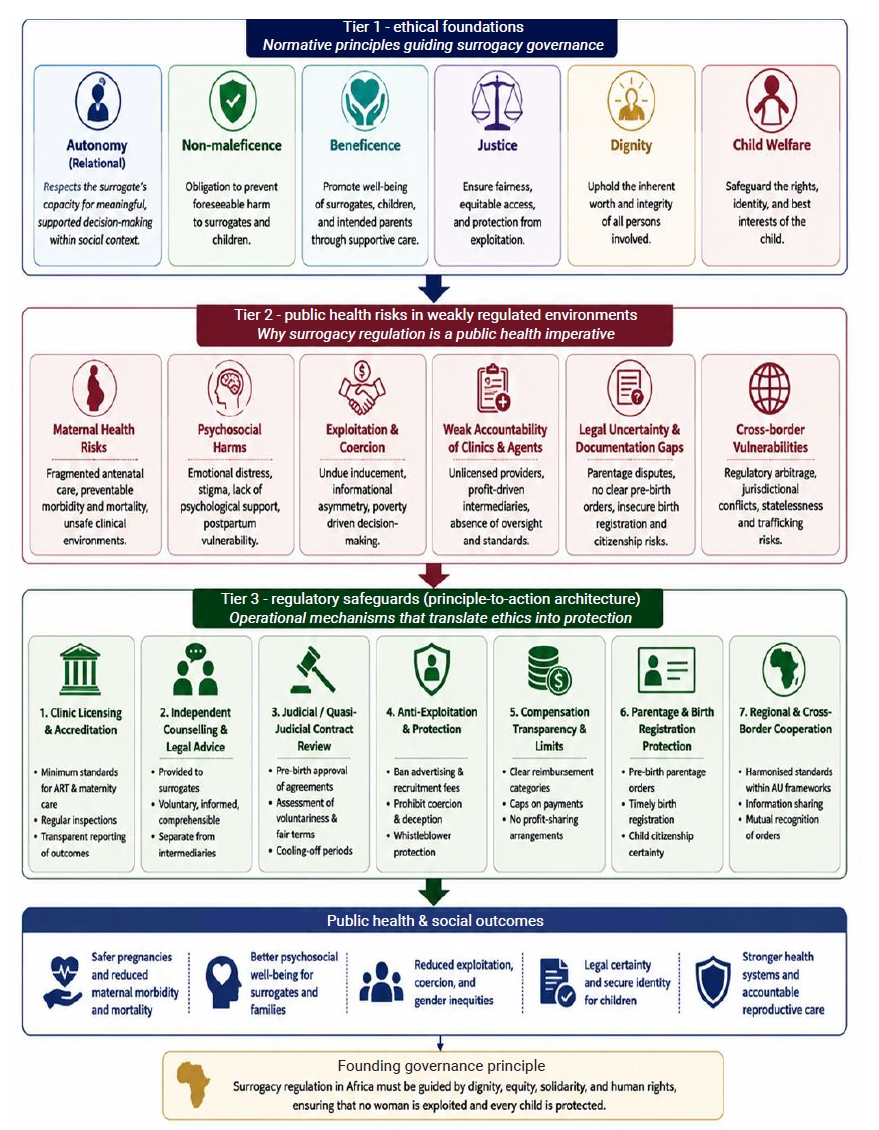
Table 1.Selected African surrogacy governance positions and indicative costs
Table 1.
| Jurisdiction |
Governance position |
Oversight mechanism |
Payment model |
Indicative costs/prices |
| South Africa |
Statutory, court-supervised |
High Court pre-approval |
Altruistic (expenses only) |
40,000–80,000 USD |
| Ghana |
Hybrid practice |
Local court parentage orders |
Compensated packages |
30,000–58,000 USD |
| Kenya |
Contract-reliant |
No formal mechanism |
Commercially offered, unregulated; reported coercion, fraud, and exploitative practices [19] |
33,000–40,000 USD |
| Nigeria |
Legally unclear |
No effective mechanism |
Commercial arrangements and exploitative ecosystems [16,17] |
Highly variable |
| Uganda |
Informal, with draft policy activity |
No formal mechanism |
Documented compensation |
In vitro fertilization: 4,000–6,000 USD; surrogate compensation: 2,000–4,000 USD |
References
- 1. Norris-Ongso PA. KinPath Surrogacy [Internet]. KinPath Surrogacy; 2025 [cited 2025 Apr 7]. Available from: https://kinpathsurrogacy.com/surrogacy-in-africa-a-practical-guide-for-intended-parents/.
- 2. World Health Organization (WHO) (CH). Maternal mortality [Internet]. WHO; 2025 [cited 2025 Apr 7]. Available from: https://www.who.int/news-room/fact-sheets/detail/maternal-mortality.
- 3. Dyer S, Potgieter L, Honwana F, et al. Assisted reproductive technology in Africa: the African Network and Registry for ART, 2021 and 2022. Reprod Biomed Online 2026;52:105230.
- 4. Moll T, Gerrits T, Hammarberg K, et al. Reproductive travel to, from and within sub-Saharan Africa: a scoping review. Reprod Biomed Soc Online 2022;14:271−88.
- 5. Horsey K. The future of surrogacy: a review of current global trends and national landscapes. Reprod Biomed Online 2024;48:103764.
- 6. Kirby J. Transnational gestational surrogacy: does it have to be exploitative? Am J Bioeth 2014;14:24−32.
- 7. United Nations International Children’s Emergency Fund (UNICEF) (US). Convention on the rights of the child [Internet]. UNICEF; 2025 [cited 2025 Apr 7]. Available from: https://www.unicef.org/child-rights-convention.
- 8. Soderstrom-Anttila V, Wennerholm UB, Loft A, et al. Surrogacy: outcomes for surrogate mothers, children and the resulting families: a systematic review. Hum Reprod Update 2016;22:260−76.
- 9. Ethics Committee of the American Society for Reproductive Medicine. Consideration of the gestational carrier: an Ethics Committee opinion. Fertil Steril 2023;119:583−8.
- 10. Igareda Gonzalez N. Legal and ethical issues in cross-border gestational surrogacy. Fertil Steril 2020;113:916−9.
- 11. Crockin SL. Growing families in a shrinking world: legal and ethical challenges in cross-border surrogacy. Reprod Biomed Online 2013;27:733−41.
- 12. Manderson L, Whittaker A, Gerrits T. Fertility care in low- and middle-income countries: training in assisted reproduction in South Africa. Reprod Fertil 2025;6:e240086.
- 13. Gerrits T, Whittaker A, Manderson L. Fertility care in low and middle income countries: embryologists’ practices of care in IVF-clinics in sub-Saharan Africa. Reprod Fertil 2025;6:e240025.
- 14. Whittaker A, Gerrits T, Weis C. Emerging “repronubs” and “repropreneurs”: transnational surrogacy in Ghana, Kazakhstan, and Laos. Int J Comp Sociol 2022;63:304−23.
- 15. Parliament of Kenya (KE). Assisted reproductive technology bill approved paving legal path to parenthood [Internet]. Parliament of Kenya; 2025 [cited 2025 Apr 7]. Available from: https://www.parliament.go.ke/node/24849.
- 16. Makinde OA, Olaleye O, Makinde OO, et al. Baby factories in Nigeria: starting the discussion toward a national prevention policy. Trauma Violence Abuse 2017;18:98−105.
- 17. Alabi OJ. Socioeconomic dynamism and the growth of baby factories in Nigeria. Sage Open 2018;8:21582440187.
- 18. Growing Families (AU). Unregulated countries & surrogacy [Internet]. Growing Families; 2022 [cited 2025 Apr 7]. Available from: https://www.growingfamilies.org/unregulated-countries/.
- 19. Lepapa N. Hard labour: the surrogacy industry in Kenya: part I [Internet]. Africa Uncensored; 2021 [cited 2025 Apr 7]. Available from: https://africauncensored.online/blog/2021/05/28/hard-labour-surrogacy-kenya-1/.
- 20. Campbell S. Relational autonomy: feminist perspectives on autonomy, agency, and the social self. Hypatia 2002;17:165−8.
- 21. Humbyrd C. Fair trade international surrogacy. Dev World Bioeth 2009;9:111−8.
- 22. van den Akker OB. Psychosocial aspects of surrogate motherhood. Hum Reprod Update 2007;13:53−62.
- 23. Jadva V, Blake L, Casey P, et al. Surrogacy families 10 years on: relationship with the surrogate, decisions over disclosure and children's understanding of their surrogacy origins. Hum Reprod 2012;27:3008−14.
- 24. Hiadzi RA, Woodward B, Akrong GB. Ethical issues surrounding the use of assisted reproductive technologies in Ghana: an analysis of the experiences of clients and service providers. Heliyon 2023;9:e13767.
Citations
Citations to this article as recorded by