Introduction
Background/Rationale
Volatile organic compounds (VOCs) are common indoor pollutants emitted from household products, building materials, electronic devices, and personal activities such as cooking, smoking, and solvent use [
1–
12]. Indoor VOC concentrations are typically 2–5 times higher than outdoor concentrations, largely because of limited ventilation, seasonal variation, and indoor activities [
6,
7,
9–
11,
13]. Because people spend much of their time indoors, indoor VOC exposure is frequent and may pose public health risks [
1,
10,
14–
16]. This issue has received additional attention since the coronavirus disease 2019 (COVID-19) pandemic, when working from home, virtual meetings, and other lifestyle changes increased time spent indoors. In addition, more frequent extreme weather events may prolong indoor stays, further supporting the need for effective indoor air quality (IAQ) management [
17]. International organizations, including the World Health Organization (WHO), have recognized the risks of indoor air pollution and emphasized the need for continuous monitoring and regulation of indoor air pollutants, particularly because children and adult females may be more susceptible to household air pollution [
12,
18].
VOCs with carcinogenic or toxic properties have received attention because of their potential health risks. These compounds are associated with a range of adverse outcomes, including eye and throat irritation, headache, respiratory and neurological disorders, endocrine disruption, and certain cancers [
3,
5,
6,
18–
23]. After entering the body primarily through inhalation, ingestion, or dermal contact, VOCs are metabolized through multiple biological pathways and subsequently excreted in urine as specific metabolites [
1,
2,
21,
22,
24]. These urinary VOC metabolites are commonly used as biomarkers of recent internal exposure because they may reflect both environmental concentrations and individual physiological characteristics [
1–
3,
5,
21].
Although previous studies have suggested sex-based differences in VOC exposure and metabolism, few studies have examined sex-specific differences in the association between VOC exposure and urinary biomarkers [
13,
18,
21,
25–
27]. The Korea National Health and Nutrition Examination Survey (KNHANES) recently incorporated IAQ measurements, including total volatile organic compound (TVOC) concentrations, enabling population-level analyses of these associations [
14,
26].
In this study, TVOC was conceptualized not as a surrogate for individual parent compounds but as an integrated proxy for mixed indoor chemical exposure. This approach allowed us to assess whether between-household variability in indoor VOC mixtures was reflected in corresponding patterns of internal exposure biomarkers at the population level.
Objectives
This study examined the association between indoor TVOC concentrations and urinary VOC metabolites using data from the 2020–2021 KNHANES, which included the Republic of Korea’s first population-based IAQ survey. Specifically, we hypothesized that indoor TVOC exposure would be positively associated with urinary VOC metabolite concentrations and that these associations may differ by sex. The broader aim was to inform public health strategies for managing IAQ and identifying vulnerable populations based on sex-specific exposure and metabolic patterns.
Materials and Methods
Study Sample
This cross-sectional study used data from the Household IAQ and Environmental Hazardous Substances Biomarker Survey, a subsidiary survey of KNHANES conducted from July 2020 to August 2021 as part of KNHANES VIII. To assess indoor environmental exposure, a stratified subsample of approximately 1,200 households was selected using a 2-stage sampling method based on season, region, and housing type. Households that consented to IAQ monitoring were included, and the subsample was constructed through secondary extraction procedures from the primary KNHANES sample. During home visits, trained field staff measured TVOC concentrations in accordance with the Official Test Method for Indoor Air Quality issued by the Ministry of Environment (MOE), Republic of Korea [
25]. TVOC was selected for further analysis because of its relevance to indoor chemical exposure and the availability of corresponding urinary biomarkers. For biomonitoring, only adult household members aged ≥19 years from households that participated in the IAQ survey were eligible. Of the 1,980 participants initially enrolled for biomonitoring, those with urinary creatinine concentrations outside the physiological range (<0.3 or >3.0,
n=107) and those with missing urine samples (
n=14) were excluded, leaving a final analytical sample of 1,859 individuals [
26,
27].
Indoor VOC Measurement
TVOC concentrations in residential environments were quantified according to the MOE standard protocol [
25]. In-home sampling was conducted by trained personnel using solid-phase adsorption tubes within the survey window. Air samples were collected at breathing-zone height, 1.2–1.5 m above the floor, in the central area of the primary living space, defined as the living room. Samples were collected during 2 consecutive 30-minute sessions under guideline-specified normal residential operating conditions, without experimental manipulation of temperature, humidity, ventilation, or appliance use. This approach supported consistency across households and provided a standardized estimate of indoor VOC exposure. The collected samples were analyzed by thermal desorption followed by gas chromatography to quantify TVOC concentrations (µg/m³).
Urinary VOC Metabolite Measurement
Urinary VOC metabolites were analyzed according to the KNHANES biomonitoring protocol of the Korea Disease Control and Prevention Agency (KDCA) [
26], using the LC-MS/MS method specified in the protocol [
28]. The target indoor VOCs were benzene, toluene, ethylbenzene, xylene, and styrene. Nine metabolites were selected based on toxicological relevance and international comparability [
14]: S-phenylmercapturic acid (SPMA), a metabolite of benzene; N-acetyl-S-(benzyl)-L-cysteine (BMA), a metabolite of toluene; phenylglyoxylic acid (PGA) and mandelic acid (MA), metabolites of ethylbenzene and styrene; 2-methylhippuric acid (2-MHA) and 3- and 4-methylhippuric acid (3,4-MHA), metabolites of xylene isomers; N-acetyl-S-(3-hydroxypropyl)-L-cysteine (3-HPMA), a metabolite of acrolein; N-acetyl-S-(n-propyl)-L-cysteine (BPMA), a metabolite of 1-bromopropane; and N-acetyl-S-(3,4-dihydroxybutyl)-L-cysteine (DHBMA), a metabolite of 1,3-butadiene. These abbreviations and parent-compound links were used consistently throughout the analyses. Although urinary VOC metabolites are generally more stable than parent VOCs measured in blood, they primarily reflect recent exposure because their biological half-lives are relatively short, typically ranging from several hours to approximately 1–2 days [
20].
Quantification was performed using liquid chromatography–tandem mass spectrometry with an API 5500 triple quadrupole mass spectrometer (AB Sciex) coupled to a Nexera XR LC-20AD system (Shimadzu). Chromatographic separation was performed on a C18 column (2.0 μm, 2.1×150 mm), with a mobile phase consisting of 0.01% acetic acid in water and acetonitrile at a flow rate of 0.4 mL/min. Electrospray ionization enabled sensitive detection, and calibration curves (R²≥0.995) were updated every 200 samples to maintain analytical robustness [
29].
To account for urine dilution, metabolite concentrations were normalized to urinary creatinine (µg/g creatinine). Samples with creatinine concentrations outside the physiological range of 0.3–3.0 g/L, as defined in the WHO guideline Biological Monitoring of Chemical Exposure in the Workplace: Guidelines (1996), were excluded [
27]. Values below the limit of detection (LOD) were flagged as <LOD (
Table S1). For statistical analyses, these values were imputed as LOD/√2, consistent with standard practice for left-censored data [
26,
28]. These exclusion and imputation procedures were applied to maintain data integrity and comparability across population subgroups [
26].
Covariates
Potential covariates were identified using a directed acyclic graph (
Figure S1). On the basis of previous studies examining relationships between urinary VOC metabolites and metabolic outcomes, the following covariates were selected for adjustment [
14,
29,
30]. In the conceptual causal pathway, biological factors, including sex, age, central obesity, hypertension, diabetes, and dyslipidemia; behavioral factors, including current smoking status, secondhand smoke exposure, alcohol consumption, and walking; and socioeconomic factors, including income, education, and household composition, were considered common causes of indoor TVOC exposure and urinary VOC metabolite concentrations.
Sex was categorized as male or female, and age was treated as a continuous variable. Central obesity was adjusted for using waist circumference rather than body mass index because waist circumference more directly reflects visceral adiposity, which may influence the uptake, partitioning, and clearance of lipophilic pollutants [
31–
33]. Central obesity was defined as a waist circumference ≥85 cm in females and ≥90 cm in males. Chronic disease status was determined from self-reported physician diagnosis and clinical criteria. Hypertension was defined as systolic blood pressure ≥140 mmHg, diastolic blood pressure ≥90 mmHg, or use of antihypertensive medication. Dyslipidemia was defined as fasting total cholesterol ≥240 mg/dL after at least 12 hours of fasting, use of cholesterol-lowering medication, and/or fasting triglycerides ≥200 mg/dL. Diabetes was defined as fasting blood glucose ≥126 mg/dL, use of antidiabetic medication or insulin injections, physician diagnosis, or glycated hemoglobin ≥6.5%.
Current smoking was defined as having smoked at least 100 cigarettes during one’s lifetime and currently smoking. Secondhand smoke exposure was defined as indoor exposure to tobacco smoke at home within the past 7 days. Alcohol consumption was defined as drinking alcohol at least once per month during the past year. Walking was defined as walking for at least 30 minutes per day on at least 5 days per week [
26].
Monthly household income was categorized into quartiles, and educational attainment was categorized as middle school or below versus high school or above. Whereas prior studies classified marital status as married, unmarried, or other, this study operationalized household structure as a binary indicator of multiperson versus single-person households to reflect the increasing prevalence of 1-person households and growing family diversity.
Statistical Analysis
All analyses were unweighted and did not incorporate the KNHANES strata or primary sampling units, because inclusion depended on household consent to monitoring and specimen provision. Descriptive statistics were calculated for all participants and were stratified by sex. Creatinine-adjusted urinary VOC metabolite concentrations were log-transformed for analysis. Associations between indoor TVOC concentrations and urinary VOC metabolites were evaluated using general linear models adjusted for sex, age, central obesity, hypertension, diabetes, dyslipidemia, smoking status, secondhand smoke exposure, alcohol consumption, walking, household income, educational attainment, and household composition. Indoor TVOC concentrations were modeled as a continuous variable scaled by interquartile range (IQR). Sex-specific effect modification was assessed by including a sex-by-TVOC interaction term in the multivariable models (Type III test), and sex-stratified models were subsequently fitted; no adjustment was made for multiple comparisons. To explore potential nonlinear exposure–response relationships, generalized additive models with penalized spline functions were fitted separately by sex. Exposure–response curves were restricted to the common support by symmetric within-stratum trimming at the 1st and 99th percentiles, with no extrapolation beyond the observed data.
To evaluate whether occupational TVOC exposure might have contributed to exposure misclassification, a subgroup analysis was conducted among non-employed participants. Non-employed participants were those classified in the KNHANES occupation variable as having no current employment (including homemakers and students). Three sensitivity analyses were conducted post hoc: (1) use of household cluster-robust standard errors, because participants in the same household shared a single indoor TVOC measurement; (2) exclusion of participants whose urine was collected 1 month or more after indoor air sampling; and (3) exclusion of participants with indoor TVOC concentrations above the 99th percentile (1,777.5 µg/m3). All statistical analyses were performed using SAS ver. 9.4 (SAS Institute Inc.) and R software ver. 4.5.0 (R Foundation for Statistical Computing).
Ethics Statement
This study analyzed deidentified, publicly available data from the KNHANES, which had received annual approval from the Institutional Review Board of the KDCA (e.g., 2020–2021, approval numbers 2018-01-03-2C-A and 2018-01-03-5C-A). Written informed consent was obtained from all participants by the KDCA at the time of the KNHANES survey. As this study involved secondary analysis of publicly available, deidentified data, it was exempt from additional Institutional Review Board approval.
Results
Descriptive Data
Among the 1,859 participants, the proportion of females was slightly higher than that of males (54.6% vs. 45.4%) (
Table 1). Indoor TVOC concentrations did not differ significantly by sex (median [IQR], 107.5 [39.5–235.0] µg/m³ in males vs. 105.2 [39.0–246.8] µg/m³ in females). Male participants had higher educational attainment than female participants (high school or above, 74.4% vs. 62.8%), were more likely to live in households with 2 or more members (87.6% vs. 84.2%), and had higher rates of current smoking (29.0% vs. 3.4%), monthly alcohol consumption (65.8% vs. 37.6%), central obesity (45.3% vs. 32.8%,
p<0.001), and hypertension (30.7% vs. 23.4%). Female participants had higher rates of secondhand smoke exposure (3.8% vs. 1.7%) and reported significantly longer indoor stay durations than males (18.8 hours vs. 15.0 hours). Urinary VOC metabolite distributions were similar between males and females.
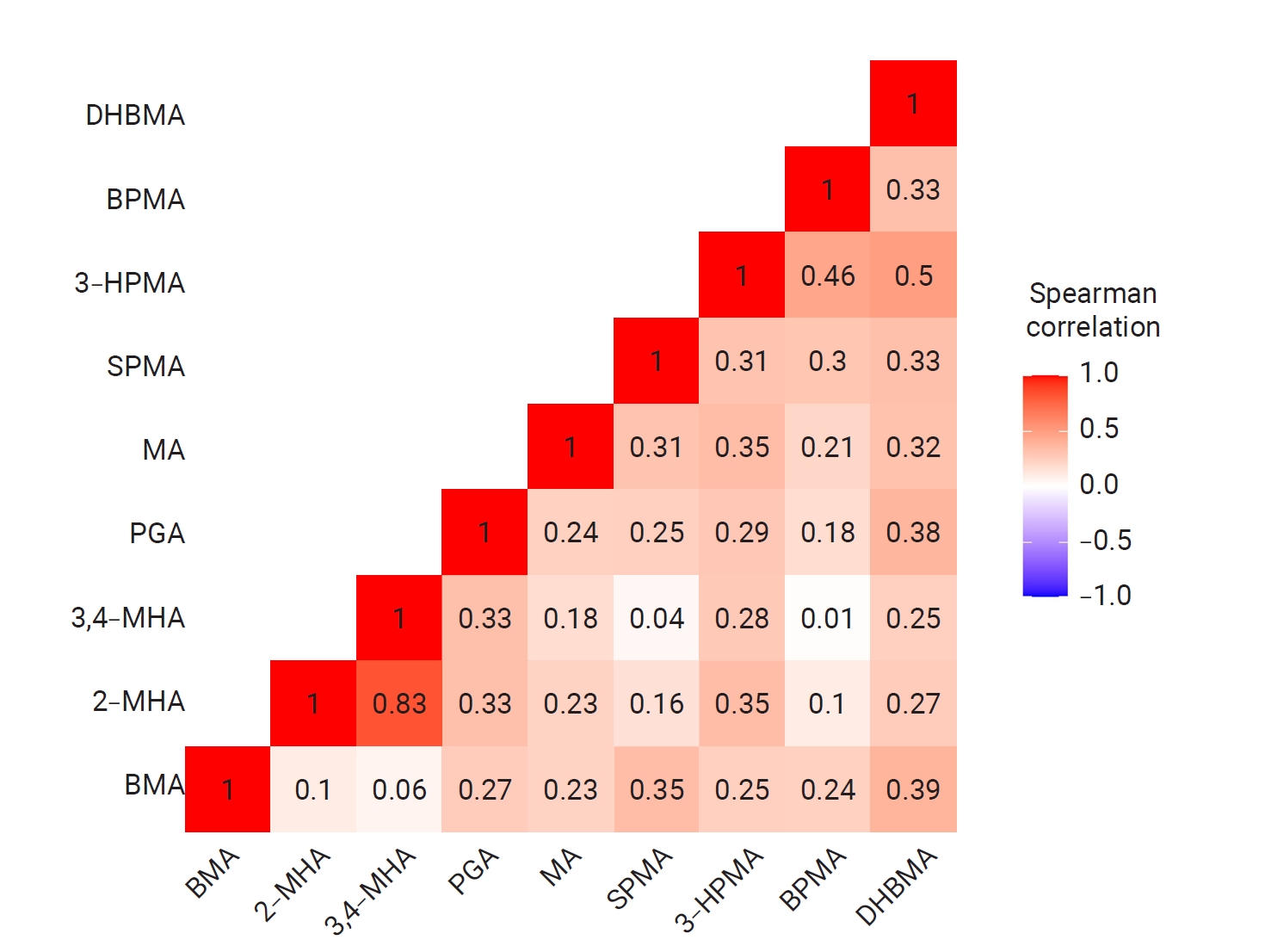
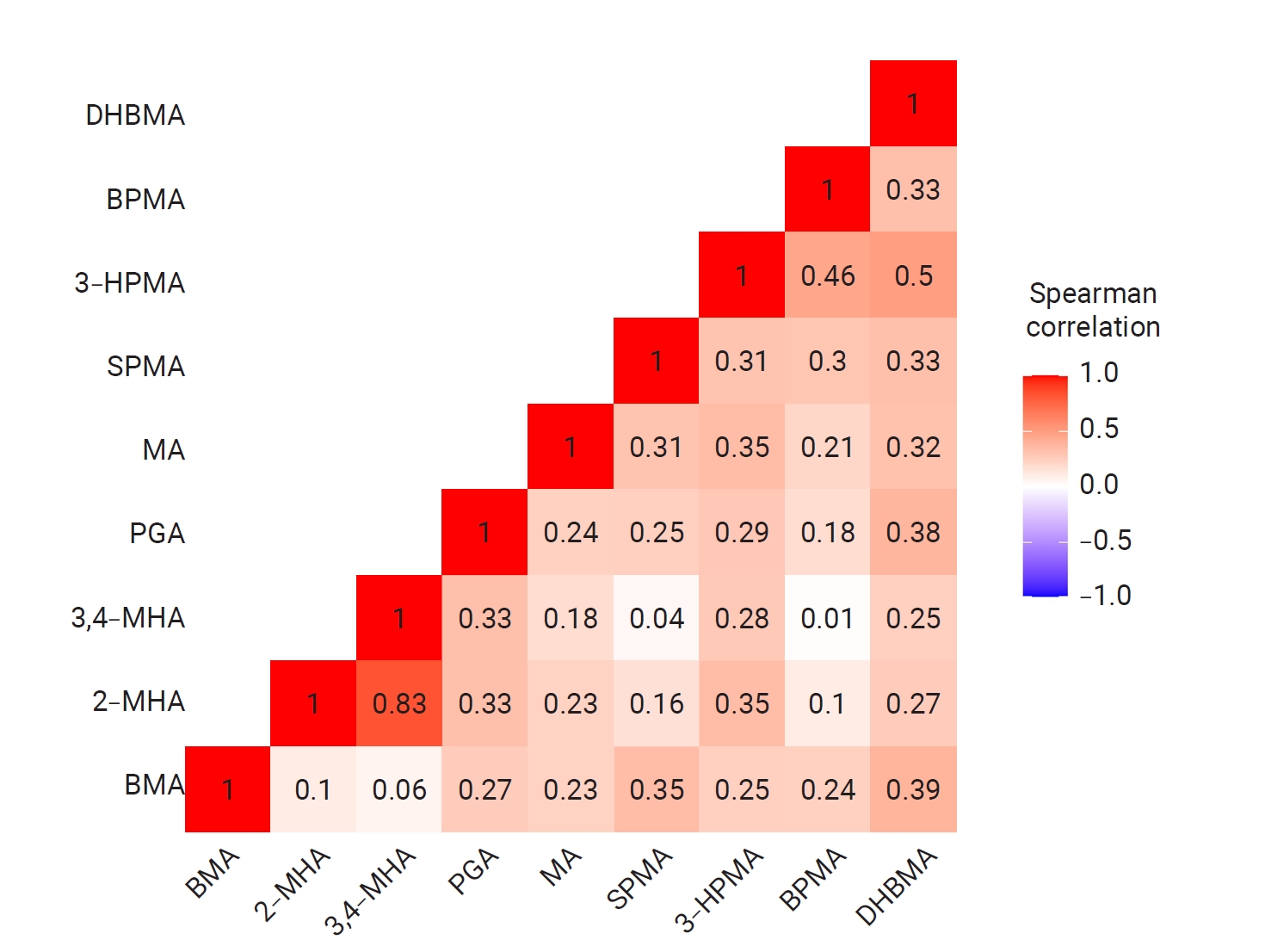
Most metabolite pairs showed weak to moderate positive correlations (ρ=0.01–0.50). The strongest correlation was observed between 2-MHA and 3,4-MHA (ρ=0.83), followed by the correlation between 3-HPMA and DHBMA (ρ=0.50) (
Figure 1). These coefficients were based on log-transformed, creatinine-adjusted concentrations using pairwise complete observations.
Outcome Data
This cross-sectional study evaluated indoor TVOC concentrations as the exposure and urinary VOC metabolite concentrations as the outcomes.
Main Results
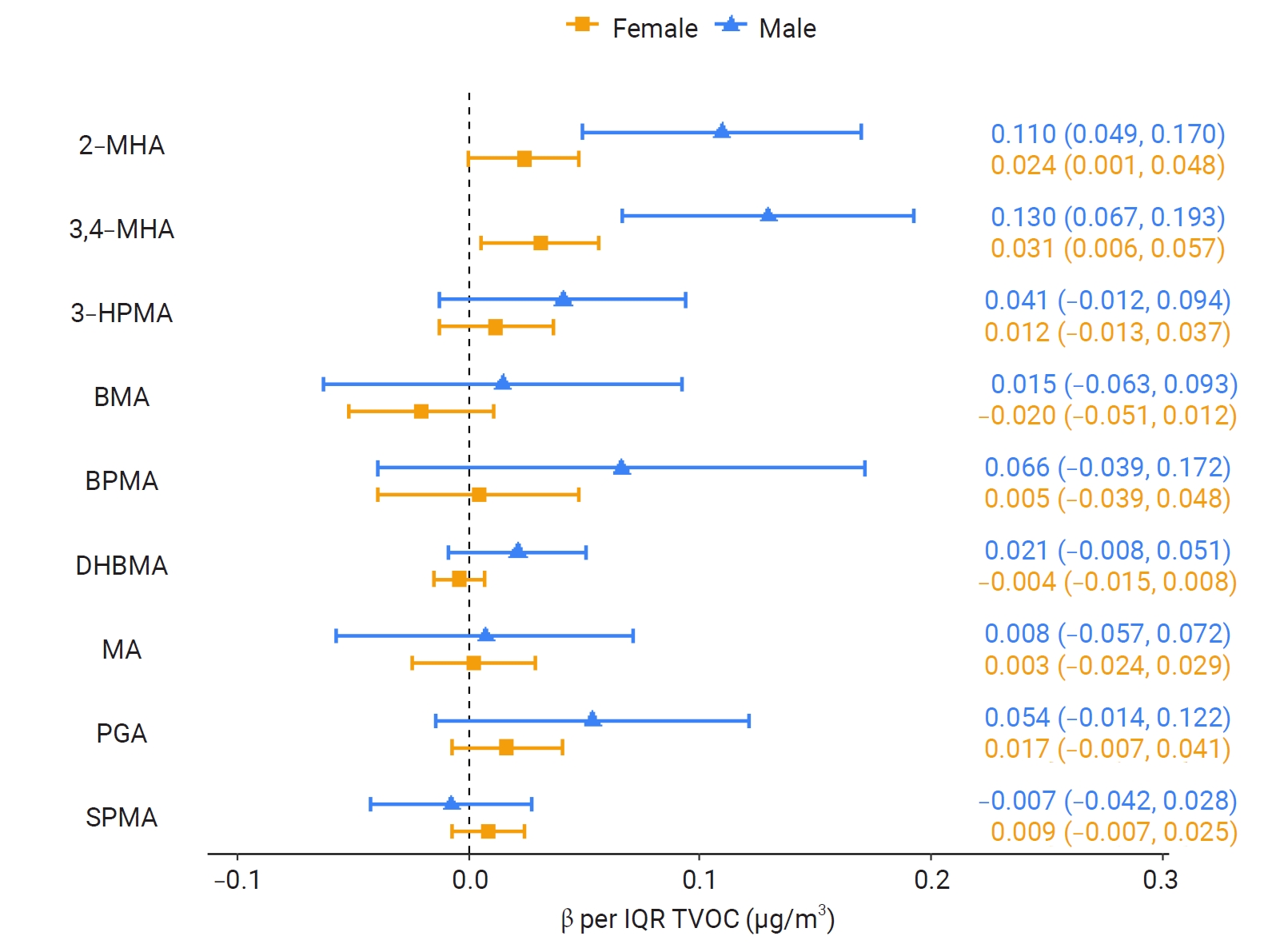
Indoor TVOC concentrations were positively associated with urinary 2-MHA and 3,4-MHA concentrations in both males (β=0.040 and 0.037, respectively) and females (β=0.040 and 0.041, respectively), with
p for interaction of 0.990 and 0.728, respectively (
Figure 2).
In exploratory analyses, indoor TVOC concentrations were also positively associated with PGA in males (β=0.022; 95% confidence interval [CI], 0.007–0.037), whereas this association was not evident in females (β=0.017; 95% CI, −0.003 to 0.037). Other metabolites showed weak and statistically nonsignificant associations in both sexes (
Figure 2).
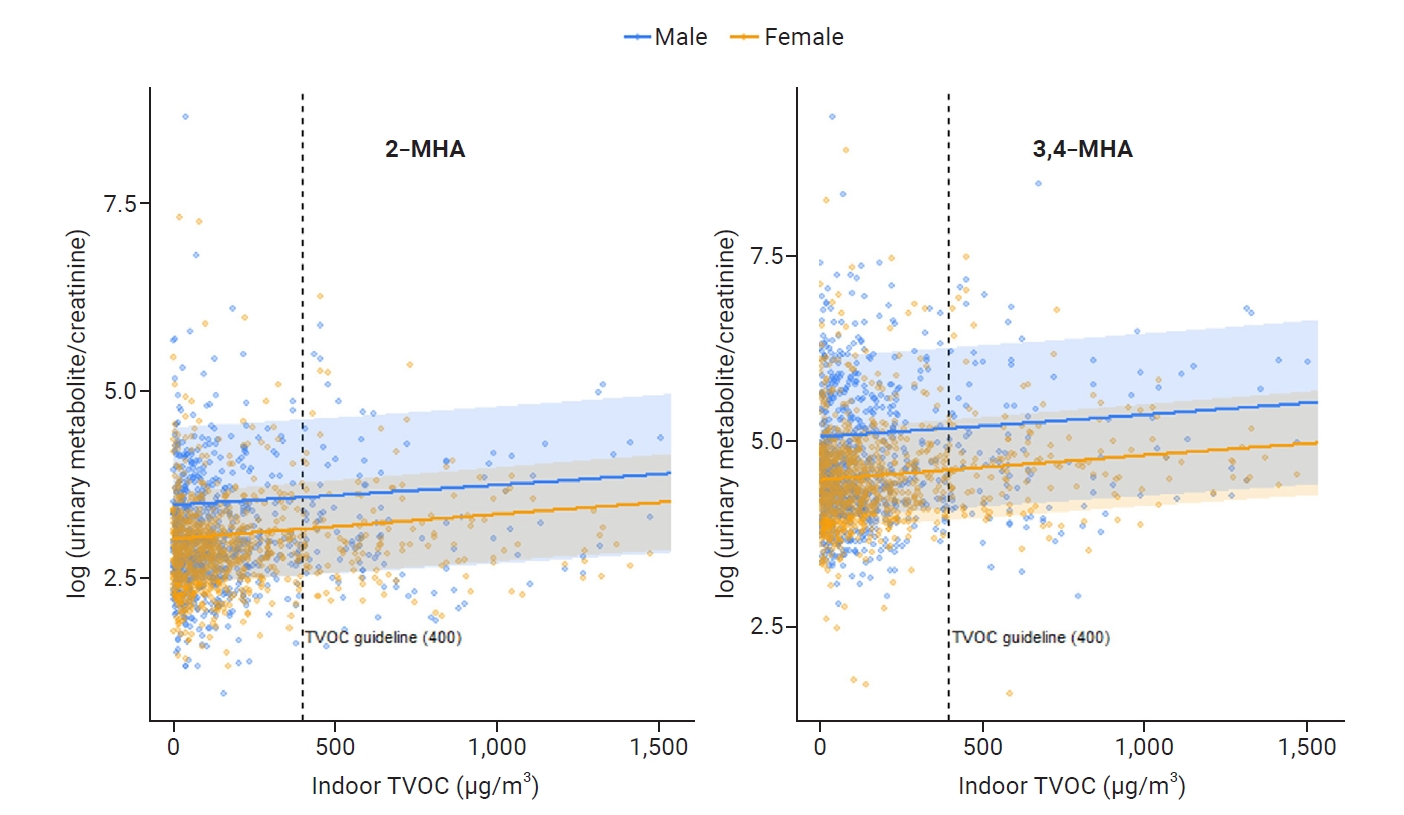
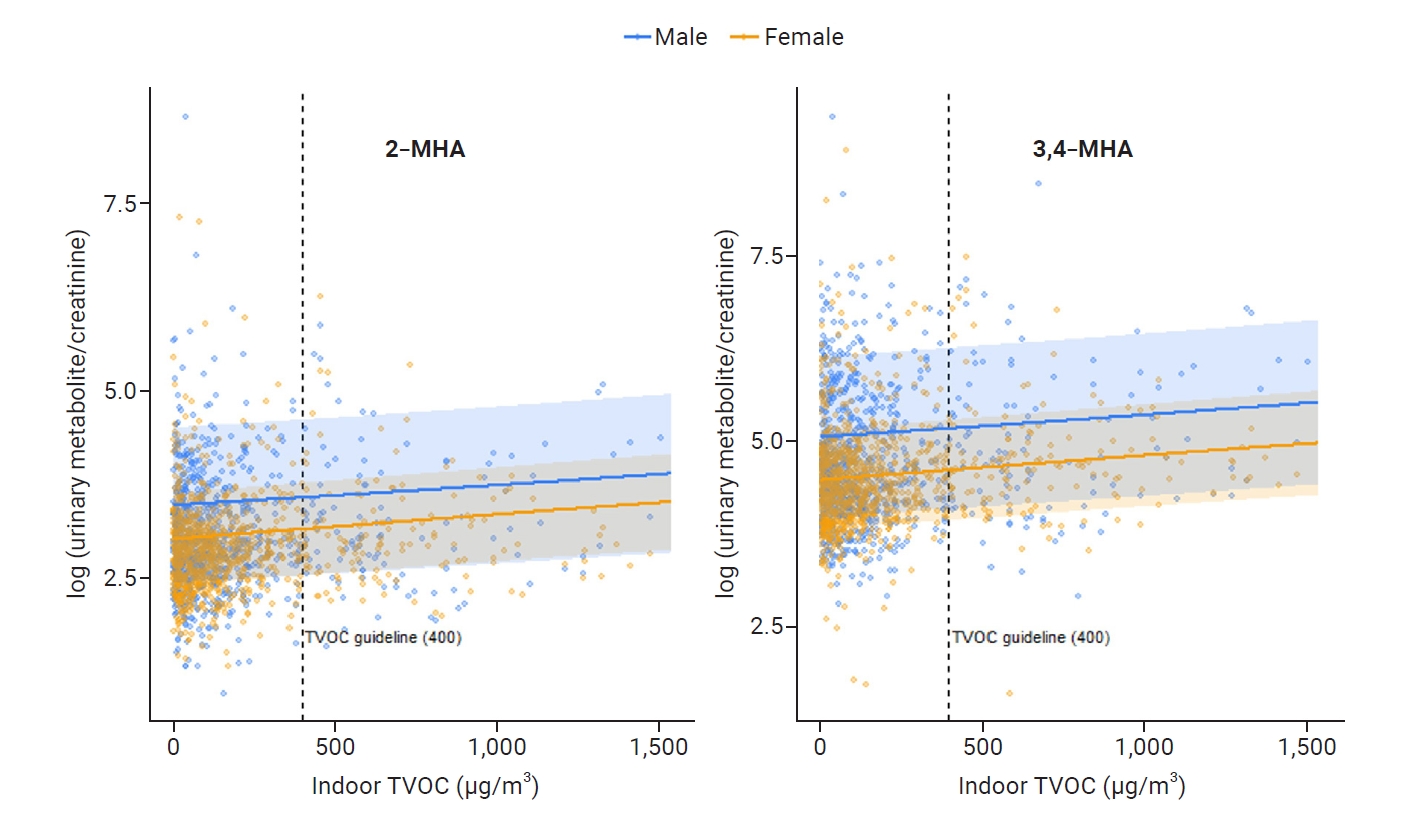
In generalized additive models, the association between indoor TVOC exposure and urinary VOC metabolites did not deviate significantly from linearity. For both 2-MHA and 3,4-MHA, the exposure–response relationships were approximately linear and similar between males and females, with overlapping CIs (
Figure 3).
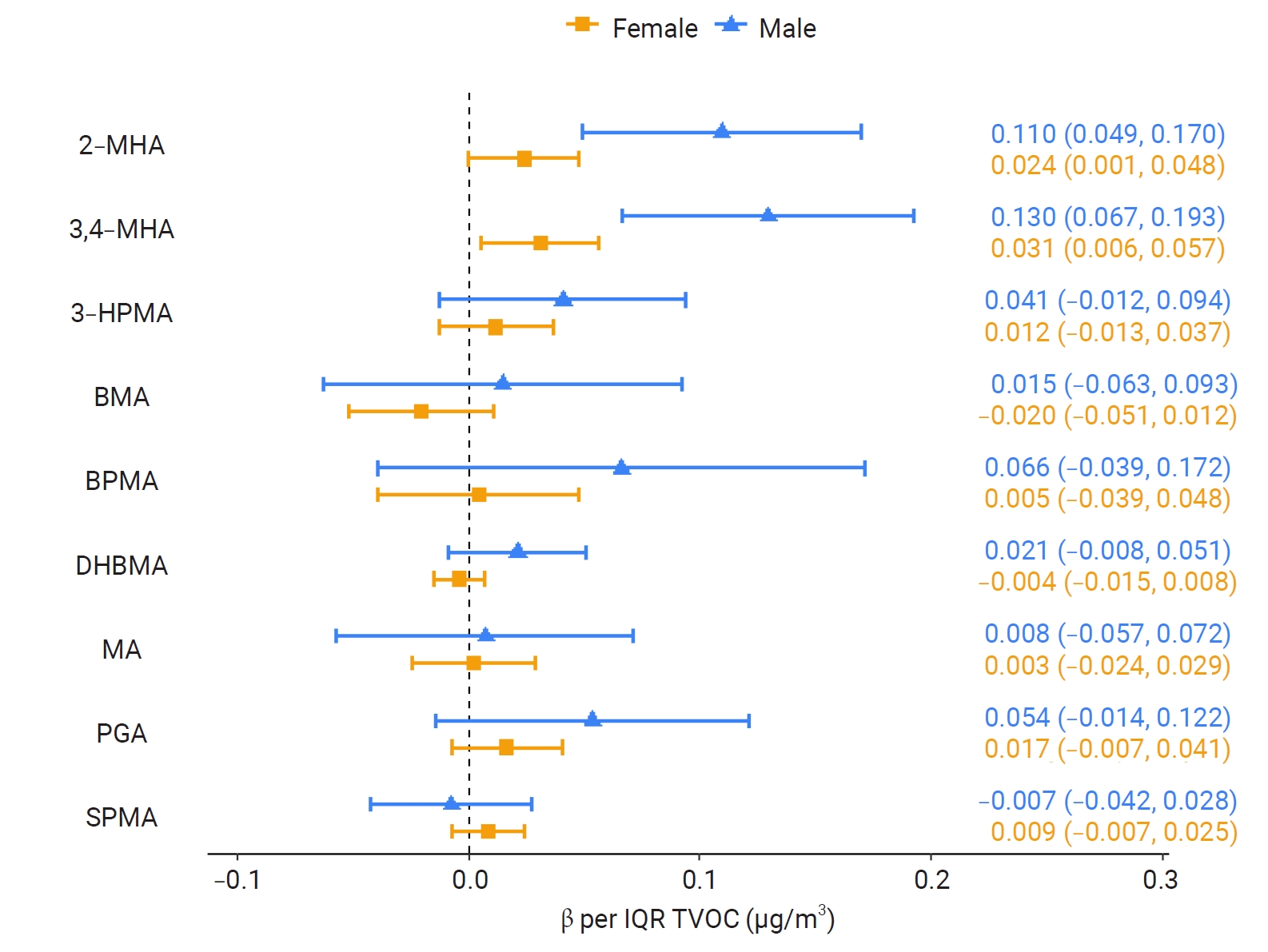
When analyses were restricted to non-employed participants (243 males and 460–461 females), stronger associations were observed in males than in females for 2-MHA (β=0.110; 95% CI, 0.049–0.170 vs. β=0.024; 95% CI, 0.001–0.048;
p for interaction=0.016) and 3,4-MHA (β=0.130; 95% CI, 0.067–0.193 vs. β=0.031; 95% CI, 0.006–0.057;
p for interaction=0.008). However, the positive association between indoor TVOC concentrations and urinary PGA was not evident in non-employed males (
Figure S2). In sensitivity analyses using household cluster-robust standard errors or excluding participants with an air–urine interval of 1 month or more or with TVOC concentrations above the 99th percentile, the full-sample associations were robust, whereas the subgroup interaction was not consistent (
Table S2).
Discussion
Key Results
In this KNHANES-based sample of Korean adults, indoor TVOC exposure was positively associated with the urinary xylene metabolites 2-MHA and 3,4-MHA in both males and females, with no evident overall sex-dependent difference. In non-employed participants, point estimates were larger in males, but this exploratory subgroup finding was not consistent across sensitivity analyses. These findings support the use of 2-MHA and 3,4-MHA as sensitive biomarkers of indoor VOC exposure in both sexes.
Interpretation
These findings should be interpreted within a mixture-exposure framework, in which TVOC represents an integrated proxy for combined indoor chemical exposure rather than a surrogate for individual parent compounds. Therefore, the observed associations should be understood as reflecting between-household variability in indoor VOC mixtures at the population level, as captured by corresponding urinary VOC metabolite patterns, rather than direct one-to-one metabolic relationships.
Although some epidemiological studies have not identified sex-dependent differences in VOC-related outcomes [
9,
13,
20,
23], an exploratory analysis restricted to non-employed participants in this study suggested possible sex-dependent differences in the association between indoor TVOC concentrations and urinary biomarkers. If confirmed, such differences could be related to VOC metabolism influenced by metabolic rate, hormonal regulation, or household role [
9,
12,
34,
35], or to behavioral factors, including time spent in specific rooms, ventilation practices, consumer product use, and gendered household roles such as cooking or cleaning. Contrary to expectations based on gendered patterns of household activity, point estimates were larger in males than in females. Although the models were adjusted for socioeconomic factors, education and income may lie on the causal pathway from sex to exposure, potentially attenuating potential sex-specific effects [
35,
36]. Future studies incorporating direct measures of time–activity patterns, household tasks, and personal product use are needed to distinguish behavioral mechanisms from biological mechanisms.
Generalizability
These findings support targeted strategies to reduce indoor VOC exposure, including improved ventilation and source control for high-emission household products [
4,
24]. The use of a KNHANES-based sample strengthens the generalizability of the findings, and the exploratory analysis of non-employed participants helped reduce potential confounding from occupational exposure. Public health policies should consider vulnerable populations when developing IAQ standards [
20,
36]. In addition, IAQ management should be integrated with outdoor pollution-control efforts to address the broader spectrum of VOC exposure [
7,
9,
13]. As indoor environments are important determinants of health, these results support public health approaches that account for possible sex differences.
Limitations
This observational study has several limitations. The cross-sectional design limits causal inference [
23]. Exposure assessment based on urinary metabolites has limitations, including the possibility that a single metabolite may arise from exposure to multiple parent compounds or from direct uptake from environmental media rather than endogenous metabolic production [
3,
4,
37]. Spot urine samples provide only a short-term snapshot of exposure and may not fully reflect chronic exposure patterns [
20,
26]. Because most urinary VOC metabolites reflect short-term exposure, any time gap between indoor air sampling and urine collection may have attenuated the observed associations, particularly among participants with intermittent or highly variable exposure patterns. For 76 participants, urine was collected 1 month or more after indoor air sampling because of COVID-19–related disruptions [
26]; excluding them did not materially change the results (
Table S2).