Objectives We examined national temporal trends, laboratory-confirmation performance, and climate associations in Lassa fever surveillance in Nigeria from 2020 to 2025, and assessed the impact of the coronavirus disease 2019 (COVID-19) pandemic on surveillance metrics. Methods: We analyzed 307 consecutive weeks of national Lassa fever surveillance data using an ecological study design. Primary outcomes included confirmed-case counts, case fatality rate (CFR), and laboratory-confirmation rate (LCR). Temporal trends were evaluated using regression models, climate associations using correlation and negative binomial regression analyses, and the impact of COVID-19 using interrupted time-series analysis. Results: Overall, 47,029 suspected cases, 6,288 confirmed cases, and 975 deaths were reported. The mean LCR was 11.2% (standard deviation, 7.2%), declining from 18.4% in 2020 to 9.9% in 2025 (p <0.001). The overall CFR was 15.5%, with no significant downward trend over time. Confirmed cases were inversely associated with weekly rainfall (rs=−0.589, p <0.0001) and positively associated with mean temperature (rs=0.462, p<0.0001). Peak season incidence was 5.3-fold higher than that during off-peak periods. The COVID-19 lockdown period was associated with an immediate reduction in confirmed cases without a corresponding reduction in suspected cases. Conclusion: Lassa fever surveillance in Nigeria from 2020 to 2025 was characterized by a declining LCR, persistently elevated CFR, and a climate-linked seasonal pattern of increasing intensity, findings that are consistent with, but do not definitively establish, systemic underascertainment. CFR trends may partly reflect case-mix variation and detection bias. Because of the ecological study design, causal inferences cannot be drawn. These findings underscore the need for resilient, climate-informed, One Health surveillance systems.
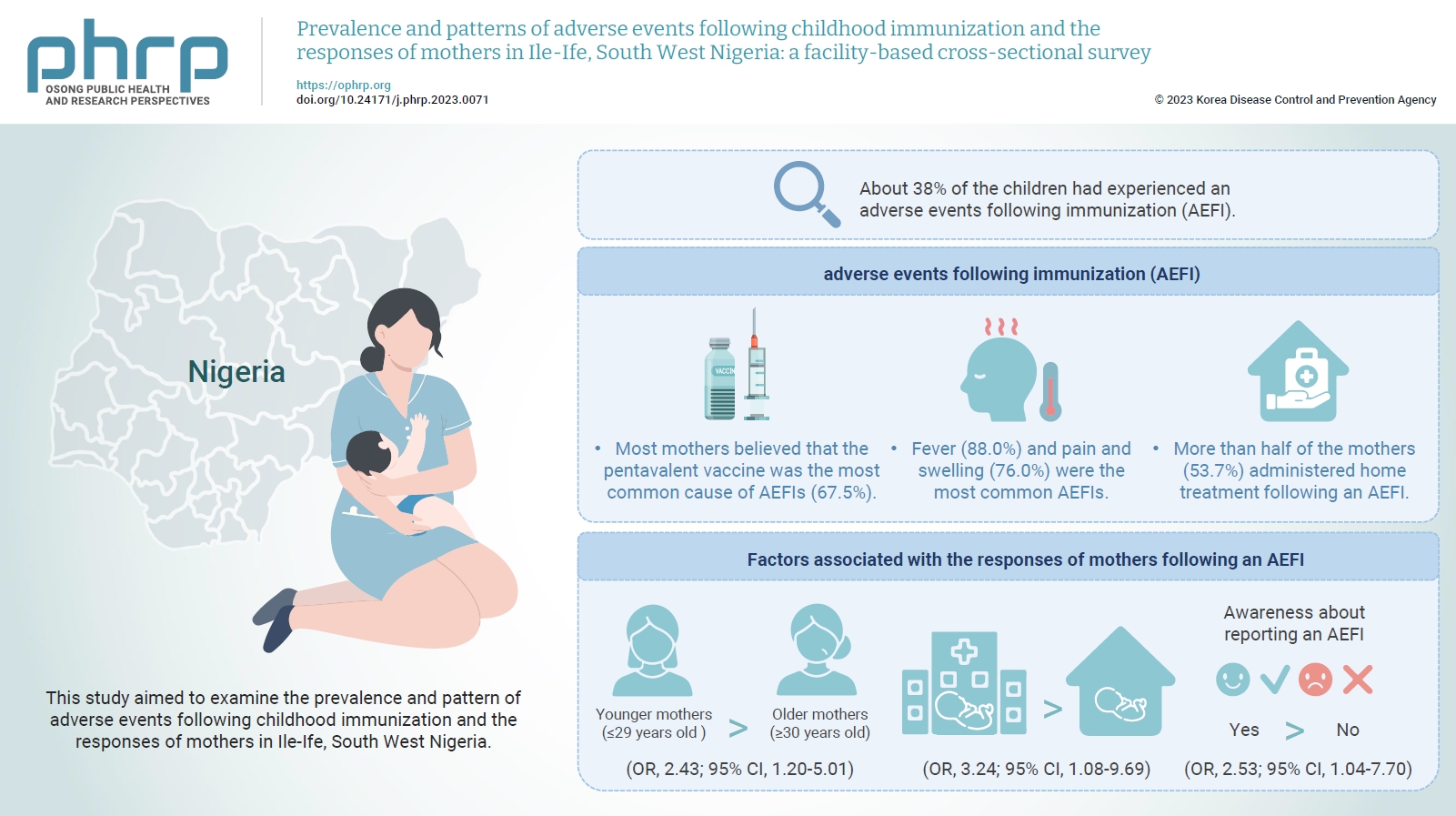
Objectives This study aimed to examine the prevalence and pattern of adverse events following childhood immunization and the responses of mothers in Ile-Ife, South West Nigeria.
Methods This descriptive cross-sectional study was conducted among 422 mothers of children aged 0 to 24 months attending any of the 3 leading immunization clinics in Ile-Ife, Nigeria. The respondents were selected using the multi-stage sampling technique. Data were collected using a pretested structured interviewer-administered questionnaire and analyzed using IBM SPSS ver. 26.0. The chi-square test was used to test associations, while binary logistic regression was used to determine the predictors of mothers’ responses to adverse events following immunization (AEFIs). A p-value of <0.05 was considered statistically significant.
Results The mean age of the respondents was 29.99±5.74 years. About 38% of the children had experienced an AEFI. Most mothers believed that the pentavalent vaccine was the most common cause of AEFIs (67.5%). Fever (88.0%) and pain and swelling (76.0%) were the most common AEFIs. More than half of the mothers (53.7%) administered home treatment following an AEFI. Younger mothers (odds ratio [OR], 2.43; 95% confidence interval [CI], 1.20–5.01), mothers who delivered their children at a healthcare facility (OR, 3.24; 95% CI, 1.08–9.69), and mothers who were knowledgeable about reporting AEFIs (OR, 2.53; 95% CI, 1.04–7.70) were most likely to respond appropriately to AEFIs.
Conclusion The proportion of mothers who responded poorly to AEFIs experienced by their children was significant. Therefore, strategies should be implemented to improve mothers’ knowledge about AEFIs to improve their responses.
Citations
Citations to this article as recorded by
A comprehensive evaluation of the AEFI surveillance system in Ethiopia: An insight from a national study Admas Abera, Behailu Hawulte, Tesfaye Gobena, Lemma Demissie Regassa, Saba Hailu, Ahmed Mohammed, Berhanu Fikadie Endehabtu, Mulumebet Abera Wordofa, Keneni Gutema Negeri, Girma Taye, Michael Tarekegn, Binyam Tilahun, Mesoud Mohammed, Naod Wondirad, Kibro Journal of Global Health Economics and Policy.2026;[Epub] CrossRef
Análisis epidemiológico de eventos adversos graves posteriores a la vacunación en Colombia, 2019-2023 Cristhian Camilo Martinez Torres, Diana Marcela Russy Roa Salud Javeriana.2026;[Epub] CrossRef
Perception of healthcare administrators on the impediments of optimizing adverse events following immunization e-Reporting in Nigeria Grace Fubara Erekosima, Saheed Dipo Isiaka, Folake Oni, Ahmed Rufai Garba, Oluchi Bassey, Stephen Olabode Asaolu, Olugbemisola Wuraola Samuel, Genevieve Ozioko, Oluwafisayo Azeez Ayodeji, Euphemia Chigekwu Agomuo, Irene Odira Okoye, Sidney Sampson, Precio PLOS One.2025; 20(8): e0331093. CrossRef
Advancing Immunization in Africa: Overcoming Challenges to Achieve the 2030 Global Immunization Targets Olalekan Okesanya, Gbolahan Olatunji, Noah Olaleke, Mba Mercy, Ayodele Ilesanmi, Hassan Kayode, Emery Manirambona, Mohamed Ahmed, Bonaventure Ukoaka, Don Lucero-Prisno III Adolescent Health, Medicine and Therapeutics.2024; Volume 15: 83. CrossRef
Objectives Severe acute respiratory syndrome coronavirus 2 (SARS-CoV-2) is the causative agent of coronavirus disease 2019 (COVID-19). The COVID-19 incidence and mortality rates are low in Nigeria compared to global trends. This research mapped the evolution of SARS-CoV-2 circulating in Nigeria and globally to determine whether the Nigerian isolates are genetically distinct from strains circulating in regions of the world with a high disease burden. Methods: Bayesian phylogenetics using BEAST 2.0, genetic similarity analyses, and genomewide mutational analyses were used to characterize the strains of SARS-CoV-2 isolated in Nigeria. Results: SARS-CoV-2 strains isolated in Nigeria showed multiple lineages and possible introductions from Europe and Asia. Phylogenetic clustering and sequence similarity analyses demonstrated that Nigerian isolates were not genetically distinct from strains isolated in other parts of the globe. Mutational analysis demonstrated that the D614G mutation in the spike protein, the P323L mutation in open reading frame 1b (and more specifically in NSP12), and the R203K/ G204R mutation pair in the nucleocapsid protein were most prevalent in the Nigerian isolates. Conclusion: The SARS-CoV-2 strains in Nigeria were neither phylogenetically nor genetically distinct from virus strains circulating in other countries of the world. Thus, differences in SARS-CoV-2 genomes are not a plausible explanation for the attenuated COVID-19 outcomes in Nigeria.
Citations
Citations to this article as recorded by
COVID19 Sero-epidemiology and vaccine uptake in two Southern Nigerian clinics Chinedu A. Ugwu, Ooreofe Odebode, Israel O. Ajayi, Josiah Olubunmi, Bejide Ifeoluwa, Jolly A. Adole, Kazeem Akano, Johnson Okolie, Philomena Eromon, Imonikhe K. Kio, Judith Amadi, Precious F. Adebayo, Iheanyi Mgbeokwere, Akeem O. Lawal, Olayemisi A. Adego PLOS Global Public Health.2026; 6(3): e0006126. CrossRef
A retrospective whole genome sequencing of SARS-CoV-2 isolate from respiratory sample of an individual from Ota – Ogun State, Nigeria Olajumoke Olufunmilayo Joseph, Samuel Olatunde Dahunsi, Anthony Okoh Gene Reports.2024; 37: 102032. CrossRef
Objectives The study aimed to examine health workers’ perceptions of the coronavirus disease 2019 (COVID-19) vaccine in Nigeria and their willingness to receive the vaccine when it becomes available.
Methods This multi-center cross-sectional study used non-probability convenience sampling to enroll 1,470 hospital workers aged 18 and above from 4 specialized hospitals. A structured and validated self-administered questionnaire was used for data collection. Data entry and analysis were conducted using IBM SPSS ver. 22.0.
Results The mean age of respondents was 40±6 years. Only 53.5% of the health workers had positive perceptions of the COVID-19 vaccine, and only slightly more than half (55.5%) were willing to receive vaccination. Predictors of willingness to receive the COVID-19 vaccine included having a positive perception of the vaccine (adjusted odds ratio [AOR], 4.55; 95% confidence interval [CI], 3.50−5.69), perceiving a risk of contracting COVID-19 (AOR, 1.50; 95% CI, 1.25–3.98), having received tertiary education (AOR, 3.50; 95% CI, 1.40−6.86), and being a clinical health worker (AOR, 1.25; 95% CI, 1.01−1.68).
Conclusion Perceptions of the COVID-19 vaccine and willingness to receive the vaccine were sub-optimal among this group. Educational interventions to improve health workers' perceptions and attitudes toward the COVID-19 vaccine are needed.
Citations
Citations to this article as recorded by
Acceptance, hesitancy, and ethical challenges of the COVID-19 vaccine in sub-Saharan Africa: a systematic review and meta-analysis Denise P. Ilboudo, Abibou Simpore, Joseph Sawadogo, Abdoul Karim Ouattara, Alice R. Ouedraogo, Luc Zongo, Albert T. Yonli, Abdou Azaque Zouré, Théodora M. Zohoncon, Florencia W. Djigma, Dorcas Obiri-Yeboah, Charlemagne M. Ouedraogo, Jacques Simpore Vaccine.2026; 69: 127966. CrossRef
Willingness to COVID-19 Vaccination: Empirical Evidence from EU Arslan Austin, Imran Ur Rahman, Naveed Nelson SSRN Electronic Journal.2025;[Epub] CrossRef
Prevalence of COVID-19 Vaccine Hesitancy Among Healthcare Workers in Nigeria: A Systematic Review and Meta-Analysis Taagbara Jolly Abaate, Dabota Yvonne Buowari, Utchay A. Agiri, Tamunodiepiriye Inimgba, Vivian Ifeoma Ogbonna, Chizaram Onyeaghala, Glory Ovunda Worgu, Abiye Somiari, Emmanuella I. Ezebuiro, Ibe Arthur Onuah International Journal of Public Health.2025;[Epub] CrossRef
Sağlık Algısı ve COVID-19 Aşısına Yönelik Tutumların İncelenmesi: Sağlık Çalışanları Örneği Melek Seyhan Demir, Ozcan Aygun Sağlık Akademisi Kastamonu.2025; 10(1): 27. CrossRef
Lessons from COVID-19 vaccine hesitancy among healthcare workers in West Africa and strategies for future pandemic preparedness: a structured literature review Sunday Iphierohor Asasah, Emmanuel Edoghogho Imade, Ben Jesuorsemwen Enagbonma Journal of Public Health.2025; 47(3): 487. CrossRef
How did health service utilization and delivery change during the COVID-19 pandemic? Frontline healthcare workers’ perceptions from the Central African Republic, the Democratic Republic of Congo, and Bangladesh Chiara Altare, Madison Bates, Hannah Crockett, Gbètoho Fortuné Gankpe, Md Abul Hasan, Linda Matadi Basadia, Jogie Abucejo Agbogan, Marie Petry, Abdoul Azizi Almoustapha Abaradine, Brigitte Tonon, Sophie Bruneau, Caroline Antoine, Paul Spiegel BMC Health Services Research.2025;[Epub] CrossRef
COVID-19 vaccine hesitancy and its predictors among healthcare workers in a tertiary hospital in Ghana: A cross-sectional survey Israel Abebrese Sefah, Perry Ofori, Araba Hutton-Nyameaye, Peter Yamoah, Frank Baiden, Varsha Bangalee, Mubarick Nungbaso Asumah PLOS One.2025; 20(9): e0333412. CrossRef
Nigerians’ attitudes and perceptions towards vaccine acceptance during and after the COVID-19 pandemic Jonas Lotanna Ibekwe, Victor Oluwafemi Femi-Lawal, Jolly Akor Thomas, Faith Uzoamaka Okei, Moses Ojomakpenen Ojile, Oluwatobiloba Oladipupo Akingbulugbe Journal of Medicine, Surgery, and Public Health.2024; 2: 100066. CrossRef
Knowledge, attitudes, and factors determining the willingness for COVID-19 vaccination among students in Bangladesh: An online-based cross-sectional study Ashis Talukder, Soheli Sharmin, Chuton Deb Nath, Iqramul Haq, Md. Ismail Hossain, Md. Jakaria Habib, Sabiha Shirin Sara Journal of Public Health.2024; 32(4): 663. CrossRef
Knowledge, attitude, and perception towards COVID-19 vaccinations among the adults in Rwanda: a cross-sectional study Abakundana Nsenga Ariston Gabriel, Xiao-Yang Wang, Laila Jamil, Mulugeta Shegaze Shimbre, Gerard Bikorimana, Lin Zhao, Wu-Chun Cao BMC Public Health.2024;[Epub] CrossRef
Healthcare professionals’ perception and COVID-19 vaccination attitudes in North-Western Ghana: A multi-center analysis Augustine Ngmenemandel Balegha, Suburu Abdul-Aziz, Louis Mornah, Pracheth Raghuveer PLOS ONE.2024; 19(2): e0298810. CrossRef
Behavioral Insights from Vaccine Adoption in Nigeria: Cross-Sectional Survey Findings Sohail Agha, Ifeanyi Nsofor, Drew Bernard, Sarah Francis, Nandan Rao Interactive Journal of Medical Research.2024; 13: e47817. CrossRef
COVID-19 and COVID-19 vaccination experiences and perceptions among health workers during the pandemic in Ebonyi state, Nigeria: An analytical cross-sectional study Ugwu I. Omale, Cordis O. Ikegwuonu, Glory E. Nkwo, Ugochi I. A. Nwali, Olaedo O. Nnachi, Okechukwu O. Ukpabi, Ifeyinwa M. Okeke, Richard L. Ewah, Osarhiemen Iyare, Chidinma I. Amuzie, Onyinyechukwu U. Oka, Victor U. Uduma, Azuka S. Adeke, Ayi Vandi Kwaghe PLOS ONE.2024; 19(5): e0303172. CrossRef
COVID-19 vaccination intention among internally displaced persons in complex humanitarian emergency context, Northeast Nigeria Saheed Gidado, Melton Musa, Ahmed Ibrahim Ba’aba, Lilian Akudo Okeke, Patrick M. Nguku, Isa Ali Hassan, Ibrahim Muhammad Bande, Rabi Usman, Gideon Ugbenyo, Idris Suleman Hadejia, J. Pekka Nuorti, Salla Atkins, Sylvester Maleghemi Maleghemi PLOS ONE.2024; 19(8): e0308139. CrossRef
Predictors of the willingness to accept a free COVID-19 vaccine among households in Nigeria Oghenowede Eyawo, Uchechukwu Chidiebere Ugoji, Shenyi Pan, Patrick Oyibo, Amtull Rehman, Mishel Mahboob, Olapeju Adefunke Esimai Vaccine.2024; 42(23): 126225. CrossRef
COVID-19 hand hygiene practices and its barriers among health care workers in a low-resource setting: a cross-sectional study in Nigeria Ezinne Chika Ekediegwu, Ogochukwu Kelechi Onyeso, Chiamaka Nwanne, Ifeoma Blessing Nwosu, Chiedozie James Alumona, Kelechi Mirabel Onyeso, Echezona Nelson Domnic Ekechukwu, Ebere Yvonne Ihegihu, Ifeoma Adaigwe Amaechi, Okwukweka Emmanuela Aruma, Adesola C Discover Social Science and Health.2024;[Epub] CrossRef
COVID-19 Vaccination Uptake and Associated Factors in Selected Communities in Two Southwestern States in Nigeria Oluseye Ayodele Ajayi, Olabanjo Okunlola Ogunsola, Ajibola Idowu, Oluwaseun Kikelomo Ajayi, Kucheli Wudiri, Rita Ayoka-Ikechukwu, Prosper Okonkwo Advances in Infectious Diseases.2024; 14(01): 260. CrossRef
COVID-19 vaccine hesitancy in Latin America and Africa: a scoping review Bruna Aparecida Gonçalves, Camila Carvalho de Souza Amorim Matos, Jonathan Vicente dos Santos Ferreira, Renata Fortes Itagyba, Vinicius Rocha Moço, Marcia Thereza Couto Cadernos de Saúde Pública.2023;[Epub] CrossRef
Suspecting the Figures: What Church Leaders Think About Government’s Commitment to Combating COVID-19 in Nigeria Uchechukwu M. Agbo, George C. Nche Journal of Asian and African Studies.2023; 58(5): 725. CrossRef
Access to COVID-19 vaccines and testing in Africa: the importance of COVAX - Nigeria as a case study Rafaella Fortini Queiroz Grenfell, Oyetunde Timothy Oyeyemi Pathogens and Global Health.2023; 117(2): 152. CrossRef
COVID-19 vaccine acceptance prediction: The roles of students’ attitude towards science and mathematics and knowledge of COVID-19 pandemic Sunday Ogbu, Ogochukwu Ebere Emenike, Amaka Loretta Nwankwo Electronic Journal of Medical and Educational Tech.2023; 16(2): em2304. CrossRef
Factors associated with COVID-19 vaccine hesitancy among healthcare workers in Cameroon and Nigeria: a web-based cross-sectional study Jerry Brown Aseneh, Valirie Ndip Agbor, Benjamin Momo Kadia, Elvis Anyaehiechukwu Okolie, Chinelo Janefrances Ofomata, Christie Linonge Etombi, Domin Sone M Ekaney, Yvonne Walburga Joko Fru International Health.2023; 15(6): 702. CrossRef
Willingness to COVID-19 vaccination: Empirical evidence from EU Imran Ur Rahman, Arslan Austin, Naveed Nelson Heliyon.2023; 9(5): e15776. CrossRef
Radiographers’ knowledge, attitude and adherence to standard COVID-19 precautions and the policy implications: a national cross-sectional study in Nigeria Charles Ikechukwu Ezema, Okechukwu Felix Erondu, Ogochukwu Kelechi Onyeso, Chiedozie James Alumona, Andrew Wueseter Ijever, Charity Ndidiamaka Amarachukwu, Amaeze Augustine Amaeze Annals of Medicine.2023;[Epub] CrossRef
Declining trends in vaccine confidence across sub-Saharan Africa: A large-scale cross-sectional modeling study A. de Figueiredo, E. Temfack, R. Tajudeen, H. J. Larson Human Vaccines & Immunotherapeutics.2023;[Epub] CrossRef
Knowledge and acceptance of COVID-19 vaccine among healthcare workers in Enugu metropolis, Enugu state, Nigeria Kelechi U. Imediegwu, Jude C. Abor, Chiamaka Q. Onyebuchukwu, Hilary I. Ugwu, Ogechi I. Ugwu, Udo Ego Anyaehie, Oluchi A. Onyia Frontiers in Public Health.2023;[Epub] CrossRef
COVID-19 vaccination acceptance (uptake, hesitancy, intention to receive and timeliness of the intention to receive) and the determinants among health workers in Ebonyi state, Nigeria: an analytical cross-sectional study Ugwu I Omale, Onyinyechukwu U Oka, Chidinma I Amuzie, Victor U Uduma, Azuka S Adeke, Cordis O Ikegwuonu, Glory E Nkwo, Ugochi I A Nwali, Osarhiemen Iyare, Richard L Ewah, Olaedo O Nnachi, Okechukwu O Ukpabi, Ifeyinwa M Okeke BMJ Open.2023; 13(7): e068668. CrossRef
Hesitação vacinal contra a COVID-19 na América Latina e África: uma revisão de escopo Bruna Aparecida Gonçalves, Camila Carvalho de Souza Amorim Matos, Jonathan Vicente dos Santos Ferreira, Renata Fortes Itagyba, Vinicius Rocha Moço, Marcia Thereza Couto Cadernos de Saúde Pública.2023;[Epub] CrossRef
The Social Ecological Model: A Framework for Understanding COVID-19 Vaccine Uptake among Healthcare Workers—A Scoping Review Damian Naidoo, Anna Meyer-Weitz, Kaymarlin Govender Vaccines.2023; 11(9): 1491. CrossRef
Health service factors affecting the COVID-19 vaccination campaign in a Ghanaian metropolis: A qualitative exploratory study Susanna Aba Aba Abraham, John Oti Amoah, Dorcas Frempomaa Agyare, Deogratias Kaheeru Sekimpi, Diana Bosomtwe-Duker, Andrews Adjei Druye, Gifty Osei Berchie, Dorcas Obiri-Yeboah BMJ Open.2023; 13(12): e076184. CrossRef
Health workers’ knowledge, attitudes, and practices on reporting adverse events following immunization (AEFI) in Nigeria: a cross-sectional study Itse Olaoye, Fatiregun Akinola, Kyriaki Myrissa, Eirini Kelaiditi, Aniebet Ekong, Tsemaye Jacdonmi, Famokun Gboyega, Stephen Fagbemi Journal of Health Research.2023; 37(4): 224. CrossRef
Evaluation of Knowledge, Attitude, and Satisfaction after COVID-19 Vaccination among Healthcare Workers at Mashhad University of Medical Sciences Kiavash Hushmandi, Seyed Saeed Tabatabaee, Sam Saghari, Khaled Samiee Roudi, Rasoul Raesi The Open Public Health Journal.2023;[Epub] CrossRef
‘Why Should I Take the COVID-19 Vaccine after Recovering from the Disease?’ A Mixed-methods Study of Correlates of COVID-19 Vaccine Acceptability among Health Workers in Northern Nigeria Zubairu Iliyasu, Muhammad R. Garba, Auwalu U. Gajida, Taiwo G. Amole, Amina A. Umar, Hadiza M. Abdullahi, Aminatu A. Kwaku, Hamisu M. Salihu, Muktar H. Aliyu Pathogens and Global Health.2022; 116(4): 254. CrossRef
A Global Map of COVID-19 Vaccine Acceptance Rates per Country: An Updated Concise Narrative Review Malik Sallam, Mariam Al-Sanafi, Mohammed Sallam Journal of Multidisciplinary Healthcare.2022; Volume 15: 21. CrossRef
Knowledge, Attitudes, and Perception towards COVID-19 Vaccination among the Adult Population: A Cross-Sectional Study in Turkey Meliha Cagla Sonmezer, Taha Koray Sahin, Enes Erul, Furkan Sacit Ceylan, Muhammed Yusuf Hamurcu, Nihal Morova, Ipek Rudvan Al, Serhat Unal Vaccines.2022; 10(2): 278. CrossRef
Factors influencing COVID-19 vaccine uptake among adults in Nigeria Halimat Adedeji-Adenola, Olubusola A. Olugbake, Shakirat A. Adeosun, Ismaeel Yunusa PLOS ONE.2022; 17(2): e0264371. CrossRef
Perception and Prevention Practices Relating to Covid 19 Infection Among Elderly in Ogun State, Nigeria Adenitire G., Agbede C.O. International Journal of Public Health and Pharmac.2022; 2(1): 29. CrossRef
Predicting nursing students' intention to attend face‐to‐face classes on school reopening: A theory of planned behavior application Ryan Michael F. Oducado, Jerome V. Cleofas, Gil P. Soriano Nursing Forum.2022; 57(5): 733. CrossRef
COVID-19 vaccination in Nigeria: A rapid review of vaccine acceptance rate and the associated factors Oluwatosin Olu-Abiodun, Olumide Abiodun, Ngozi Okafor, Nusirat Elelu PLOS ONE.2022; 17(5): e0267691. CrossRef
COVID-19 vaccine acceptance among health care workers in Africa: A systematic review and meta-analysis Martin Ackah, Louise Ameyaw, Mohammed Gazali Salifu, Delali Pearl Afi Asubonteng, Cynthia Osei Yeboah, Eugene Narkotey Annor, Eunice Abena Kwartemaa Ankapong, Hosea Boakye, Muhammad Shahzad Aslam PLOS ONE.2022; 17(5): e0268711. CrossRef
A national survey of COVID-19 vaccine acceptance in Nigeria Ahmad Ibrahim Al-Mustapha, Ochulor Okechukwu, Ademola Olayinka, Oyeniyi Rasheed Muhammed, Muftau Oyewo, Samuel A. Owoicho, Ahmed Tijani Abubakar, Abdulsalam Olabisi, Aliyu Jibril, Simon Ereh, Oluwatosin Enoch Fakayode, Oluwaseun Adeolu Ogundijo, Nusirat E Vaccine.2022; 40(33): 4726. CrossRef
COVID-19 vaccine hesitancy in Africa: a scoping review Betty B. B. Ackah, Michael Woo, Lisa Stallwood, Zahra A. Fazal, Arnold Okpani, Ugochinyere Vivian Ukah, Prince A. Adu Global Health Research and Policy.2022;[Epub] CrossRef
COVID-19 Vaccine Acceptance and Associated Factors Among College Students in Dessie City, Northeastern Ethiopia Gete Berihun, Zebader Walle, Daniel Teshome, Leykun Berhanu, Mohammed Derso Journal of Multidisciplinary Healthcare.2022; Volume 15: 1735. CrossRef
Career Aspiration Fulfillment and COVID-19 Vaccination Intention among Nigerian Youth: An Instrumental Variable Approach Abayomi Samuel Oyekale International Journal of Environmental Research an.2022; 19(16): 9813. CrossRef
COVID-19 Vaccine Attitude and Its Predictors Among People Living With Chronic Health Conditions in Ibadan, Nigeria Lucia Yetunde Ojewale, Rotimi Felix Afolabi, Adesola Ogunniyi International Journal of Public Health.2022;[Epub] CrossRef
Associations between COVID-19 vaccine hesitancy and the experience of violence among women and girls living with and at risk of HIV in Nigeria Morenike Oluwatoyin Folayan, Olujide Arije, Amaka Enemo, Aaron Sunday, Amira Muhammad, Hasiya Yunusa Nyako, Rilwan Mohammed Abdullah, Henry Okiwu, Erik Lamontagne African Journal of AIDS Research.2022; 21(4): 306. CrossRef
Willingness to receive COVID-19 vaccine: A survey among medical radiation workers in Nigeria Grace Ben Inah, Samuel Archibong Efanga, Ekaete Vincent Ukpong, Christiana Ifeyinwa Obiora Calabar Journal of Health Sciences.2022; 6: 80. CrossRef
Acceptance of COVID-19 vaccine among healthcare workers in Africa, systematic review and meta-analysis Zerihun Figa, Tesfaye Temesgen, Addisu Getnet Zemeskel, Moges Ganta, Asrat Alemu, Mesfin Abebe, Zemachu Ashuro Public Health in Practice.2022; 4: 100343. CrossRef
Perception and willingness to accept COVID-19 Vaccines: A cross-sectional survey of the general population of Sokoto State, Nigeria Oche Mansur Oche, Habibullah Adamu, Musa Yahaya, Hudu Garba Illo, Abdulaziz Mohammad Danmadami, Adamu Ijapa, Asmau Mohammad Wali, Hamza Yusuf, Hafsat Muhammad, Abba Aji, Harapan Harapan PLOS ONE.2022; 17(12): e0278332. CrossRef
COVID-19 vaccination acceptance among community members and health workers in Ebonyi state, Nigeria: study protocol for a concurrent-independent mixed method analyses of intention to receive, timeliness of the intention to receive, uptake and hesitancy to Ugwu I Omale, Osarhiemen Iyare, Richard L Ewah, Chidinma I Amuzie, Onyinyechukwu U Oka, Victor U Uduma, Azuka S Adeke, Cordis O Ikegwuonu, Olaedo O Nnachi, Okechukwu O Ukpabi, Ifeyinwa M Okeke, Glory E Nkwo, Ugochi IA Nwali BMJ Open.2022; 12(12): e061732. CrossRef
Objectives
This study aims to create a mathematical model to better understand the spread of Ebola, the mathematical dynamics of the disease, and preventative behaviors. Methods
An epidemiological model is created with a system of nonlinear differential equations, and the model examines the disease transmission dynamics with isolation through stability analysis. All parameters are approximated, and results are also exploited by simulations. Sensitivity analysis is used to discuss the effect of intervention strategies. Results
The system has only one equilibrium point, which is the disease-free state (<i>S</i>,<i>L</i>,<i>I</i>,<i>R</i>,<i>D</i>) = (<i>N</i>,0,0,0,0). If traditional burials of Ebola victims are allowed, the possible end state is never stable. Provided that safe burial practices with no traditional rituals are followed, the endemic-free state is stable if the basic reproductive number, <i>R</i><sub>0</sub>, is less than 1. Model behaviors correspond to empirical facts. The model simulation agrees with the data of the Nigeria outbreak in 2004: 12 recoveries, eight deaths, Ebola free in about 3 months, and an <i>R</i><sub>0</sub> value of about 2.6 initially, which signifies swift spread of the infection. The best way to reduce <i>R</i><sub>0</sub> is achieving the speedy net effect of intervention strategies. One day's delay in full compliance with building rings around the virus with isolation, close observation, and clear education may double the number of infected cases. Conclusion
The model can predict the total number of infected cases, number of deaths, and duration of outbreaks among others. The model can be used to better understand the spread of Ebola, educate about prophylactic behaviors, and develop strategies that alter environment to achieve a disease-free state. A future work is to incorporate vaccination in the model when the vaccines are developed and the effects of vaccines are known better.
Citations
Citations to this article as recorded by
Modeling the role of the environment and African tradition practices in the transmission dynamics of Ebola virus disease Ijuptil Kwajighu Joseph, Georg Bader, Nicholas Kwasi-Do Ohene Opoku Scientific African.2026; 32: e03392. CrossRef
Data-driven fractional-order modeling and optimal control of Ebola virus dynamics with environmental transmission and memory effects Dipti Dolai, Mst Sebi Khatun, Palakshi Paul, Pritha Das, Dibakar Ghosh, Ranjit Kumar Upadhyay The European Physical Journal Special Topics.2026;[Epub] CrossRef
A generalized multi-population model for Ebola virus transmission incorporating environmental reservoir dynamics Muhammad Farhan Hakeem, Shajar Abbas, Imran Siddique, Ilyas Khan, Mohsen Bakouri, Rashid Jan, Rakhmonjon Akhmadjonov, Rasul Turaev Infectious Medicine.2026; 5(3): 100278. CrossRef
Psychological distress among healthcare professionals in Mbarara, following the 2022 Ebola Virus Disease outbreak in Uganda: a mixed methods study Joan Abaatyo, Godfrey Zari Rukundo, Margaret Twine, Dan Lutasingwa, Alain Favina, Novatus Nyemara, Rosemary Ricciardelli BMC Psychiatry.2024;[Epub] CrossRef
Fractional–Order Modeling and Control of COVID-19 with Shedding Effect Isa A. Baba, Usa W. Humphries, Fathalla A. Rihan, J. E. N. Valdés Axioms.2023; 12(4): 321. CrossRef
Projecting the impact of an ebola virus outbreak on endangered mountain gorillas Dawn M. Zimmerman, Emily Hardgrove, Sara Sullivan, Stephanie Mitchell, Eddy Kambale, Julius Nziza, Benard Ssebide, Chantal Shalukoma, Mike Cranfield, Pranav S. Pandit, Sean P. Troth, Taylor Callicrate, Philip Miller, Kirsten Gilardi, Robert C. Lacy Scientific Reports.2023;[Epub] CrossRef
Mathematical Models for Typhoid Disease Transmission: A Systematic Literature Review Sanubari Tansah Tresna, Subiyanto, Sudradjat Supian Mathematics.2022; 10(14): 2506. CrossRef
Fractional COVID-19 Modeling and Analysis on Successive Optimal Control Policies Mohammed Subhi Hadi, Bülent Bilgehan Fractal and Fractional.2022; 6(10): 533. CrossRef
Analysis of a Covid-19 model: Optimal control, stability and simulations Seda İğret Araz Alexandria Engineering Journal.2021; 60(1): 647. CrossRef
Modeling 2018 Ebola virus disease outbreak with Cholesky decomposition Lagès Nadège Mouanguissa, Abdul A. Kamara, Xiangjun Wang Mathematical Methods in the Applied Sciences.2021; 44(7): 5739. CrossRef
Mitigation strategies and compliance in the COVID-19 fight; how much compliance is enough? Swati Mukerjee, Clifton M. Chow, Mingfei Li, Martin Chtolongo Simuunza PLOS ONE.2021; 16(8): e0239352. CrossRef
A Generalized Mechanistic Model for Assessing and Forecasting the Spread of the COVID-19 Pandemic Hamdi Friji, Raby Hamadi, Hakim Ghazzai, Hichem Besbes, Yehia Massoud IEEE Access.2021; 9: 13266. CrossRef
Analytical solution for post-death transmission model of Ebola epidemics Abdul A. Kamara, Xiangjun Wang, Lagès Nadège Mouanguissa Applied Mathematics and Computation.2020; 367: 124776. CrossRef
Modelling the daily risk of Ebola in the presence and absence of a potential vaccine Stéphanie M.C. Abo, Robert Smith Infectious Disease Modelling.2020; 5: 905. CrossRef
Data Fitting and Scenario Analysis of Vaccination in the 2014 Ebola Outbreak in Liberia
Zhifu Xie Osong Public Health and Research Perspectives.2019; 10(3): 187. CrossRef
Effect of sexual transmission on the West Africa Ebola outbreak in 2014: a mathematical modelling study Dongmei Luo, Rongjiong Zheng, Duolao Wang, Xueliang Zhang, Yi Yin, Kai Wang, Weiming Wang Scientific Reports.2019;[Epub] CrossRef
Mathematical modeling of contact tracing as a control strategy of Ebola virus disease T. Berge, A. J. Ouemba Tassé, H. M. Tenkam, J. Lubuma International Journal of Biomathematics.2018; 11(07): 1850093. CrossRef
Challenges of Designing and Implementing High Consequence Infectious Disease Response Joan M. King, Chetan Tiwari, Armin R. Mikler, Martin O’Neill Disaster Medicine and Public Health Preparedness.2018; 12(5): 563. CrossRef
The potential impact of a prophylactic vaccine for Ebola in Sierra Leone Erin N. Bodine, Connor Cook, Mikayla Shorten Mathematical Biosciences and Engineering.2017; 15(2): 337. CrossRef





 First
 Prev


