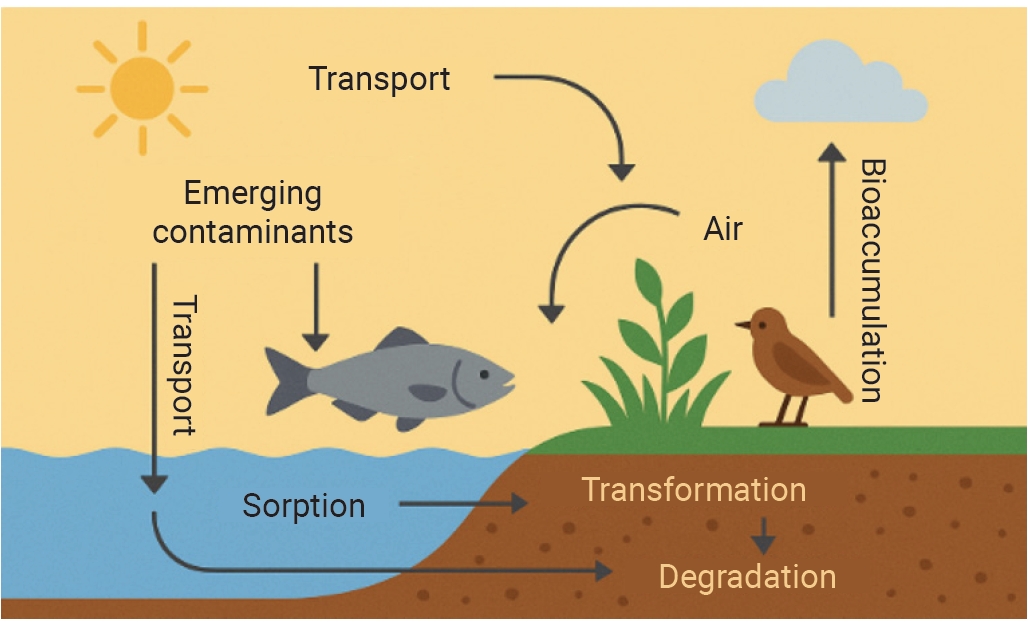
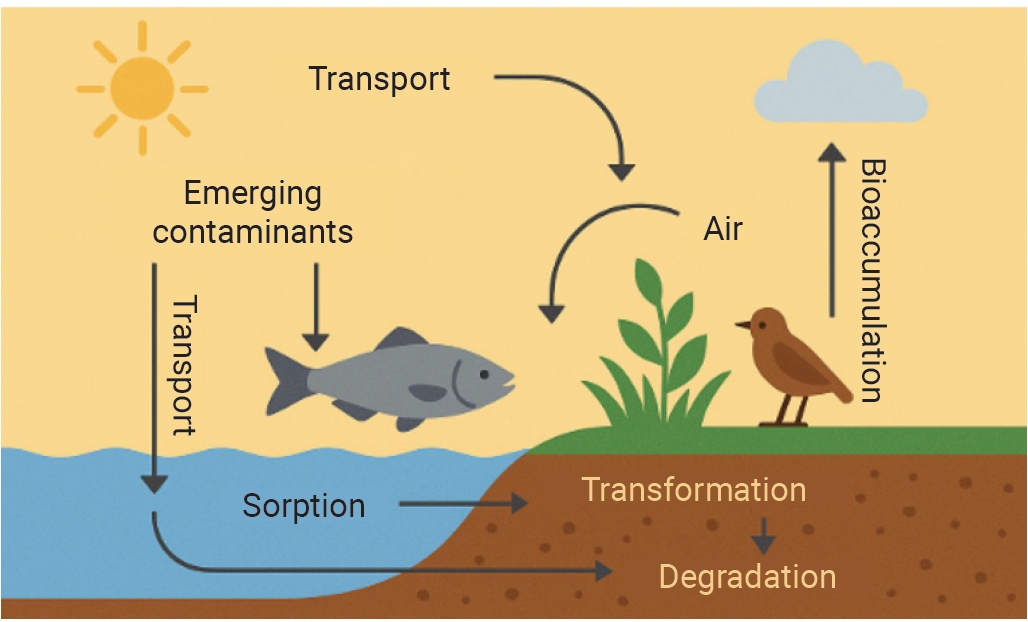
Pollutants of Major Concern
PFAS
PFAS are among the most scrutinized ECs due to their chemical persistence and global distribution. As of 2025, more than 12,000 PFAS have been identified, although only a small fraction are routinely monitored [
17,
32,
33]. PFAS are a class of anthropogenic “forever chemicals” characterized by exceptionally strong carbon–fluorine bonds (~485–540 kJ/mol), which confer thermal and chemical stability and make these compounds highly resistant to conventional hydrolytic and photolytic degradation [
34]. Mechanistically, their environmental behavior is governed by their amphiphilic structure, which consists of a perfluorinated tail and a polar functional head group, such as a carboxylate or sulfonate group [
35,
36]. Along with well-known compounds such as perfluorooctanoic acid and perfluorooctane sulfonate (PFOS), short-chain PFAS (e.g., perfluorobutanesulfonic acid, perfluorohexanoic acid) and fluoropolymer degradation products have gained attention due to their increasing detection in environmental matrices [
37–
39]. Short-chain PFAS were initially promoted as safer alternatives; however, recent toxicological evidence suggests that they are highly mobile and can contaminate groundwater because of reduced sorption to soil [
17,
40,
41]. In surface water and groundwater, PFAS partitioning is influenced by chain length and functional group chemistry. Long-chain PFAS exhibit greater interfacial activity and sorption affinity, driven by fluorinated chain interactions and electrostatic forces; short-chain analogues are more mobile because of their lower organic carbon–water partition coefficients (K
oc), facilitating their persistence and transport in groundwater plumes [
42,
43].
Recent global assessments have reported PFAS concentrations in surface waters exceeding 100 ng/L near industrialized regions, whereas detectable levels in remote areas, including the Arctic, support atmospheric and oceanic transport [
44–
46]. The global detection of PFAS in diverse aquatic matrices reflects complex transport and sequestration mechanisms. In surface waters, case studies have identified wastewater treatment plants as major mechanistic sources. Lenka et al. [
47] and Mustafa et al. [
48] demonstrated that although conventional secondary treatment effectively removes legacy surfactants, it can act as a “precursor processor” for PFAS: polyfluorinated precursors undergo oxidative transformation into highly persistent perfluorinated carboxylic acids, yielding higher effluent concentrations than influent loads.
In groundwater systems, the mechanistic focus shifts to the air–water interface within the vadose zone. Brusseau and Van Glubt [
49] and subsequent North American field studies have shown that PFAS accumulation at this interface substantially slows the downward migration of long-chain compounds such as PFOS. Conversely, short-chain variants (e.g., perfluorobutanoic acid) exhibit breakthrough behavior because of minimal interfacial affinity, producing extensive contamination plumes that can travel kilometers from aqueous film-forming foam training sites. At the sediment–water interface, sorption is governed by organic carbon content, mineral surface properties, and solution chemistry. Multivalent cations, such as Ca²⁺ and Mg²⁺, can mediate cation bridging between anionic PFAS headgroups and negatively charged sediment surfaces, thereby enhancing retention under specific geochemical conditions [
50,
51]. In sediment and biota, Gao et al. [
52] described the mechanistic trapping of PFAS in urban estuaries. Salinity gradients trigger salting-out effects, reducing PFAS solubility and promoting adsorption onto suspended organic matter, which then settles into the benthic zone.
This dual behavior helps explain the distinctive mobility and high bioaccumulation potential of PFAS. In aquatic biota, PFAS deviate from classical hydrophobic partitioning behavior and instead show strong protein affinity, binding preferentially to serum albumin and fatty acid-binding proteins [
53]. This proteinophilic behavior promotes bioaccumulation in blood-rich tissues, including the liver and plasma, driving trophic transfer and biomagnification in aquatic food webs [
54,
55]. PFAS exposure is associated with thyroid dysfunction, immune suppression (including reduced vaccine response), and developmental effects in children [
56–
58]. Studies of apex predators in the Great Lakes suggest that bioaccumulation is driven by hepatic sequestration. Unlike traditional PCBs, which are stored in adipose tissue, PFAS bind to the ligand-binding domain of peroxisome proliferator-activated receptors (PPARs), helping explain their high concentrations in the liver and blood of teleost fish and marine mammals [
52].
Recent studies have reported PFAS in drinking water supplies at concentrations exceeding provisional health advisory limits, raising urgent public health concerns [
59–
61].
The persistence of PFAS stems from the high energy of the carbon–fluorine bond (485–540 kJ/mol), which resists hydrolysis, photolysis, and microbial degradation. This durability has prompted the widespread description of PFAS as “forever chemicals.” Reported toxicological effects include hepatotoxicity, immunotoxicity, developmental toxicity, and potential carcinogenicity [
62–
65]. Mechanistically, PFAS disrupt lipid metabolism, hormone regulation, and immune responses, although precise dose–response relationships remain under investigation [
66,
67].
A consolidated summary of recent PFAS investigations, including concentration ranges, environmental matrices, and analytical techniques, is presented in
Table 1 [
68–
73].
PPCPs
PPCPs are considered pseudo-persistent pollutants. Although many degrade relatively quickly compared with PFAS, their continuous introduction into wastewater creates a steady-state environmental presence. This heterogeneous group includes antibiotics, analgesics, antidepressants, hormones, sunscreens, and fragrances. Physicochemically, PPCPs constitute a structurally diverse class of ECs whose environmental behavior is shaped by their ionization constants (pK
a), octanol–water partition coefficients (logK
ow), and functional group reactivity [
74]. Unlike legacy hydrophobic pollutants, many PPCPs are polar or ionizable; therefore, their speciation in aquatic systems is highly sensitive to ambient pH [
75]. They enter the environment primarily through wastewater effluents, with human and veterinary excretion accounting for most residues. Many pharmaceuticals are only partially metabolized in the human body, and unmetabolized fractions pass into sewage systems [
76–
78]. In surface waters, case studies frequently identify wastewater treatment plants as pseudo-persistent sources. Wilkinson et al. [
79] conducted a global survey of 258 rivers, revealing that the prevalence of carbamazepine and metformin stems from their high resistance to microbial metabolic pathways during activated sludge processes. Mechanistically, the tricyclic structure of carbamazepine limits its bioavailability to degrading enzymes; thus, it serves as a conservative tracer of anthropogenic influence in aquatic systems.
In surface waters, the fate of PPCPs is governed primarily by competition between photodegradation and microbial transformation [
80,
81]. Compounds with chromophores, such as sulfamethoxazole and diclofenac, undergo direct photolysis or indirect transformation through reactions with photochemically produced reactive intermediates, including hydroxyl radicals and singlet oxygen [
82,
83].
Antibiotics such as ciprofloxacin, sulfamethoxazole, and tetracycline are of particular concern because of their association with antimicrobial resistance [
84–
86]. A global ecological analysis showed a positive correlation between national median ciprofloxacin concentrations in rivers and the prevalence of fluoroquinolone resistance in
Escherichia coli, suggesting that even relatively low environmental ciprofloxacin levels may contribute to selection for antimicrobial resistance [
87].
Beyond surface waters, these contaminants can be transported into groundwater, where their movement results primarily from advection–dispersion coupled with attenuated sorption. For cationic pharmaceuticals, such as beta-blockers, sorption to aquifer materials is dominated by cation exchange and electrostatic attraction to negatively charged clay minerals and metal oxides [
88]. Conversely, neutral compounds partition through hydrophobic interactions with natural organic matter (NOM) [
80,
81]. Recent research further indicates that the presence of sulfonamide antibiotics in groundwater is governed by competitive adsorption [
80,
89]. In aquifers with high organic matter content, sulfonamides compete for limited adsorption sites on soil surfaces through interactions such as π–π electron donor–acceptor interactions and hydrogen bonding [
89]. However, as pH increases beyond their pK
a values, typically pK
a2 for the sulfonamide group moiety, sulfonamides such as sulfamethoxazole deprotonate into anionic forms [
90]. This shift leads to electrostatic repulsion from predominantly negatively charged mineral surfaces and NOM [
90,
91]. Consequently, this mechanism enhances vertical mobility through the soil profile and substantially increases the risk of groundwater contamination [
92,
93].
Non-antibiotic pharmaceuticals also disrupt ecological function. Non-steroidal anti-inflammatory drugs, such as diclofenac, persist in aquatic systems and are toxic to fish and vultures, causing renal failure and population declines [
94–
96]. The sediment–water interface serves as a critical mechanistic sink for hydrophobic PPCPs, such as synthetic musks and triclosan, and for compounds capable of forming strong hydrogen bonds or surface complexes [
97]. In the benthic zone, these compounds may undergo anaerobic degradation or become sequestered through aging processes, in which they migrate into the internal micropores of sediment particles, reducing their bioavailability [
97]. However, sediment-bound triclosan can provide a mechanistic reservoir; research indicates that benthic organisms can trigger remobilization of these contaminants through bioturbation, which alters local redox potential and releases sequestered compounds back into the water column [
98].
Sunscreen agents, such as oxybenzone and octocrylene, accumulate in coral reefs and may contribute to bleaching events [
99]. Among personal care products, parabens and synthetic musks are widely detected in surface waters and sediments [
76]. Their lipophilic properties facilitate accumulation in aquatic organisms, with recent biomonitoring studies confirming their presence in fish tissues from urban rivers [
100]. In aquatic biota, PPCP bioaccumulation differs from the lipid-driven partitioning typical of persistent organic pollutants [
75]. Because many pharmaceuticals are designed to interact with specific biological targets, such as enzymes or receptors, their uptake is often mediated by active transport proteins or pH-dependent passive diffusion across gill membranes. For example, investigations in the Puget Sound estuary indicated that accumulation of the antidepressant fluoxetine in fish tissue is driven by pH-dependent membrane partitioning. Since many PPCPs are weak bases, they exist in nonionized form at specific physiological pH levels, facilitating passive diffusion across the gill lipid bilayer. Inside the organism, they become ion-trapped in more acidic lysosomes [
101].
Once internalized, PPCPs undergo phase I metabolism, mediated by cytochrome P450 enzymes, and phase II metabolism, involving conjugation [
74,
102]. Biodegradation can partially remove PPCPs; however, transformation products may be more toxic than the parent compounds. For example, carbamazepine metabolites have shown greater genotoxicity than the original drug [
103,
104]. This finding underscores the need for whole-mixture toxicity assessment rather than narrow assessment of parent PPCPs alone [
78]. The continuous pseudo-persistence of PPCPs in water leads to chronic exposure and non-target effects, including endocrine disruption and antidepressant-related alterations in fish behavior, even at ng/L concentrations [
105].
Among PPCPs, antibiotics are particularly concerning due to their role in fostering antimicrobial resistance. A recent global survey identified rivers in some countries with antibiotic levels exceeding safe ecological thresholds [
21,
106].
Microplastics and Nanoplastics
Microplastics (<5 mm) and nanoplastics (<1 μm) are increasingly recognized as pervasive environmental pollutants, reported in air, water, soil, food, and human blood [
107–
110]. A 2024 study quantified microplastics and nanoplastics in human blood using pyrolysis–gas chromatography–mass spectrometry (Py–GC/MS) and detected plastic polymers in 64 of 68 whole-blood samples, or approximately 94%, indicating widespread internal exposure [
111]. In a related 2022 investigation, microplastics were identified in approximately 77% of human blood samples collected from 22 volunteers, further supporting the ubiquity of plastic particle pollution in human biological systems [
112]. Another study detected nanoplastics in the human placenta, raising concerns about potential developmental risks [
113]. Major sources include degradation of larger plastic debris, synthetic textiles, tire abrasion, and personal care products containing microbeads [
114,
115]. The detection of microplastics and nanoplastics across global aquatic systems has shifted their conceptualization from physical debris to complex biogeochemical agents. In coastal and high-energy aquatic environments, microplastic occurrence is governed by hydrodynamic sorting, a process driven by turbulent mixing and Stokes drift that influences the vertical positioning of particles regardless of their inherent density [
116]. While the density of the base polymer (e.g., low-density polyethylene vs. polyvinyl chloride) dictates initial buoyancy, the fate of particles is rapidly altered by biofouling [
117]. Colonization of plastic surfaces by microbial communities, known as the plastisphere, increases the effective density of particles, promoting settling into sediments [
118]. Furthermore, the detection of high-density polymers in surface waters is often explained by the formation of an eco-corona. Surface-active substances and extracellular polymeric substances from phytoplankton can modify particle buoyancy through aggregation–settling mechanisms, bypassing traditional density-based flotation models [
117,
118].
Environmental fate is influenced by size, density, and polymer type. Polyethylene and polypropylene dominate aquatic microplastics, whereas polyester fibers are prevalent in terrestrial and atmospheric compartments due to textile washing [
119,
120]. Weathering processes, including photodegradation and mechanical abrasion, accelerate fragmentation and generate nanoplastics that evade filtration barriers in wastewater treatment plants [
121,
122]. In the benthic zone, microplastics and nanoplastics undergo further fragmentation through mechanical abrasion and ultraviolet-induced photo-oxidation [
123]. Photo-oxidation involves the formation of surface carbonyl groups through free radical chain reactions, increasing particle hydrophilicity and sorption capacity [
118,
123]. In sedimentary environments, sediment-bound microplastics act as long-term sinks due to their persistence and gradual accumulation within benthic systems. Deep-sea investigations have revealed substantial microplastic accumulation in benthic sediments, with biological and oceanographic transport processes contributing to downward transfer and sequestration in the deep ocean [
124,
125].
In groundwater, nanoplastic transport is governed by colloid filtration theory. Nanoplastics migrate through porous media via advection–dispersion but are attenuated by deposition into secondary energy minima on soil-grain surfaces, a process highly sensitive to ionic strength and pH [
126,
127]. Nanoplastics are also captured at narrow pore throats within the aquifer matrix [
128]. However, heavy rainfall can trigger remobilization: changes in ionic strength and flow velocity perturb the secondary energy minima, releasing trapped nanoplastics and facilitating deep-subsurface transport [
129,
130].
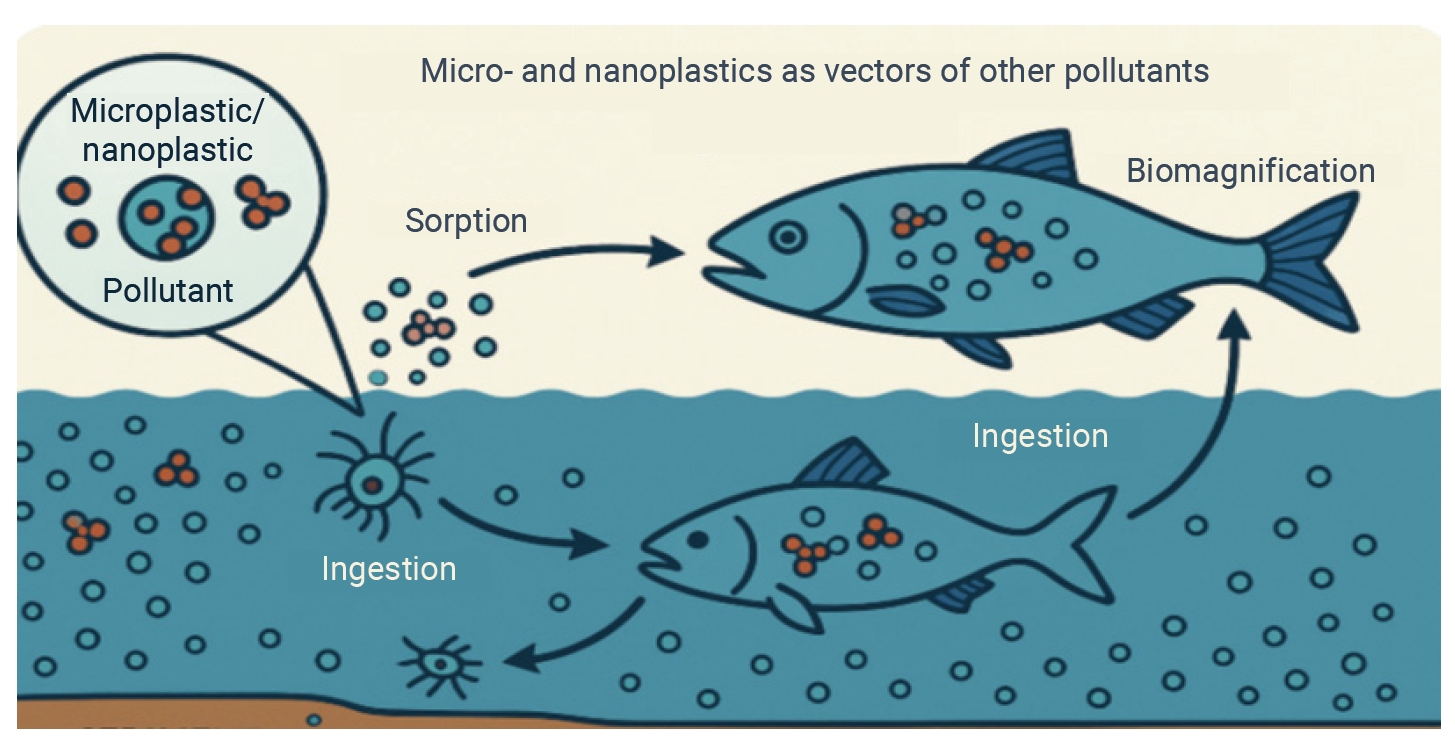
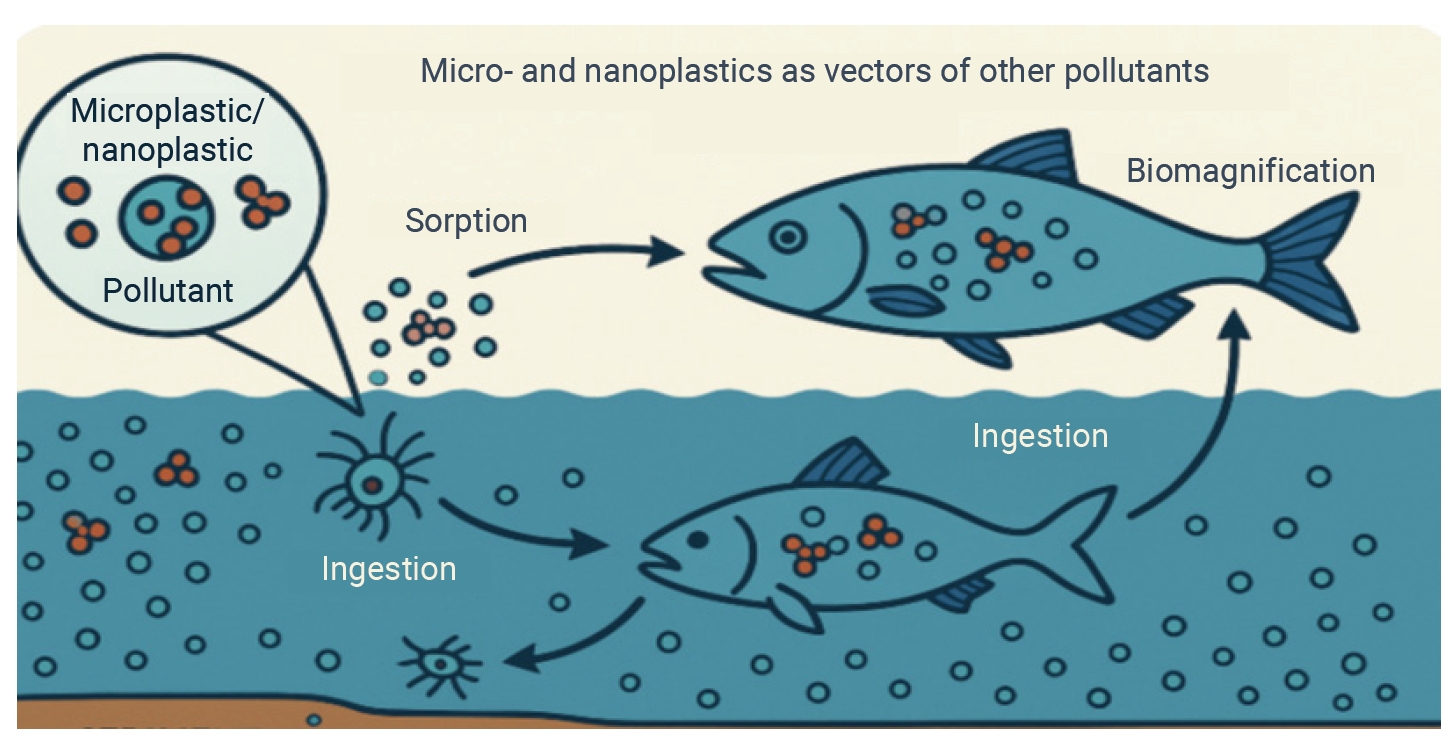
Mechanistic studies have shown that microplastics can act as carriers for heavy metals and hydrophobic organic contaminants, enhancing their mobility and bioavailability. Specifically, the high surface area of fragmented microplastics and nanoplastics facilitates sorption of hitchhiking hydrophobic organic pollutants, such as polycyclic aromatic hydrocarbons and PCBs, through hydrophobic partitioning and π–π interactions [
131]. This process can enhance the bioavailability and toxicity of co-contaminants through a Trojan-horse effect [
127]. Microplastics and nanoplastics can also alter gut microbiota composition in aquatic organisms, impairing nutrient absorption and immunity [
132,
133]. In aquatic biota, nanoplastics can be taken up through endocytosis or passive diffusion across gill and intestinal membranes due to their nanoscale dimensions [
131]. Once internalized, nanoplastics interact with cellular proteins to form a protein corona, which dictates their intracellular trafficking and potential translocation to the circulatory system and vital organs [
131,
134]. Owing to their extremely small size, nanoplastics can cross biological barriers, facilitating systemic distribution and toxicological effects. Experimental studies have demonstrated that nanoplastics can translocate across epithelial tissues and accumulate in organs, including the brain, where they may induce neurobehavioral responses and oxidative stress [
135–
137]. Notably, trophic transfer from zooplankton to fish and higher predators has been documented, raising concerns about bioaccumulation [
138,
139].
The effects of microplastics and nanoplastics extend beyond physical accumulation. They can sorb hydrophobic organic pollutants and heavy metals, acting as vectors for co-contaminants. Their small size also enables cellular uptake, where they may induce oxidative stress, inflammation, and cytotoxicity. Trophic transfer has been demonstrated in aquatic food webs, highlighting concerns about bioaccumulation and biomagnification [
140,
141].
Figure 3 depicts the mechanisms by which microplastics and nanoplastics sorb pollutants, are ingested, and transfer contaminants across trophic levels.
EDCs
EDCs mimic or interfere with endogenous hormones and disrupt normal endocrine signaling. BPA, bisphenol S, and phthalates remain among the most studied compounds, whereas newer substitutes such as bisphenol AF are increasingly detected in environmental matrices [
142,
143]. Evidence suggests that BPA substitutes may not be safer than BPA, as in vitro studies have reported estrogenic activities comparable to or greater than those of BPA [
144,
145]. EDCs such as bisphenols, phthalates, and parabens interfere with hormonal signaling pathways. Their ubiquity in consumer products, ranging from plastics to cosmetics, contributes to widespread environmental release. Mechanistically, these chemicals mimic or antagonize natural hormones by binding to receptors, such as estrogen, androgen, or thyroid hormone receptors, thereby disrupting developmental and reproductive processes [
146–
148].
EDCs, including natural estrogens, synthetic hormones such as 17α-ethinylestradiol (EE2), and industrial phenols such as BPA and nonylphenol, exhibit complex environmental behavior governed by physicochemical properties, particularly lipophilicity (logK
ow), ionization state, and hydrogen-bonding capacity. In surface waters, these chemicals undergo photochemical and microbial transformation. Studies have shown that chromophoric dissolved organic matter can generate reactive oxygen species (ROS), including singlet oxygen and hydroxyl radicals, which facilitate indirect photochemical degradation of estrogenic compounds such as EE2 [
149,
150]. In groundwater and soil, EDC transport is controlled by hydrophobic partitioning, adsorption to organic matter, and interactions with mineral surface hydroxyl groups. Mobility is strongly pH-dependent because deprotonation at pH values above the pK
a increases aqueous solubility and reduces sorption to negatively charged soil matrices [
151]. In sediments, alkylphenolic EDCs may accumulate within organic-rich fractions, forming persistent contaminant reservoirs, although environmental changes can promote remobilization into overlying waters.
The occurrence of EDCs in aquatic systems reflects a progression from anthropogenic discharge to receptor-mediated biological interference. Wastewater treatment plant effluents remain major sources of estrogenic compounds, such as EE2, in rivers and estuaries, where chronic exposure has been associated with feminization and reproductive disruption in fish populations [
152,
153]. The environmental persistence of EE2 is partly attributable to its structural stability, particularly ethinyl substitution at the C17 position, which reduces biodegradation efficiency and contributes to pseudo-persistence in aquatic environments [
154]. In groundwater and subsurface systems, the transport and persistence of EDCs such as BPA are strongly influenced by redox conditions and microbial degradation pathways. BPA degradation is substantially reduced under anaerobic conditions, increasing contaminant persistence and mobility in oxygen-limited aquifers [
155,
156]. In estuarine and sedimentary systems, increasing salinity may enhance sediment–water partitioning of hydrophobic EDCs through salting-out effects, thereby promoting accumulation within organic-rich benthic sediments. Consequently, sediments can function as long-term contaminant reservoirs with potential for later remobilization. In aquatic organisms, EDC toxicity is mediated primarily through estrogen receptor-dependent pathways. Because compounds such as EE2 structurally resemble endogenous estrogens, they activate the hypothalamic–pituitary–gonadal axis and induce hepatic vitellogenin synthesis in male fish, even at ng/L concentrations, producing reproductive and population-level effects [
152,
153]. Importantly, EDCs can trigger physiological responses at ultra-trace concentrations because endocrine regulatory pathways are highly sensitive to hormonal perturbation [
157,
158].
Exposure to EDCs is linked to reproductive toxicity, developmental delays, obesity, diabetes, and certain cancers [
159,
160]. Recent monitoring studies have reported persistent endocrine disruption and intersex conditions in wild fish exposed to treated wastewater effluents containing estrogenic and anti-androgenic compounds [
161]. Amphibian metamorphosis has also been disrupted by thyroid-active contaminants, such as alkylphenols, phthalates, and parabens [
162].
Recent studies have highlighted the epigenetic effects of EDCs, including heritable DNA methylation changes induced by low-dose exposure that persist across generations [
163,
164]. These findings challenge traditional risk assessment models based on acute toxicity thresholds and emphasize the need for long-term and transgenerational studies [
165,
166].
Recent epidemiological studies have associated EDC exposure with reduced fertility, developmental anomalies, obesity, and metabolic disorders [
167,
168]. Field studies have also continued to report endocrine disruption in aquatic and terrestrial wildlife, along with reproductive impairments associated with pesticide- and EDC-related hormonal disruption in birds [
161,
169].
ENMs
ENMs are increasingly recognized both as emerging pollutants and as potential technological solutions. Nanomaterials, including silver nanoparticles (AgNPs), titanium dioxide nanoparticles (TiO₂-NPs), carbon nanotubes (CNTs), graphene-based materials, and zinc oxide nanoparticles, are increasingly incorporated into consumer products, electronics, and industrial applications. They may be released during manufacturing, product use, and end-of-life disposal [
170,
171]. AgNPs are widely used in antimicrobial coatings, textiles, and medical devices, while TiO₂-NPs are present in sunscreens and food packaging. Their increasing use has raised concerns about environmental accumulation [
172,
173].
ENMs, including metallic (Ag, zinc oxide), carbon-based (CNTs, graphene), and metal oxide (TiO₂) nanoparticles, exhibit environmental behavior distinct from that of bulk materials because of their high surface area, elevated surface energy, and nanoscale physicochemical properties. In aquatic systems, their fate is governed by colloidal stability, surface functionalization, aggregation behavior, and chemical transformation. In surface waters, ENMs commonly undergo heteroaggregation with suspended minerals and NOM, processes that can be described using Derjaguin-Landau-Verwey-Overbeek interaction theory. Adsorption of humic substances may promote steric stabilization, thereby increasing ENM persistence in the water column [
174,
175]. Metallic ENMs, such as AgNPs, also undergo oxidative dissolution, releasing silver ions that substantially contribute to toxicity [
176]. In groundwater systems, ENM transport is strongly influenced by deposition, pore-throat straining, and attachment efficiency in porous media, with elevated ionic strength compressing the electrical double layer and promoting retention [
175]. In sediments and anaerobic environments, metallic ENMs may undergo sulfidation reactions that form metal-sulfide phases such as silver sulfide, reducing dissolution and bioavailability [
177]. In aquatic biota, ENMs can enter cells through endocytosis and trophic-transfer pathways, then induce oxidative stress through ROS generation and mitochondrial dysfunction [
178,
179].
The environmental behavior of ENMs is influenced by size, surface charge, shape, and coating. Aggregation, dissolution, and interactions with NOM govern their mobility and bioavailability. Their nanoscale size enables penetration of biological membranes, where they may induce oxidative stress, mitochondrial dysfunction, and genotoxicity [
180–
182]. Dissolution is particularly important for metal-based nanoparticles, with AgNPs releasing toxic silver ions [
182].
Toxicity mechanisms include oxidative stress, genotoxicity, and immune disruption. A 2024 study demonstrated that chronic exposure to TiO₂-NPs altered zebrafish brain development and behavior [
182,
183]. In soils, ENMs interact with microbial communities, potentially altering nutrient cycling [
184–
186]. Key findings regarding the occurrence, environmental impacts, and detection techniques for the major classes of ENMs are summarized in
Table 2.
Analytical Limitations and Standardization Challenges of ECs
Detection and quantification of ECs, including PFAS, PPCPs, microplastics, and nanoplastics, present substantial technical and regulatory bottlenecks [
2,
12,
187].
Analytical Vulnerabilities and Detection Limits
A major analytical limitation is the extreme complexity and diversity of environmental matrices [
2]. PPCPs and antibiotics occur in aquatic environments at ultra-trace concentrations, requiring highly sensitive methods such as liquid chromatography–tandem mass spectrometry [
107,
108]. However, these methods are frequently affected by matrix effects, which cause signal suppression or enhancement during ionization and compromise data accuracy [
107].
For PFAS, analytical challenges are exacerbated by the large number of compounds and the continuous transformation of precursors [
32,
188]. Traditional target screening often underestimates the total PFAS burden because it does not capture novel alternatives and short-chain variants [
38,
46]. Quantifying ultra-small particles, such as nanoplastics, also exceeds the capacity of many current technologies. Standard approaches often fail to resolve the structural and chemical changes of highly weathered submicron plastics in complex biological or environmental matrices, necessitating specialized Py–GC/MS workflows [
110–
112].
Standardization Barriers
Standardization remains limited across EC research [
5]. The lack of harmonized, globally accepted sampling and extraction protocols introduces substantial variability across independent monitoring studies [
5,
11]. Environmental risk assessment is further complicated because traditional regulatory frameworks evaluate single substances and often do not consider the cumulative, transgenerational, or synergistic toxicity of real-world chemical mixtures [
15,
78,
105]. Without standardized reference materials and harmonized analytical criteria, establishing enforceable global thresholds for these contaminants remains difficult [
5,
189,
190].
Impacts on Ecosystems and Human Health
The mechanistic processes that govern the environmental behavior of ECs directly shape exposure pathways and toxicological outcomes in ecosystems and humans. Ecotoxicological effects of ECs occur at multiple levels of biological organization, ranging from molecular perturbations and altered gene expression to population-level effects and changes in ecosystem function [
212].
Mechanistic Pathways of Toxicity
Endocrine disruption and receptor-mediated signaling
Many ECs exert effects primarily through endocrine or immune modulation rather than overt cytotoxicity. Consequently, traditional apical endpoints, such as mortality or gross pathology, are often insensitive to these effects. Subclinical biomarkers, altered developmental trajectories, and epigenetic modifications have therefore become critical endpoints for assessing exposure-related risks and mechanistic perturbations [
213,
214].
Mechanistically, EDCs and certain PFAS homologues alter homeostatic control by binding to specific nuclear receptors. Long-term epidemiological research has associated certain PFAS with developmental delays, dysregulated lipid metabolism, and increased cancer risk through endocrine disruption and epigenetic modulation [
215,
216]. Unlike traditional PCBs, which are stored in adipose tissue, PFAS bind to the ligand-binding domain of PPARs, altering lipid transport and downstream metabolic signaling [
217].
Oxidative Stress and Mitochondrial Dysfunction
In vitro research indicates that cellular and subcellular exposure to nanoplastics and ENMs can induce oxidative stress, inflammatory signaling, and, in some models, genotoxic effects [
218]. Metal-based nanoparticles produce toxicity through both particle-mediated and ion-mediated mechanisms. Particulate forms interact directly with lipid bilayers and organelles, inducing oxidative stress and mitochondrial dysfunction. For instance, AgNPs induce oxidative stress and mitochondrial injury and mediate autophagy through the Akt/AMPK/mTOR signaling pathway [
219]. Simultaneously, these metallic ENMs undergo oxidative dissolution, releasing toxic free ions (such as Ag
+) that bind to cellular thiols, inactivate vital respiratory enzymes, and disrupt mitochondrial membrane potential [
220,
221].
Trophic Transfer and Particulate Vectors
Microplastics and nanoplastics exert both physical and chemical effects. Particle ingestion can cause physical blockages, reduced feeding efficiency, and internal abrasions in invertebrates and fish [
222,
223]. Beyond mechanical damage, particulate vectors, including microplastics, nanoplastics, and ENMs, can fundamentally alter exposure profiles [
224]. Plastics act as carriers for other contaminants: hydrophobic organic compounds and metals sorbed to plastic surfaces can desorb under gut-like chemical conditions, increasing bioavailability and internal dose [
225,
226]. The high surface area of fragmented microplastics and nanoplastics facilitates the sorption of hitchhiking hydrophobic pollutants, enhancing the bioavailability and toxicity of these co-contaminants through a Trojan-horse effect. Trophic transfer from zooplankton to fish and higher predators has been documented, raising concerns about bioaccumulation and biomagnification across aquatic food webs [
223,
224].
Comparative Toxicity Insights
Persistence, mobility, and structural stability vary substantially across contaminant classes, shaping their comparative hazard profiles. The presence of numerous PFAS homologues complicates dose–response assessment because potency varies by chain length and functional group [
227]. Total organic fluorine measurements have revealed substantial unidentified fluorinated mass, underscoring uncertainty in exposure assessment and risk characterization [
228].
Whereas legacy hydrophobic pollutants partition predictably into adipose tissue according to hydrophobicity, pharmaceuticals and EDCs can exhibit high environmental mobility and targeted biological activity at ultra-trace concentrations. Moreover, transformation products may retain or exceed the toxicity of their parent compounds [
229]. For example, carbamazepine metabolites show greater genotoxicity than the original drug, and pesticide transformation products can create highly toxic secondary inputs in aquatic matrices [
230]. These findings underscore the need for whole-mixture toxicity assessment rather than assessment focused only on parent compounds [
231].
Recent Ecotoxicological and Epidemiological Findings
Wildlife and ecosystem impairments
Pharmaceutical residues and their transformation products produce a range of sublethal effects in aquatic organisms, including endocrine disruption, altered behavior, impaired reproduction, and immune modulation [
232]. Antidepressants and anxiolytics, which are detectable at ng/L levels in surface waters, can influence fish feeding and predator avoidance behaviors, contributing to erosion of behavioral plasticity and pace-of-life shifts under multigenerational pharmaceutical pollution [
233]. In fish, long-term exposure to widespread pharmaceutical pollution can produce trade-offs among behavioral, life-history, and reproductive traits [
234]. For example, long-term fluoxetine exposure has shown sex-specific effects on inhibitory control in guppies (
Poecilia reticulata) [
235].
Antibiotic residues indirectly threaten human health by driving the selection and enrichment of antimicrobial resistance within environmental microbiomes. For example, subinhibitory gentamicin pollution induces integration of gentamicin resistance genes into class 1 integrons in the environment [
236]. Environmental hotspots with elevated antibiotic concentrations consistently show increased abundances of antibiotic resistance genes, enabling resistance determinants to return to human and animal populations [
237]. These residues also have substantial ecological consequences, including shifts in sediment functional traits and microbial community structure, impaired nutrient cycling, and possible decline or loss of sensitive taxa [
238]. Similarly, soil and sediment exposure to ENMs alters microbial community composition and enzymatic functions essential to nutrient cycling, with potentially larger-scale effects on ecosystem productivity [
239].
Human Health Implications
From a human health perspective, exposure pathways include ingestion of contaminated water and food, inhalation of airborne nanoparticles and microfibers, and dermal contact with consumer products [
240,
241]. The toxicological profile depends on dose, exposure timing (such as prenatal versus adult exposure), mixture composition, and individual susceptibility [
242].
Recent epidemiological and toxicological studies have strengthened evidence linking chemical co-exposures, including PFAS and EDCs, to adverse cardiovascular and neurological outcomes through convergent mechanistic pathways such as oxidative stress and inflammation [
213,
243]. ECs may also influence multigenerational epigenetic transmission, in which low-dose in utero exposure induces heritable DNA methylation changes that persist across generations [
214,
215]. Recent reports of microplastics in human placenta and blood further confirm the ubiquity of plastic particle pollution in human biological systems, correlating with altered coagulation markers and raising concerns about prenatal exposure and developmental programming [
244,
245].
Collectively, the mechanistic evidence indicates that many ECs are persistent or continuously reintroduced into the environment [
212], and their transformation products may retain or exceed the toxicity of the parent compounds [
229]. Additionally, particulate vectors, including microplastics, nanoplastics, and ENMs, can substantially alter exposure profiles, while mixture effects and low-dose endocrine or immune perturbations remain central considerations for realistic risk assessment [
231]. These conclusions underscore the need for monitoring strategies that capture both parent compounds and transformation products, integration of mechanistic biomarkers into epidemiological studies, and comprehensive evaluation protocols, such as wastewater-based epidemiology, to track unintentional human exposure to potentially harmful chemical mixtures.


 , Yemisi Ajoke Olawore2