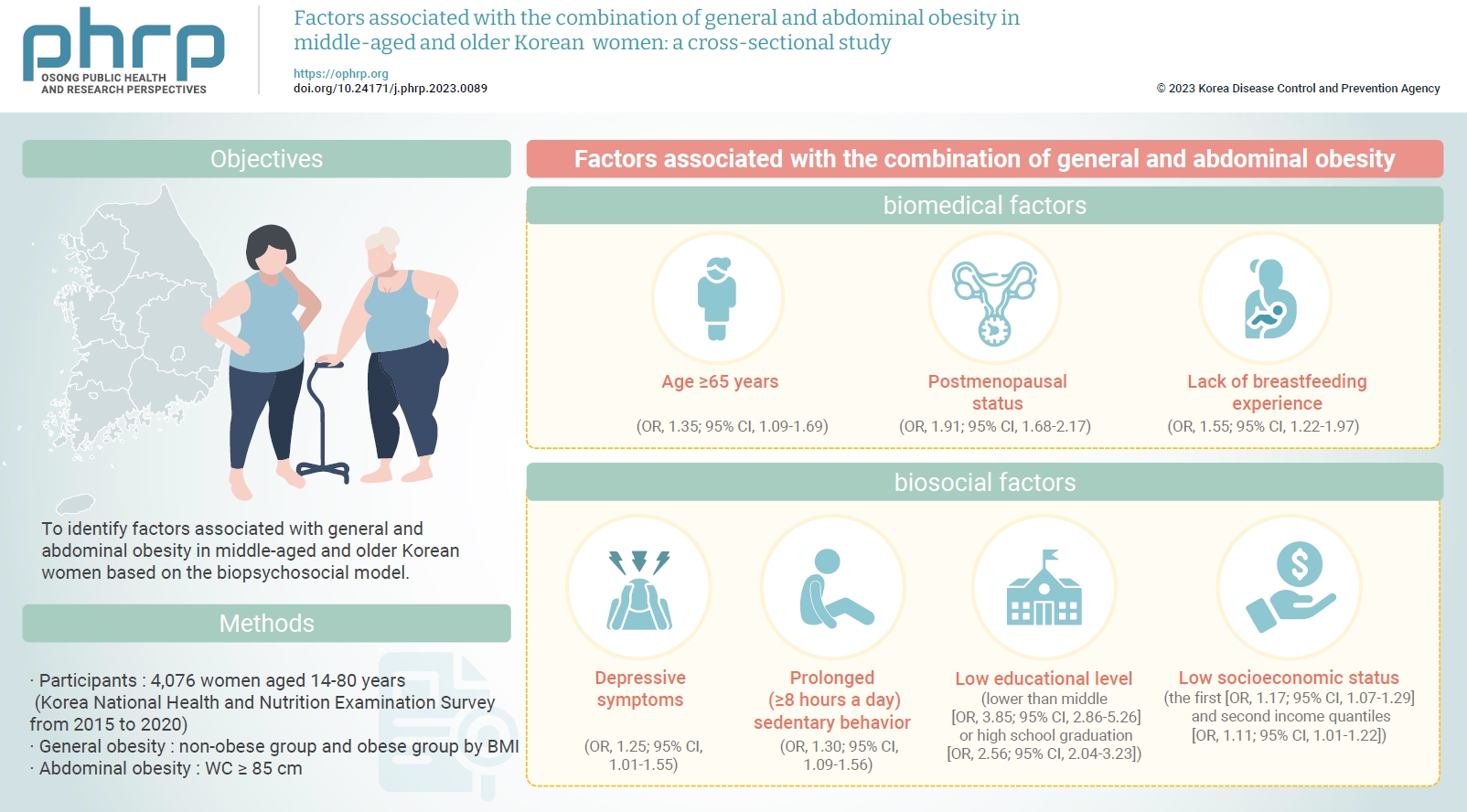
Objectives To identify factors associated with general and abdominal obesity in middle-aged and older Korean women based on the biopsychosocial model. Methods: Data from 4,076 women aged ≥45 years who participated in the Korea National Health and Nutrition Examination Survey from 2015 to 2020 were analyzed. Complex sampling analysis was performed using IBM SPSS ver. 26.0. Results: The combination of general and abdominal obesity was positively associated with age ≥65 years, postmenopausal status, and without breastfeeding experience among biomedical factors; depressive symptoms and prolonged (≥8 hours a day) sedentary behavior among psychosocial factors; and an educational level lower than middle or high school graduation and the first and second income quantiles among biosocial factors. Conclusion: Healthcare providers in communities and public societies should screen for risk factors for the combination of general and abdominal obesity while considering non-modifiable biomedical (e.g., age) and biosocial factors (e.g., educational level). In addition, intervention strategies should be developed by considering modifiable psychosocial factors such as sedentary behavior.
Citations
Citations to this article as recorded by
Relationship between anthropometric risk variables for chronic diseases in users of a primary care center José Ander Asenjo-Alarcón Población y Salud en Mesoamérica.2025;[Epub] CrossRef



 First
 Prev


