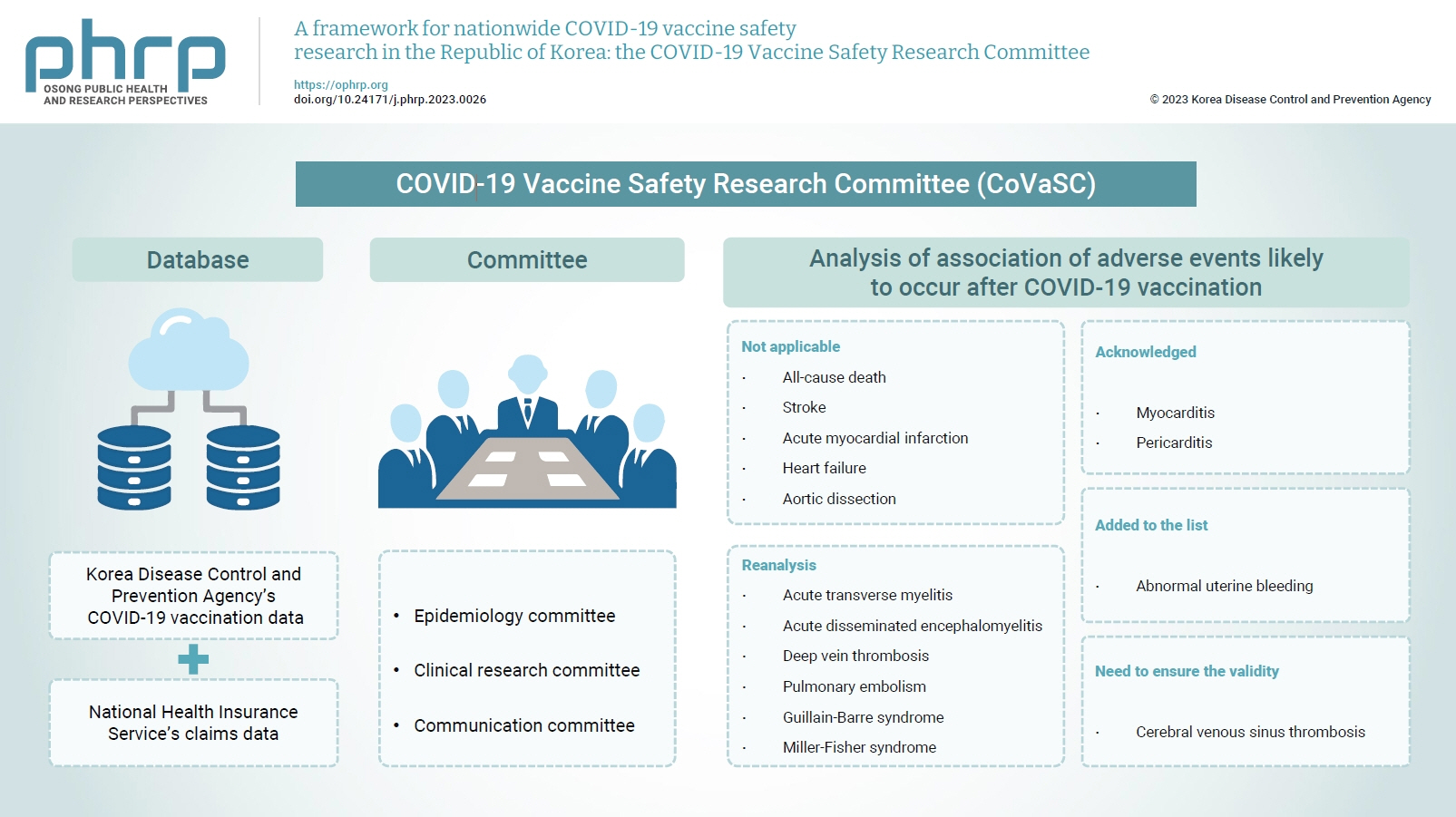
With the introduction of coronavirus disease 2019 (COVID-19) vaccines, the Korea Disease Control and Prevention Agency (KDCA) commissioned the National Academy of Medicine of Korea to gather experts to independently assess post-vaccination adverse events. Accordingly, the COVID-19 Vaccine Safety Research Committee (CoVaSC) was launched in November 2021 to perform safety studies and establish evidence for policy guidance. The CoVaSC established 3 committees for epidemiology, clinical research, and communication. The CoVaSC mainly utilizes pseudonymized data linking KDCA’s COVID-19 vaccination data and the National Health Insurance Service’s claims data. The CoVaSC’s 5-step research process involves defining the target diseases and organizing ad-hoc committees, developing research protocols, performing analyses, assessing causal relationships, and announcing research findings and utilizing them to guide compensation policies. As of 2022, the CoVaSC completed this research process for 15 adverse events. The CoVaSC launched the COVID-19 Vaccine Safety Research Center in September 2022 and has been reorganized into 4 divisions to promote research including international collaborative studies, long-/short-term follow-up studies, and education programs. Through these enhancements, the CoVaSC will continue to swiftly provide scientific evidence for COVID-19 vaccine research and compensation and may serve as a model for preparing for future epidemics of new diseases.
Citations
Citations to this article as recorded by
Risk of anxiety disorders and insomnia following COVID-19 vaccination Haerin Cho, Joon Hyung Jung, Hwoyeon Seo, Won Chul Shin, Jung-Ick Byun, Suvin Park, Na-Young Jeong, Sanghoon Oh, Nam-Kyong Choi Journal of Psychiatric Research.2026; 192: 109. CrossRef
Active Surveillance for COVID-19 Vaccine Safety Using Sequential Analysis in Korea: Population-Based Retrospective Observational Study Na-Young Jeong, Haerin Cho, Heehyun Won, Suvin Park, Joongyub Lee, Hyesook Park, Nam-Kyong Choi JMIR Public Health and Surveillance.2026; 12: e75094. CrossRef
MIS‐C Overlap, Not Prior COVID‐19 Itself, Drives Treatment Escalation in Kawasaki Disease: A Nationwide Cohort Study Min Ji Kim, Jong Seung Kim, Jee Young Hong, Jihye You Pediatrics International.2026;[Epub] CrossRef
Postmenopausal Bleeding Risk after COVID-19 Vaccination: A Population-Based Self-Controlled Case Series Study Na-Young Jeong, HyeMin Park, SiHyun Cho, Nam-Kyong Choi Yonsei Medical Journal.2026; 67(11): 831. CrossRef
Risk of Kawasaki Disease/Multisystem Inflammatory Syndrome Following COVID-19 Vaccination in Korean Children: A Self-Controlled Case Series Study Suyeon Kim, Hwa Yeon Ko, Jeongin Oh, Dongwon Yoon, Ju Hwan Kim, Young June Choe, Ju-Young Shin Journal of Korean Medical Science.2025;[Epub] CrossRef
The association between acute transverse myelitis and COVID‐19 vaccination in Korea: Self‐controlled case series study Eunsun Lim, Yoo Hwan Kim, Na‐Young Jeong, Su‐Hyun Kim, Heehyun Won, Jong‐Seok Bae, Nam‐Kyong Choi European Journal of Neurology.2025;[Epub] CrossRef
Coronavirus disease vaccine linked menstrual changes: mobile application study Sung Eun Kim, Joseph J. Noh, Yoo-Young Lee Obstetrics & Gynecology Science.2025; 68(2): 155. CrossRef
Multilevel analysis of individual, household, and community factors influencing COVID-19 vaccination intention: evidence from the 2021 Korea Community Health Survey Ji-seon Seong, Jong-Yeon Kim Osong Public Health and Research Perspectives.2025; 16(2): 169. CrossRef
Association between COVID-19 vaccination and first healthcare utilization for chronic obstructive pulmonary disease: A nationwide population-based cohort study Sang Hyuk Kim, Seung-Hun You, Ju Won Lee, Eunji Kim, Youlim Kim, Hyun Lee, Sun-Young Jung, Ji-Yong Moon Vaccine.2025; 61: 127367. CrossRef
Evaluating Vaccine Safety Through the Vaccine Safety Datalink: A Comprehensive Review of Research Contributions Eunsun Lim, Na-Young Jeong, Heehyun Won, Nam-Kyong Choi Journal of Health Informatics and Statistics.2025; 50(2): 113. CrossRef
COVID-19 vaccination and the risk of abnormal uterine bleeding: A nationwide self-controlled case series study Na-Young Jeong, SiHyun Cho, Eunsun Lim, Jung Ryeol Lee, Jae Yen Song, Joong Shin Park, Nam-Kyong Choi Vaccine.2025; 63: 127619. CrossRef
Risk of new-onset seizures following immunization against COVID-19: a self-controlled case-series study Hwa Yeon Ko, Dongwon Yoon, Ju Hwan Kim, Han Eol Jeong, Seung Bong Hong, Won-Chul Shin, Ju-Young Shin Epidemiology and Health.2025; 47: e2025024. CrossRef
Risk of encephalitis and meningitis after COVID-19 vaccination in South Korea: a self-controlled case series analysis Ju Hwan Kim, Dongwon Yoon, Hwa Yeon Ko, Kyungyeon Jung, Jun-Sang Sunwoo, Won Chul Shin, Jung-Ick Byun, Ju-Young Shin BMC Medicine.2024;[Epub] CrossRef
The COVID-19 Vaccine Safety Research Center: a cornerstone for strengthening safety evidence for COVID-19 vaccination in the Republic of Korea Na-Young Jeong, Hyesook Park, Sanghoon Oh, Seung Eun Jung, Dong-Hyun Kim, Hyoung-Shik Shin, Hee Chul Han, Jong-Koo Lee, Jun Hee Woo, Jaehun Jung, Joongyub Lee, Ju-Young Shin, Sun-Young Jung, Byung-Joo Park, Nam-Kyong Choi Osong Public Health and Research Perspectives.2024; 15(2): 97. CrossRef
A Causality Assessment Framework for COVID-19 Vaccines and Adverse Events at the COVID-19 Vaccine Safety Research Center Seyoung Kim, Jeong Ah Kim, Hyesook Park, Sohee Park, Sanghoon Oh, Seung Eun Jung, Hyoung-Shik Shin, Jong Koo Lee, Hee Chul Han, Jun Hee Woo, Byung-Joo Park, Nam-Kyong Choi, Dong-Hyun Kim Journal of Korean Medical Science.2024;[Epub] CrossRef
To become a more stronger and safer country Jong-Koo Lee Osong Public Health and Research Perspectives.2023; 14(2): 67. CrossRef
Risk of lymphadenopathy from SARS-CoV-2 vaccination in Korea: a self-controlled case series analysis Mi-Sook Kim, Bongyoung Kim, Jeong Pil Choi, Nam-Kyong Choi, Jung Yeon Heo, Jun Yong Choi, Joongyub Lee, Sang Il Kim Epidemiology and Health.2023; 45: e2023090. CrossRef
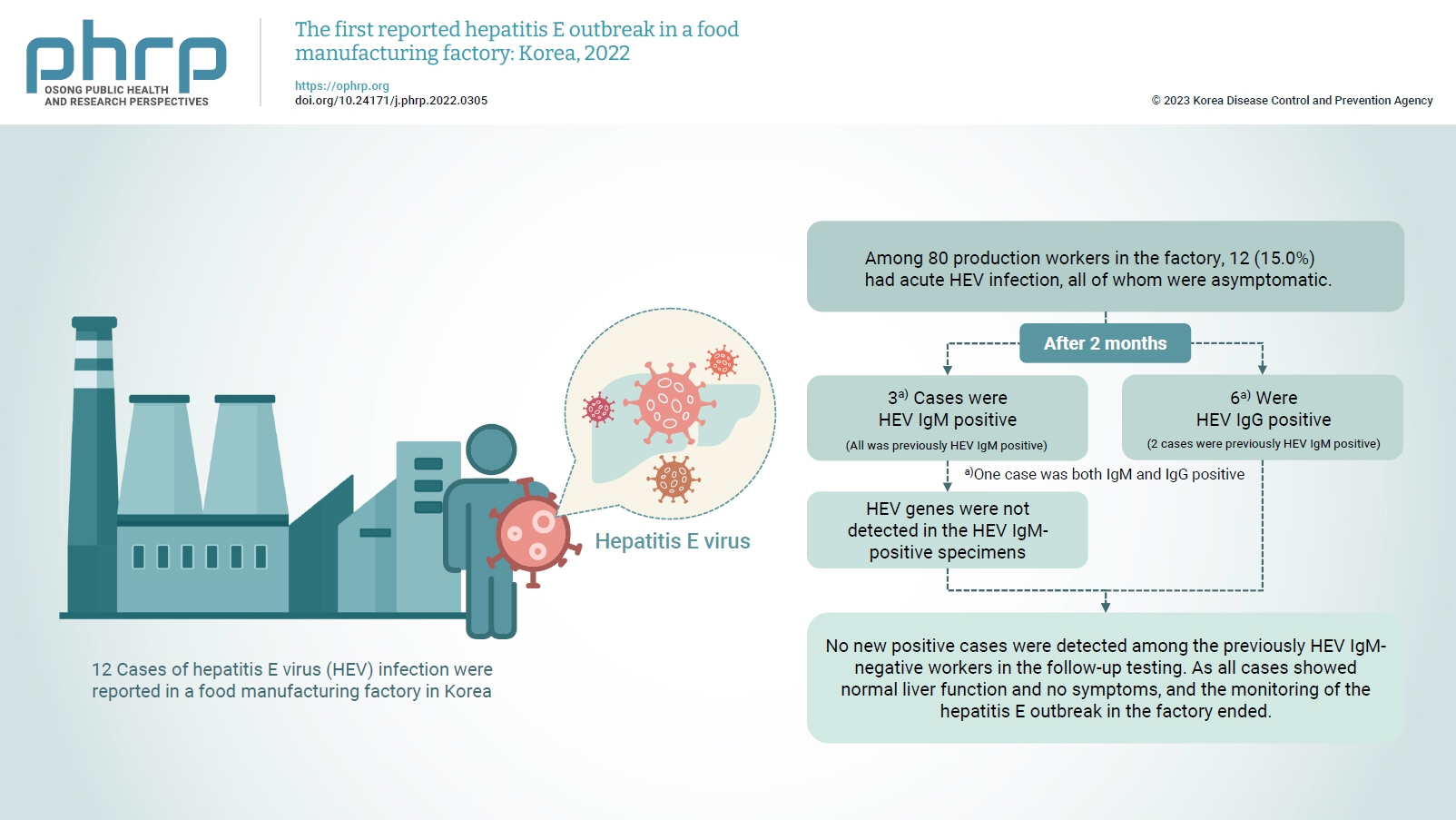
Objectives On February 16, 2022, 12 cases of hepatitis E virus (HEV) infection were reported in a food manufacturing factory in Korea. The aim of this study was to identify additional cases and to determine the source of this HEV outbreak. Methods: This study was an in-depth investigation of 12 HEV immunoglobulin M (IgM)-positive cases and their demographic, clinical, and epidemiological characteristics. On-site specimens were collected from the environment and from humans, and a follow-up investigation was conducted 2 to 3 months after the outbreak. Results: Among 80 production workers in the factory, 12 (15.0%) had acute HEV infection, all of whom were asymptomatic. The follow-up investigation showed that 3 cases were HEV IgMpositive, while 6 were HEV IgG-positive. HEV genes were not detected in the HEV IgM-positive specimens. HEV genes were not detected in the food products or environmental specimens collected on-site. HEV was presumed to be the causative pathogen. However, it could not be confirmed that the source of infection was common consumption inside the factory. Conclusion: This was the first domestic case of an HEV infection outbreak in a food manufacturing factory in Korea. Our results provide information for the future control of outbreaks and for the preparation of measures to prevent domestic outbreaks of HEV infection.
Citations
Citations to this article as recorded by
Current global estimates, risk factors, and knowledge gaps for Hepatitis E virus (HEV): A scoping review Md Koushik Ahmed, Hanna Maroofi, Madeleine Blunt, Alain Labrique, Carl Kirkwood, Kirsten Vannice, Kawsar R. Talaat, Julia Lynch, Brittany L. Kmush, David Safronetz PLOS Neglected Tropical Diseases.2026; 20(3): e0013980. CrossRef
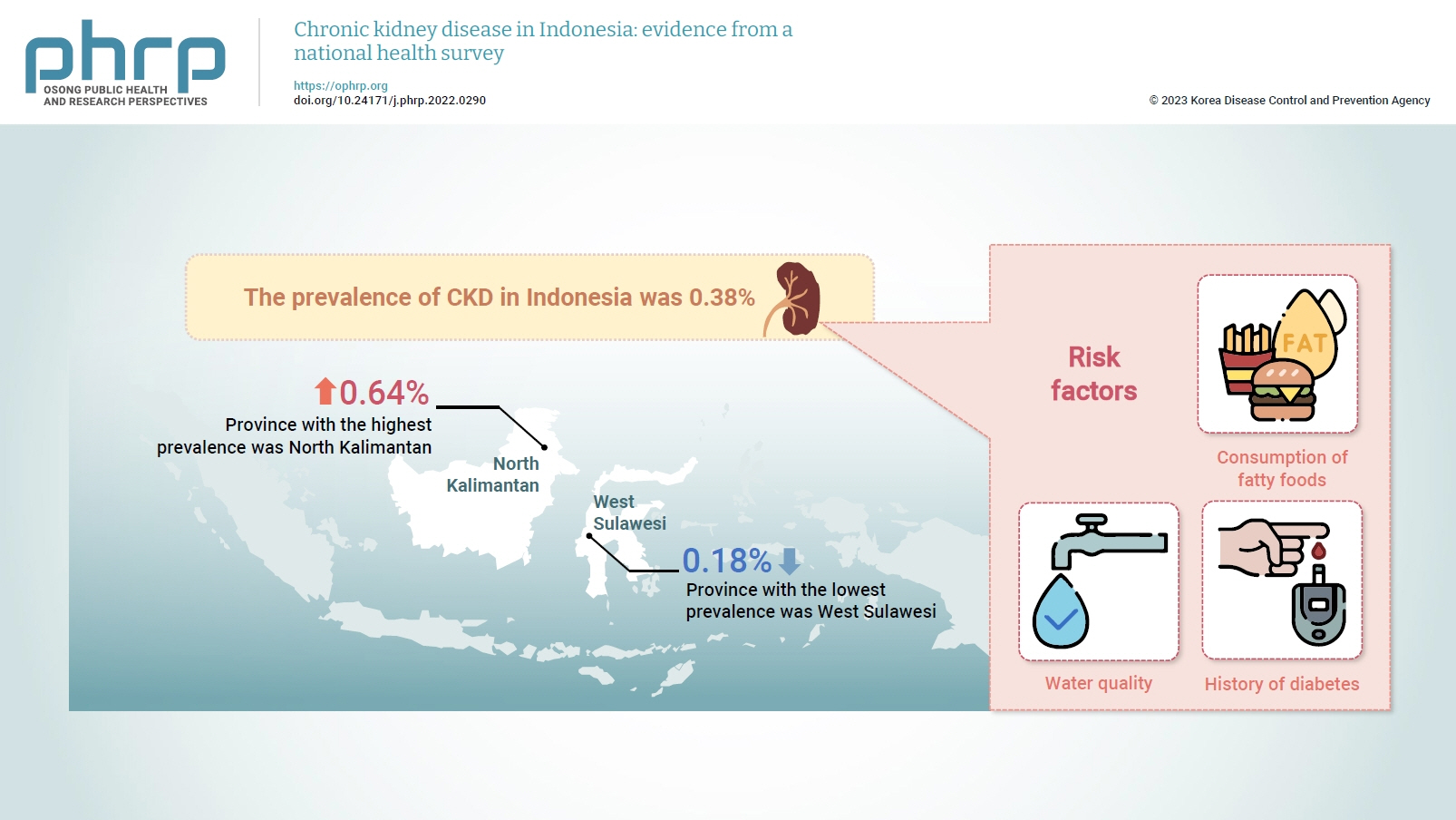
Objectives Several previous studies have stated that consuming certain foods and beverages might increase the risk of chronic kidney disease (CKD). This study aimed to examine the relationships of food and beverage consumption with other risk factors for CKD. Methods: Data sources included the 2018 Basic Health Research (Riskesdas) and the National Socio-Economic Survey (Susenas), which were analyzed using a cross-sectional design. The study samples were households from 34 provinces in Indonesia, and the analysis was performed with provincial aggregates. Data were analyzed using risk factor analysis followed by linear regression to identify relationships with CKD. Results: The prevalence of CKD in Indonesia was 0.38%. The province with the highest prevalence was North Kalimantan (0.64%), while the lowest was found in West Sulawesi (0.18%). Five major groups were formed from 15 identified risk factors using factor analysis. A linear regression model presented 1 significant selected factor (p=0.006, R2 =31%). The final model of risk factors included water quality, consumption of fatty foods, and a history of diabetes. Conclusion: Drinking water quality, fatty food consumption, and diabetes are associated with CKD. There is a need to monitor drinking water, as well as to promote health education and provide comprehensive services for people with diabetes, to prevent CKD.
Citations
Citations to this article as recorded by
Syndemic analysis of stroke in Indonesia Andi Alfian Zainuddin, Rais Reskiawan A. Kadir, Nurul Qalby, Hedi Kuswanto, Andi Afdal Abdullah, Takuro Furusawa, Haerani Rasyid, Irawan Yusuf The Lancet Regional Health - Western Pacific.2026; 69: 101849. CrossRef
Integrating Spirituality and Self-Transcendence in Chronic Kidney Disease Management: A Structural Equation Modeling Approach Siti Nurkholifah, Yurika Fauzia Wardhani, Minarti Minarti, Asep Hermawan, Eka Denis Machfutra, Doni Lasut Journal of Holistic Nursing.2026;[Epub] CrossRef
Clinical characteristics, medication use, and mortality outcomes in pediatric chronic kidney disease: A retrospective study at national hospital in Jakarta Aprilita Rina Yanti Eff, Selvia Yuliana, Nadiya Nurul Afifah, Ade Heryana Journal of Advanced Pharmaceutical Technology & Re.2026; 17(2): 108. CrossRef
Illness Perception and Social Support in Self-management Behavior of Older Adults with Chronic Diseases in Indonesia: A Cross-sectional Study Ira Suarilah, Joni Haryanto, Febi Fadilah Wanda Sari Zain, Intan Rismatul Azizah, Retno Indarwati, Dianis Wulan Sari Ageing International.2026;[Epub] CrossRef
Mixed Matrix Membrane Based on Cellulose Acetate and Activated Carbon from Plastic Waste for Urea Removal in Spent Dialysate Saiful Saiful, Mirzalisa Mirzalisa, Muliadi Ramli, Mutia Farida Jurnal Rekayasa Kimia & Lingkungan.2026; 21(1): 11. CrossRef
Enhanced detection of albumin-creatinine ratio in urine using gold nanoparticle-integrated 3D-connector microfluidic paper-based analytical devices for early diagnosis of chronic kidney disease Akhmad Sabarudin, Saidun Fiddaroini, Ahmad Luthfi Fahmi, Abdul Munir Roja’i, Isadora Evani Salsabila, Aulanni’am, Setyawan Purnomo Sakti, Hani Susianti Microchemical Journal.2025; 211: 113071. CrossRef
The Effect of Intravenous Oxyhydrogen Nanobubble on Chronic Kidney Disease: Case Series Olly Indrajani, Aditya T. Hernowo, Christyanita P. Ekasari, Ricki Yudhanata, Sutiman B. Sumitro Clinical Therapeutics.2025; 47(9): e13. CrossRef
Association between low-carbohydrate diet and chronic kidney disease in population with gestational diabetes mellitus history: based on the National Health and Nutrition Examination Survey database Junli Zhang, Youlian Dong Food & Nutrition Research.2025;[Epub] CrossRef
Hubungan Lama Hemodialisa dengan Kualitas Hidup Pasien Chronic Kidney Disease yang Menjalani Hemodialisa di Rumah Sakit TK II Kadek Dheana Novitayani W, Ni Putu Dita Wulandari, I Made Dwie Pradnya Susila, I Nyoman Sutresna Journal Center of Research Publication in Midwifer.2025; 9(2): 85. CrossRef
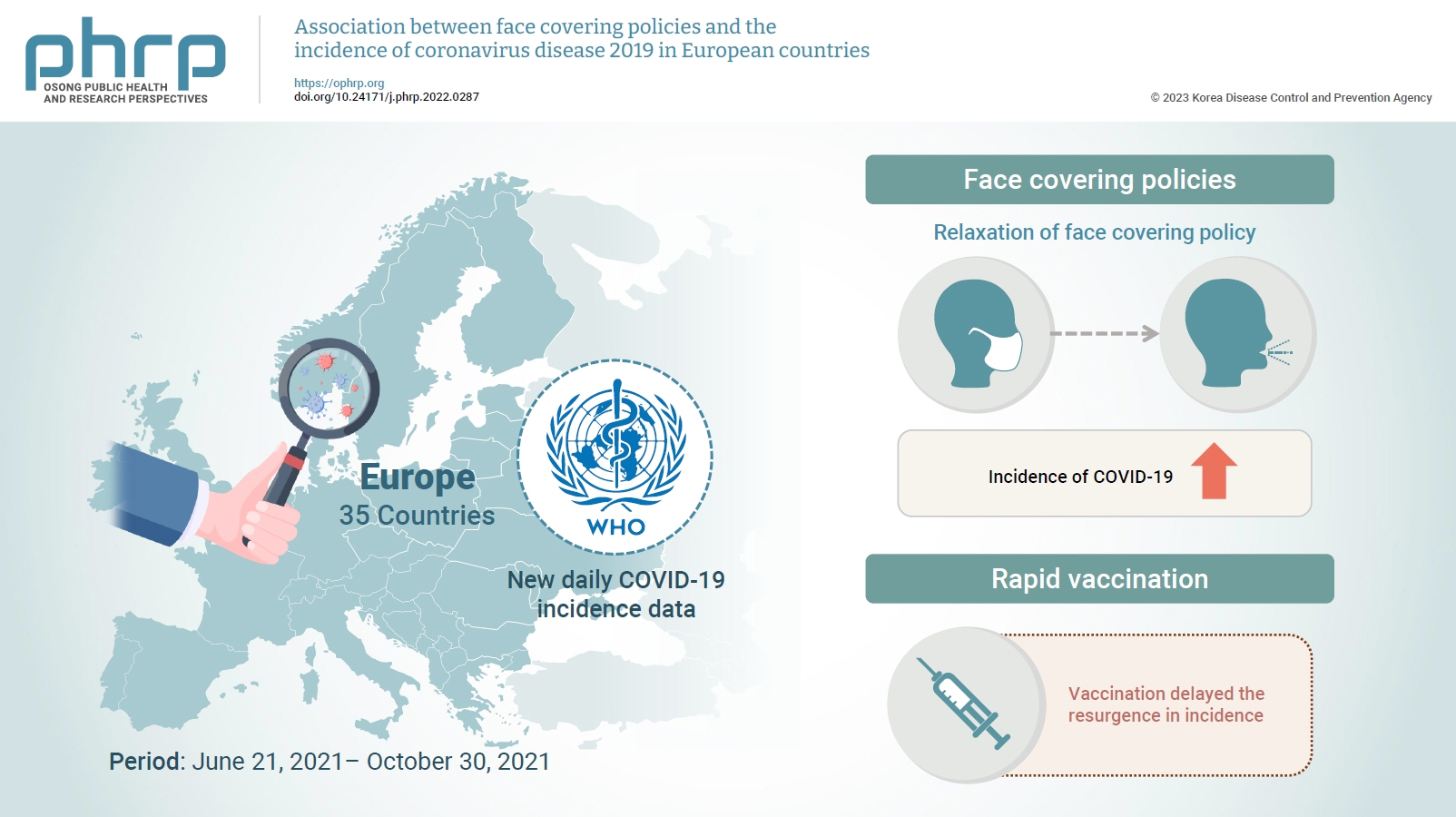
Objectives This study was conducted to determine the impact of the strengthening or relaxation of face covering mandates on the subsequent national case incidence of coronavirus disease 2019 (COVID-19) in Europe as the full vaccination rate was increasing.
Methods European countries in which case incidence increased for 3 consecutive weeks were monitored and analyzed using COVID-19 incidence data shared by the World Health Organization (WHO). The epidemic trend of COVID-19 in Europe was compared with that of countries elsewhere in the world based on WHO weekly epidemiological reports from June 20 to October 30, 2021. In addition, this study provided insight into the impact of government mask mandates on COVID-19 incidence in Europe by measuring the index scores of those facial covering policies before and after mandate relaxation or strengthening. The effects of the vaccination rate and the speed of vaccination on COVID-19 incidence were also analyzed.
Results The incidence of COVID-19 after the relaxation of face covering mandates was significantly higher than before relaxation. However, no significant difference was observed in vaccination rate between countries with increased and decreased incidence. Instead, rapid vaccination delayed the resurgence in incidence.
Conclusion The findings suggest that face covering policies in conjunction with rapid vaccination efforts are essential to help mitigate the spread of COVID-19.
Citations
Citations to this article as recorded by
Toward resilience for public health emergency response system during COVID-19: qualitative comparative analyses of 40 countries Lingzhi Li, Yifan Tang, Mengxia Zhu, Yudi Chen, Peng Cui Frontiers in Public Health.2025;[Epub] CrossRef
Non-pharmaceutical interventions in containing COVID-19 pandemic after the roll-out of coronavirus vaccines: a systematic review Xiaona He, Huiting Chen, Xinyu Zhu, Wei Gao BMC Public Health.2024;[Epub] CrossRef
Objectives We evaluated pain, fatigue, anxiety, depression, and quality of life in patients hospitalized for coronavirus disease 2019 (COVID-19) and observed them over a period of 3 months. We also investigated the relationship of these symptoms to age, sex, disease severity, and levels of anxiety and depression. Methods: The study included 100 confirmed COVID-19 patients (i.e., positive on a polymerase chain reaction test) between the ages of 18 and 75 years. Pain (visual analog scale [VAS]), fatigue (fatigue severity scale), anxiety, and depression (hospital anxiety and depression scales) were evaluated on the first day of hospitalization and at 1-month and 3-month follow-ups. The short form-12 questionnaire was used to measure quality of life at the 1-month and 3-month followups. Results: No differences were found in pain, fatigue, anxiety levels, depression levels, and quality of life according to disease severity. High VAS scores at hospital admission were related to continued pain at the 3-month follow-up (odds ratio [OR], 1.067; p<0.001). High VAS (OR, 1.072; p=0.003) and anxiety levels (OR, 1.360; p=0.007) were related to severe fatigue at the 3-month evaluation. Conclusion: Pain, fatigue, anxiety, and depression appear to be long-term sequelae of COVID-19 and can affect quality of life. High VAS and anxiety levels were found to be associated with long-term fatigue.
Citations
Citations to this article as recorded by
Estimating the prevalence of persistent symptoms after SARS-CoV-2 infection (post-COVID-19 syndrome): a regional cross-sectional study protocol Lindybeth Sarmiento Varón, Hermy Alvarez, Leyla Carolina Huirimilla Casanova, Maria Paz Díaz Mora, Luis Alfredo Muñoz Cuevas, Jorge Gonzalez-Puelma, Karena Espinoza, Lidia Amarales, Jonathan Lühr Henriquez, Felipe Retamal-Matus, Roberto Uribe-Paredes, Cri BMJ Open.2025; 15(5): e093844. CrossRef
Changes in prevalence of anxiety and depression among COVID-19 patients during a two-year recovery period: A systematic review and meta-analysis Qingxiang Shang, Ke Xu, Hong Ji, Qigang Dai, Hao Ju, Haodi Huang, Jianli Hu, Changjun Bao Journal of Psychosomatic Research.2024; 178: 111602. CrossRef
The Prevalence and Associated Factors of Post-COVID-19 Fatigue: A Systematic Review and Meta-Analysis Wangjuan Hu, Rongzhu Tang, Siyuan Gong, Jihong Liu, Jia Li, Chunlian Liao Cureus.2024;[Epub] CrossRef
Predicting higher risk factors for COVID-19 short-term reinfection in patients with rheumatic diseases: a modeling study based on XGBoost algorithm Yao Liang, Siwei Xie, Xuqi Zheng, Xinyu Wu, Sijin Du, Yutong Jiang Journal of Translational Medicine.2024;[Epub] CrossRef
Covid-19 Salgını Sürecinde Sağlık Personelinin Fiziksel Aktivite Düzeyi, Yaşam Kalitesi ve Yorgunluk Düzeyi Arasındaki İlişki Kağan Üstün, Zeynep Yıldız Kızkın, Masoud Amır Rashedı Bonab, Mehmet Armağan, Yusuf Hasırcı, Tuğba Kuru Çolak Sakarya Üniversitesi Holistik Sağlık Dergisi.2023; 6(3): 419. CrossRef
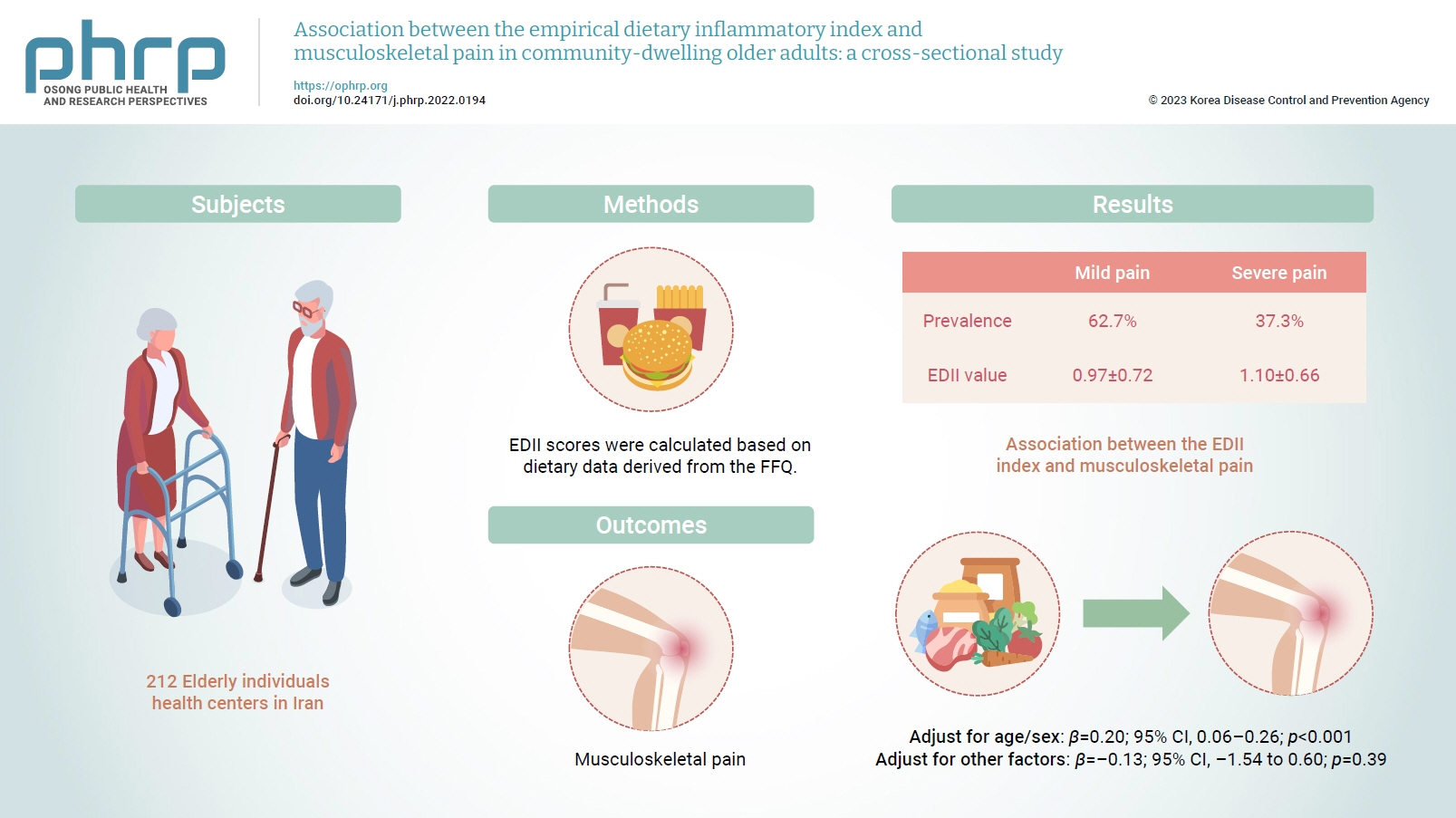
Objectives Inflammation has been proposed to be one of the main causes of musculoskeletal pain. Diet is a lifestyle factor that plays an important role in managing inflammation; thus, we assessed the inflammatory potential of diets using the empirical dietary inflammatory index (EDII) to investigate the relationship between diet and musculoskeletal pain.
Methods This cross-sectional study included 212 elderly individuals who were selected from health centers in Tehran, Iran. Dietary intake was evaluated using a valid and reliable 147-item food frequency questionnaire. To measure the intensity of pain, a visual analogue scale was used. Multiple linear regression was applied to assess the association between the EDII and musculoskeletal pain.
Results In total, 62.7% and 37.3% of participants had mild and severe pain, respectively. The EDII values were 0.97±0.72 and 1.10±0.66, respectively, in those with mild and severe pain. A higher EDII score was associated with more intense musculoskeletal pain after adjusting for age and sex (β=0.20; 95% confidence interval [CI], 0.06–0.26; p<0.001), but not after adjustment for other confounders (β=–0.13; 95% CI, –1.54 to 0.60; p=0.39).
Conclusion Our findings indicated that higher dietary inflammation might not be associated with musculoskeletal pain in older adults. However, further investigations are required to confirm these findings.
Citations
Citations to this article as recorded by
Skeletal Muscle Disorders: Navigating Management and Natural Products Hesham M. El‐Sayed, Khaled Hussien, Heba R. Ghaiad, Mai A. Abd‐Elmawla, Nourhan M. Abdelmaksoud, Asmaa Ramadan, Riham A. El‐Shiekh, Mohamed Bakr Zaki Chemistry & Biodiversity.2026;[Epub] CrossRef
Proinflammatory diet is associated with higher pain, disease severity and biochemical parameters associated with inflammation in fibromyalgia Nursena Ersoy Söke, Hansa İnceöz, İlker Solmaz, Hülya Yardımcı Pain Medicine.2025; 26(3): 131. CrossRef
Exploring the association between dietary Inflammatory Index and chronic pain in US adults using NHANES 1999–2004 Lunxue Qing, Yingying Zhu, Changhe Yu, Yang Zhang, Jinxia Ni Scientific Reports.2024;[Epub] CrossRef
The dietary inflammatory index and cardiometabolic parameters in US firefighters Andria Christodoulou, Costas A. Christophi, Mercedes Sotos-Prieto, Steven Moffatt, Longgang Zhao, Stefanos N. Kales, James R. Hébert Frontiers in Nutrition.2024;[Epub] CrossRef
Association between dietary inflammatory index and musculoskeletal disorders in adults Firoozeh Khamoushi, Davood Soleimani, Farid Najafi, Neshat Ahmadi, Neda Heidarzadeh-Esfahani, Bita Anvari, Ebrahim Shakiba, Yahya Pasdar Scientific Reports.2023;[Epub] CrossRef
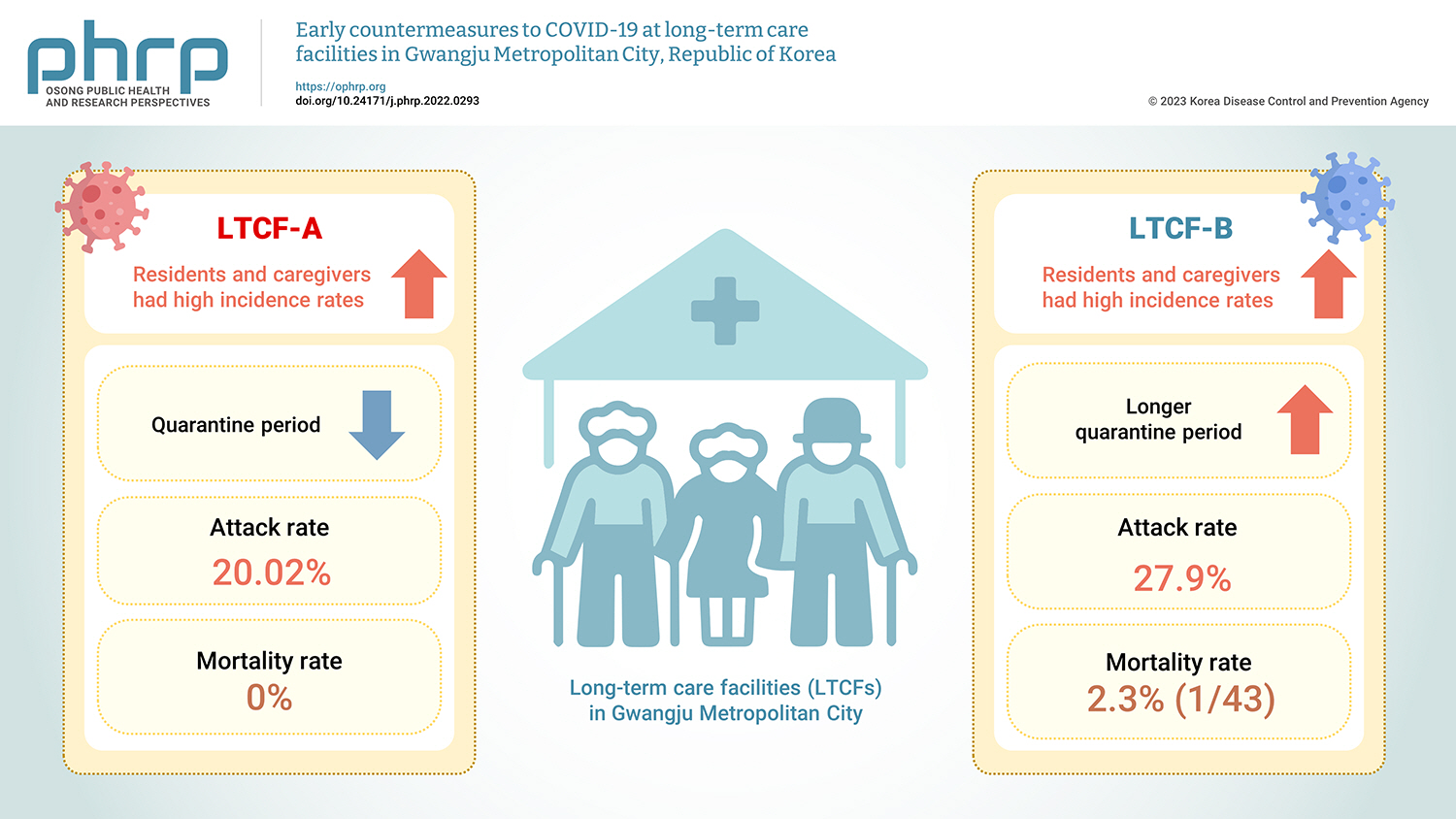
Objectives The coronavirus disease 2019 (COVID-19) pandemic has continued since its first detection in the Republic of Korea on January 20, 2020. This study describes the early countermeasures used to minimize the risk of COVID-19 outbreaks during cohort quarantine and compares the epidemiological characteristics of 2 outbreaks in long-term care facilities (LTCFs) in Gwangju Metropolitan City in summer 2020. Methods: An epidemiological investigation was conducted via direct visits. We investigated epidemiological characteristics, including incidence, morbidity, and mortality rates, for all residents and staff members. Demographic characteristics were analyzed using a statistical program. Additionally, the method of managing infection in LTCFs is described. Results: Residents and caregivers had high incidence rates in LTCF-A and LTCF-B, respectively. LTCF-B had a longer quarantine period than LTCF-A. The attack rate was 20.02% in LTCF-A and 27.9% in LTCF-B. The mortality rate was 2.3% (1/43) in LTCF-B, the only facility in which a COVID-19 death occurred. Conclusion: Extensive management requires contact minimization, which involves testing all contacts to mitigate further transmission in the early stages of LTCF outbreaks. The findings of this study can help inform and prepare public health authorities for COVID-19 outbreaks, particularly for early control in vulnerable facilities.
Citations
Citations to this article as recorded by
Healthcare workers' views on the response to COVID-19 in long-term care hospitals in Korea: a mixed-method study Eun Kyoung Yun, In Seo La, Sunmi Kim, Seongyu Han, Hyungran Lee Frontiers in Public Health.2025;[Epub] CrossRef





 First
 Prev


