

| Young Joon Park | 7 Articles |
Objectives
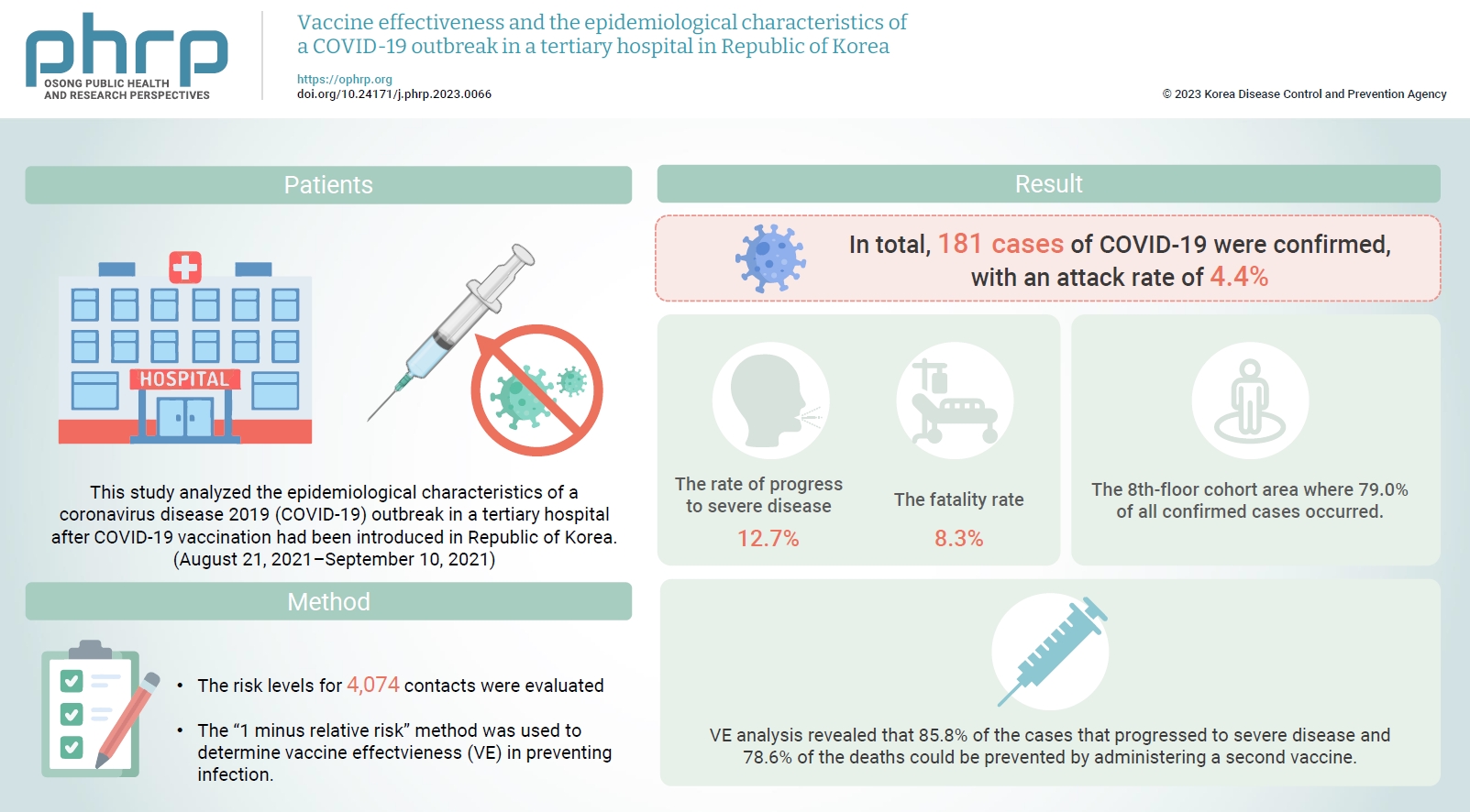
Healthcare facilities are high-risk sites for infection. This study analyzed the epidemiological characteristics of a coronavirus disease 2019 (COVID-19) outbreak in a tertiary hospital after COVID-19 vaccination had been introduced in Republic of Korea. Vaccine effectiveness (VE) and shared anti-infection strategies are also assessed. Methods The risk levels for 4,074 contacts were evaluated. The epidemiological characteristics of confirmed cases were evaluated using the chi-square test. The “1 minus relative risk” method was used to determine VE in preventing infection, progression to severe disease, and death. In the largest affected area (the 8th floor), a separate relative risk analysis was conducted. A multivariate logistic regression analysis (with 95% confidence interval [CIs]) was used to identify transmission risk factors with a significance level <10% via the backward elimination method. Results In total, 181 cases of COVID-19 were confirmed, with an attack rate of 4.4%. Of those cases, 12.7% progressed to severe disease, and 8.3% died. In the cohort isolation area on the 8th floor, where 79.0% of the confirmed cases occurred, the adjusted odds ratio was 6.55 (95% CI, 2.99–14.33) and 2.19 (95% CI, 1.24–3.88) for caregivers and the unvaccinated group, respectively. VE analysis revealed that 85.8% of the cases that progressed to severe disease and 78.6% of the deaths could be prevented by administering a second vaccine. Conclusion Caregiver training for infection prevention and control is necessary to reduce infection risk. Vaccination is an important intervention to reduce the risk of progression to severe disease and death.
Objectives
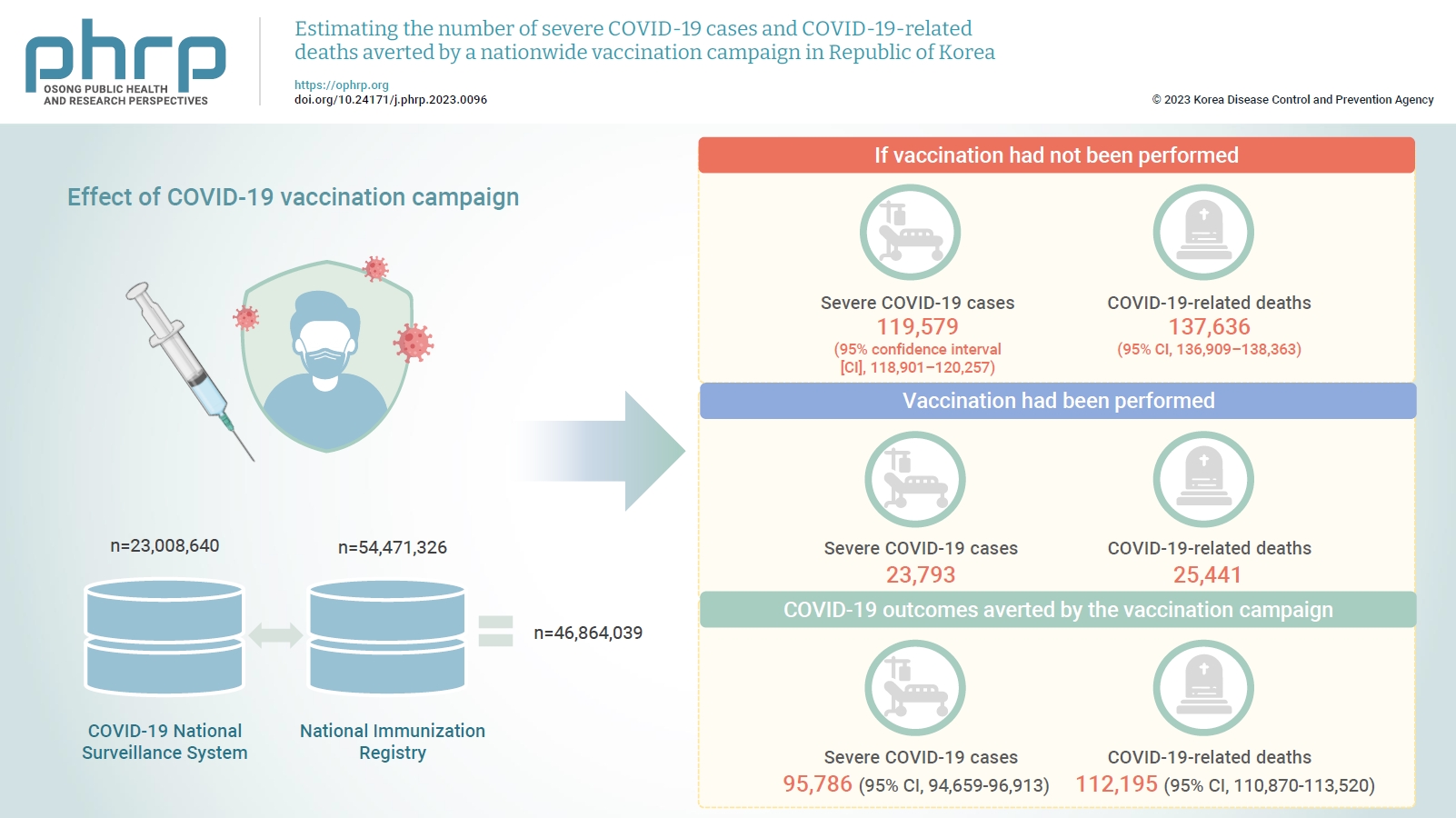
The Korea Disease Control and Prevention Agency promotes vaccination by regularly providing information on its benefits for reducing the severity of coronavirus disease 2019 (COVID-19). This study aimed to analyze the number of averted severe COVID-19 cases and COVID-19-related deaths by age group and quantify the impact of Republic of Korea’s nationwide vaccination campaign. Methods We analyzed an integrated database from the beginning of the vaccination campaign on February 26, 2021 to October 15, 2022. We estimated the cumulative number of severe cases and COVID-19-related deaths over time by comparing observed and estimated cases among unvaccinated and vaccinated groups using statistical modeling. We compared daily age-adjusted rates of severe cases and deaths in the unvaccinated group to those in the vaccinated group and calculated the susceptible population and proportion of vaccinated people by age. Results There were 23,793 severe cases and 25,441 deaths related to COVID-19. We estimated that 119,579 (95% confidence interval [CI], 118,901–120,257) severe COVID-19 cases and 137,636 (95% CI, 136,909–138,363) COVID-19-related deaths would have occurred if vaccination had not been performed. Therefore, 95,786 (95% CI, 94,659–96,913) severe cases and 112,195 (95% CI, 110,870–113,520) deaths were prevented as a result of the vaccination campaign. Conclusion We found that, if the nationwide COVID-19 vaccination campaign had not been implemented, the number of severe cases and deaths would have been at least 4 times higher. These findings suggest that Republic of Korea’s nationwide vaccination campaign reduced the number of severe cases and COVID-19 deaths. Citations
Citations to this article as recorded by

Objectives
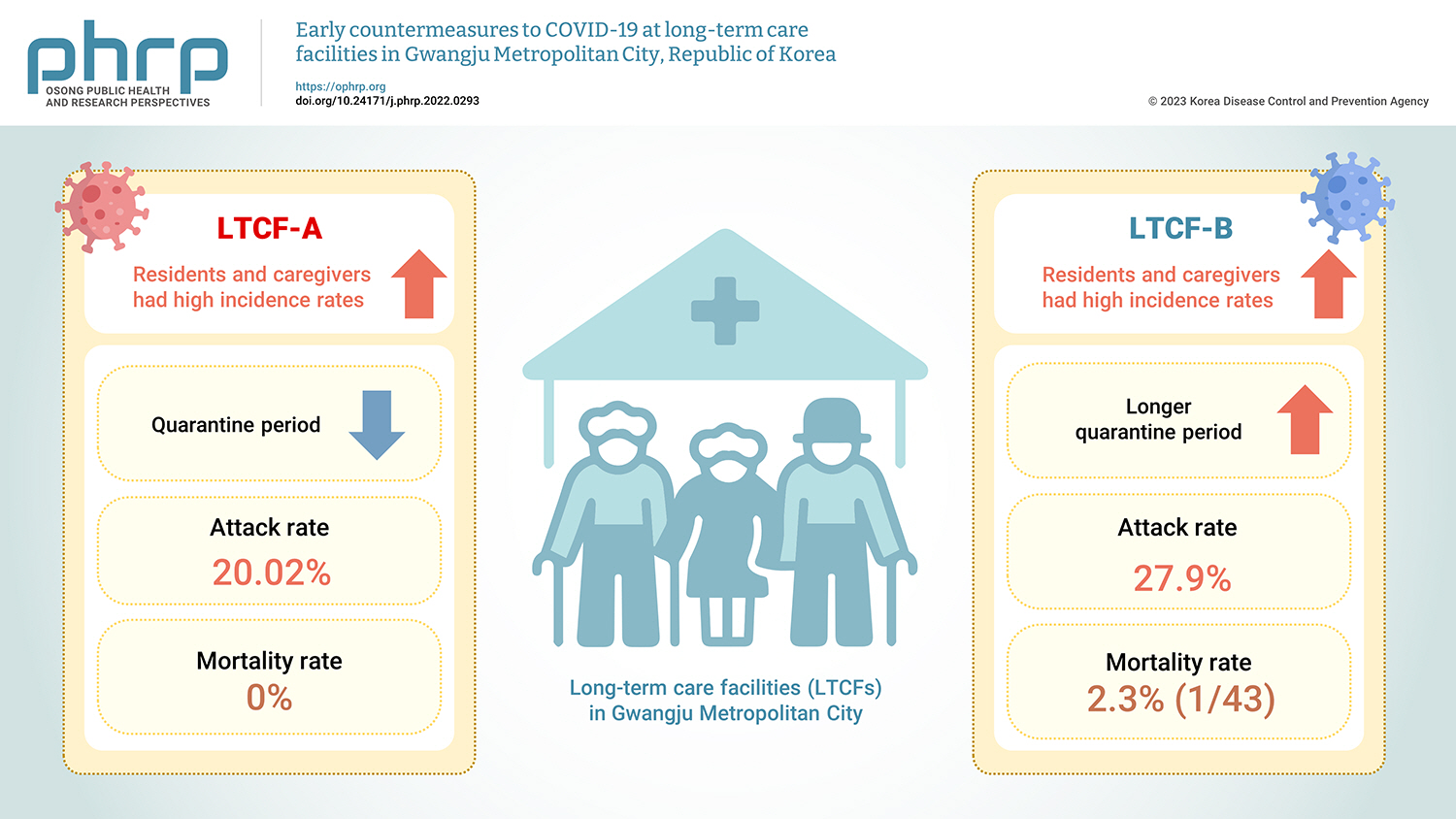
The coronavirus disease 2019 (COVID-19) pandemic has continued since its first detection in the Republic of Korea on January 20, 2020. This study describes the early countermeasures used to minimize the risk of COVID-19 outbreaks during cohort quarantine and compares the epidemiological characteristics of 2 outbreaks in long-term care facilities (LTCFs) in Gwangju Metropolitan City in summer 2020. Methods: An epidemiological investigation was conducted via direct visits. We investigated epidemiological characteristics, including incidence, morbidity, and mortality rates, for all residents and staff members. Demographic characteristics were analyzed using a statistical program. Additionally, the method of managing infection in LTCFs is described. Results: Residents and caregivers had high incidence rates in LTCF-A and LTCF-B, respectively. LTCF-B had a longer quarantine period than LTCF-A. The attack rate was 20.02% in LTCF-A and 27.9% in LTCF-B. The mortality rate was 2.3% (1/43) in LTCF-B, the only facility in which a COVID-19 death occurred. Conclusion: Extensive management requires contact minimization, which involves testing all contacts to mitigate further transmission in the early stages of LTCF outbreaks. The findings of this study can help inform and prepare public health authorities for COVID-19 outbreaks, particularly for early control in vulnerable facilities. Citations
Citations to this article as recorded by
Objectives
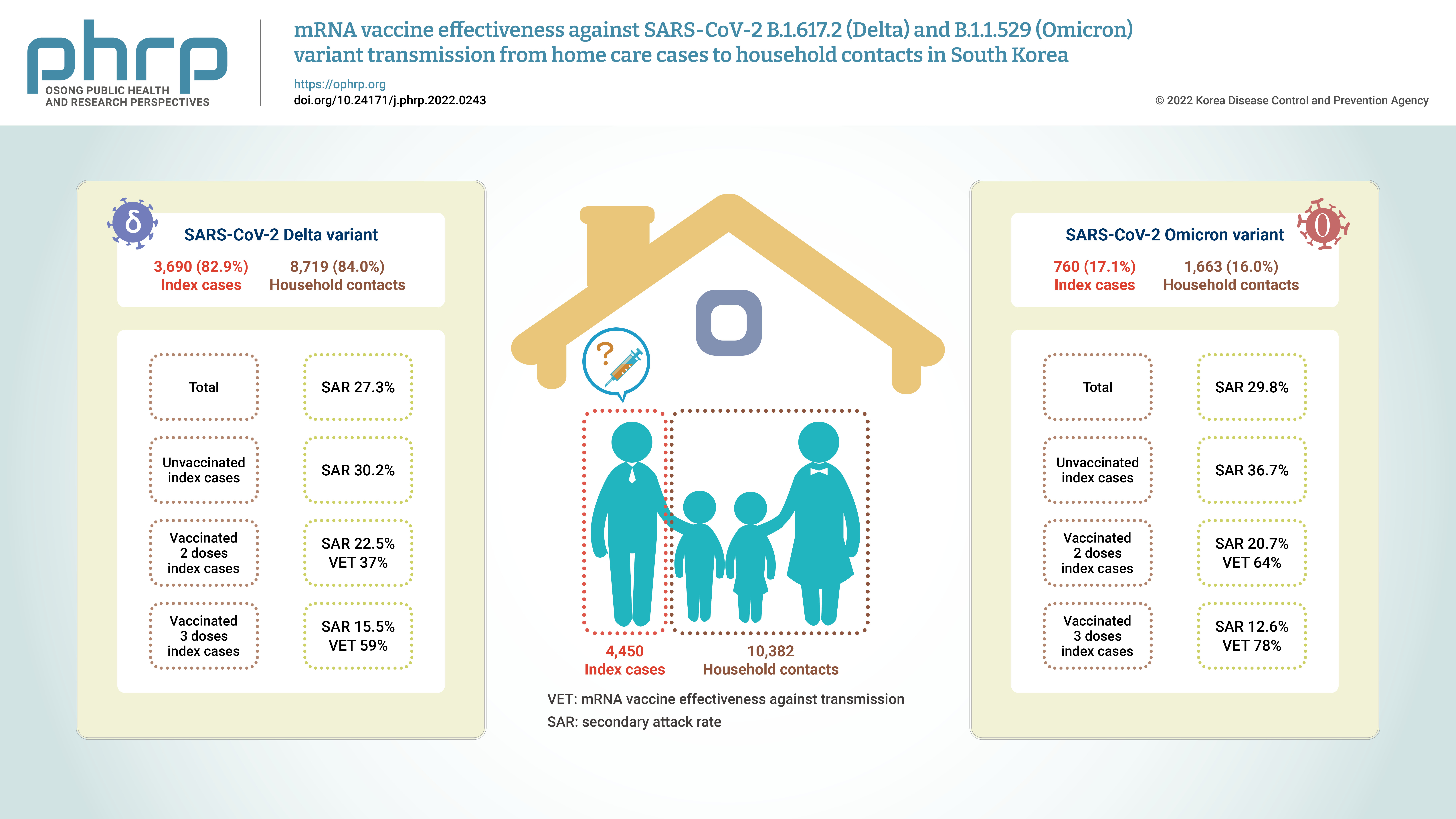
Household contacts of confirmed cases of coronavirus disease 2019 (COVID-19) areexposed to a high risk of viral transmission, and secondary incidence is an important indicatorof community transmission. This study analyzed the secondary attack rate and mRNA vaccineeffectiveness against transmission (VET) for index cases (patients treated at home) confirmedto be infected with the Delta and Omicron variants.Methods: The subjects of the study were 4,450 index cases and 10,382 household contacts.Logistic regression analysis was performed to compare the secondary attack rate byvaccination status, and adjusted relative risk and 95% confidence intervals were identified.Results: The secondary attack rate of the Delta variant was 27.3%, while the secondary attackrate of the Omicron variant was 29.8%. For the Delta variant, groups with less than 90 daysand more than 90 days after 2 doses of mRNA vaccination both showed a VET of 37%. For theOmicron variant, a 64% VET was found among those with less than 90 days after 2 doses ofmRNA vaccination.Conclusion: This study provides useful data on the secondary attack rate and VET of mRNAvaccines for household contacts of COVID-19 cases in South Korea. Citations
Citations to this article as recorded by
Objectives
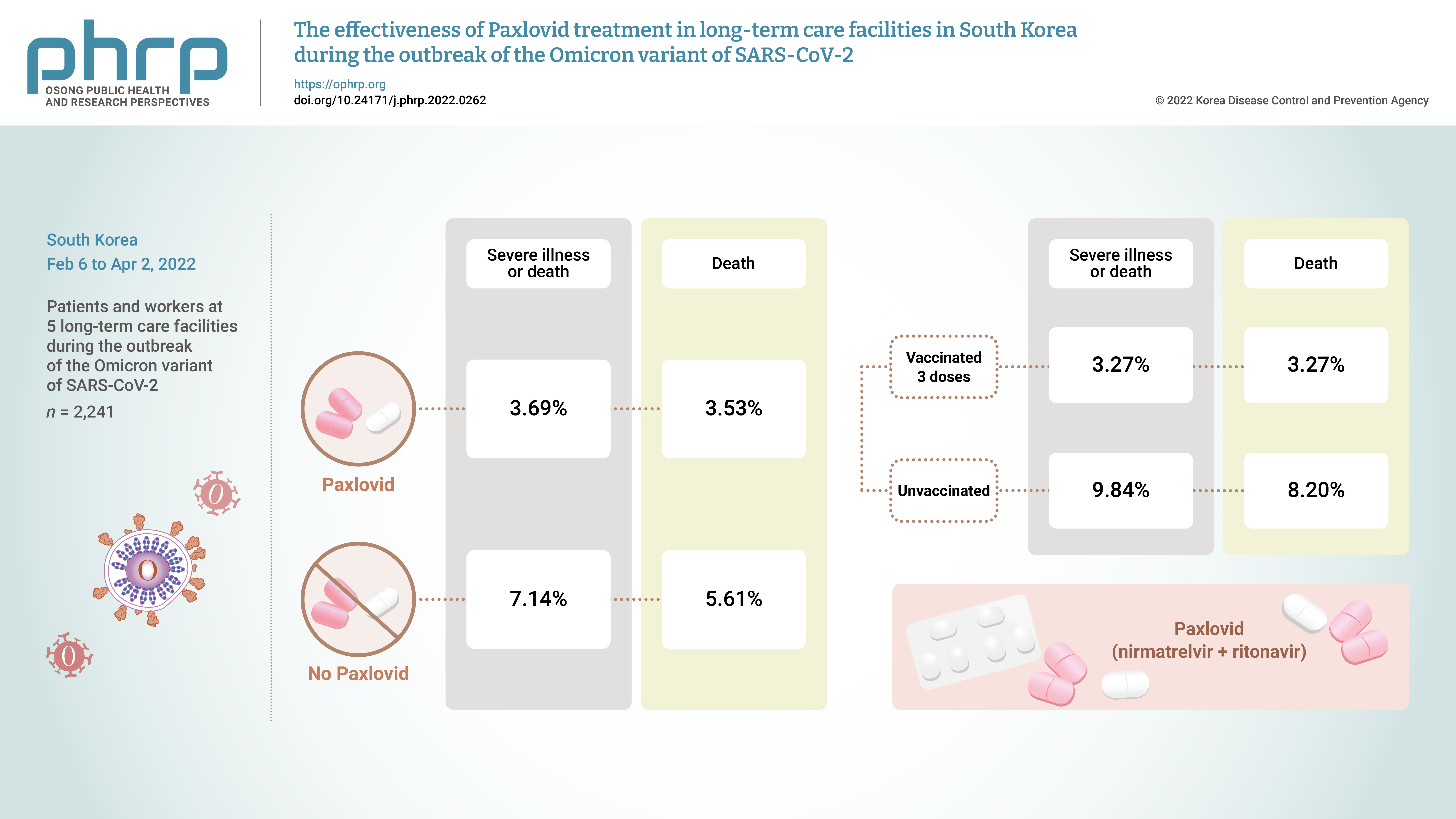
On November 5, 2021, Pfizer Inc. announced Paxlovid (nirmatrelvir +ritonavir) asa treatment method that could reduce the risk of hospitalization or death for patients withconfirmed coronavirus disease 2019 (COVID-19).Methods: From February 6, 2022 to April 2, 2022, the incidence of COVID-19 and the effectsof treatment with Paxlovid were analyzed in 2,241 patients and workers at 5 long-term carefacilities during the outbreak of the Omicron variant of severe acute respiratory syndromecoronavirus 2 in South Korea.Results: The rate of severe illness or death in the group given Paxlovid was 51% lower thanthat of the non-Paxlovid group (adjusted risk ratio [aRR], 0.49; 95% confidence interval [CI],0.24−0.98). Compared to unvaccinated patients, patients who had completed 3 doses of thevaccine had a 71% reduced rate of severe illness or death (aRR, 0.29; 95% CI, 0.13−0.64) and a65% reduced death rate (aRR, 0.35; 95% CI, 0.15−0.79).Conclusion: Patients given Paxlovid showed a lower rate of severe illness or death and alower fatality rate than those who did not receive Paxlovid. Patients who received 3 dosesof the vaccine had a lower rate of severe illness or death and a lower fatality rate than theunvaccinated group. Citations
Citations to this article as recorded by
<p>This study describes the epidemiological characteristics of coronavirus disease 2019 (COVID-19) based on reported cases from long-term care facilities. As of April 20<sup>th</sup>, 2020, 3 long-term care facilities in a metropolitan area of South Korea had reported cases of COVID-19. These facilities’ employees were presumed to be the sources of infection. There were 2 nursing hospitals that did not report any additional cases. One nursing home had a total of 25 cases, with an attack rate of 51.4% (95% CI 35.6–67.0), and a fatality rate of 38.9% (95% CI 20.3–61.4) among residents. The results from this study suggest that early detection and maintenance of infection control minimizes the risk of rapid transmission.</p>
Citations
Citations to this article as recorded by
<sec><title>Objectives</title>
<p>In this pandemic situation caused by a novel coronavirus disease in 2019 (COVID-19), an electronic support system that can rapidly and accurately perform epidemic investigations, is needed. It would systematically secure and analyze patients’ data (who have been confirmed to have the infection), location information, and credit card usage.</p></sec>
<sec><title>Methods</title>
<p>The “Infectious Disease Prevention and Control Act” in South Korea, established a legal basis for the securement, handling procedure, and disclosure of information required for epidemic investigations. The Epidemic Investigation Support System (EISS) was developed as an application platform on the Smart City data platform.</p></sec>
<sec><title>Results</title>
<p>The EISS performed the function of inter-institutional communication which reduced the processing period of patients’ data in comparison to other methods. This system automatically marked confirmed cases’ tracking data on a map and hot-spot analysis which lead to the prediction of areas where people may be vulnerable to infection.</p></sec>
<sec><title>Conclusion</title>
<p>The EISS was designed and implemented for use during an epidemic investigation to prevent the spread of an infectious disease, by specifically tracking confirmed cases of infection.</p></sec>
Citations
Citations to this article as recorded by
|
|


