

| Eunju Lee | 3 Articles |
Objectives
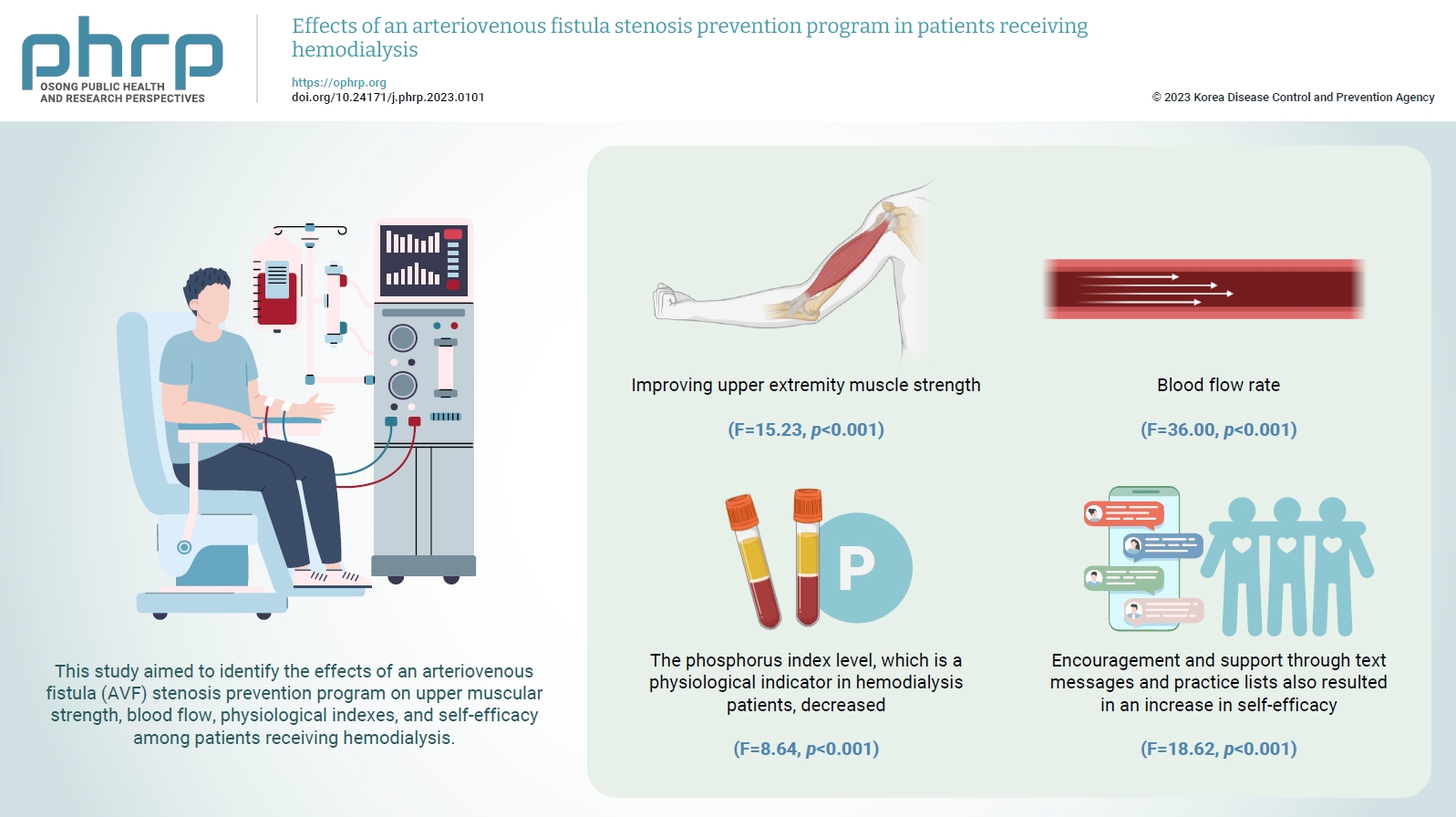
To increase the efficiency of hemodialysis, an appropriate vascular pathway must be created, and its function must be maintained. This study aimed to identify the effects of an arteriovenous fistula (AVF) stenosis prevention program on upper muscular strength, blood flow, physiological indexes, and self-efficacy among patients receiving hemodialysis. Methods The participants were patients receiving hemodialysis at Keimyung University Dongsan Medical Center in Daegu, Republic of Korea. They were divided into experimental and control groups based on the day of the week they received hemodialysis at the outpatient department and included 25 participants each. The study was conducted for 8 weeks. Results The AVF stenosis prevention program was effective in improving upper extremity muscle strength (F=15.23, p<0.001) and blood flow rate (F=36.00, p<0.001). As a result of the program, the phosphorus index level, which is a physiological indicator in hemodialysis patients, decreased (F=8.64, p<0.001). Encouragement and support through text messages and practice lists also resulted in an increase in self-efficacy (F=18.62, p<0.001). Conclusion The AVF stenosis prevention program in this study resulted in an increase in upper extremity muscle strength through grip strength exercises and was effective in preventing AVF stenosis by increasing the blood flow rate. Citations
Citations to this article as recorded by

Objectives
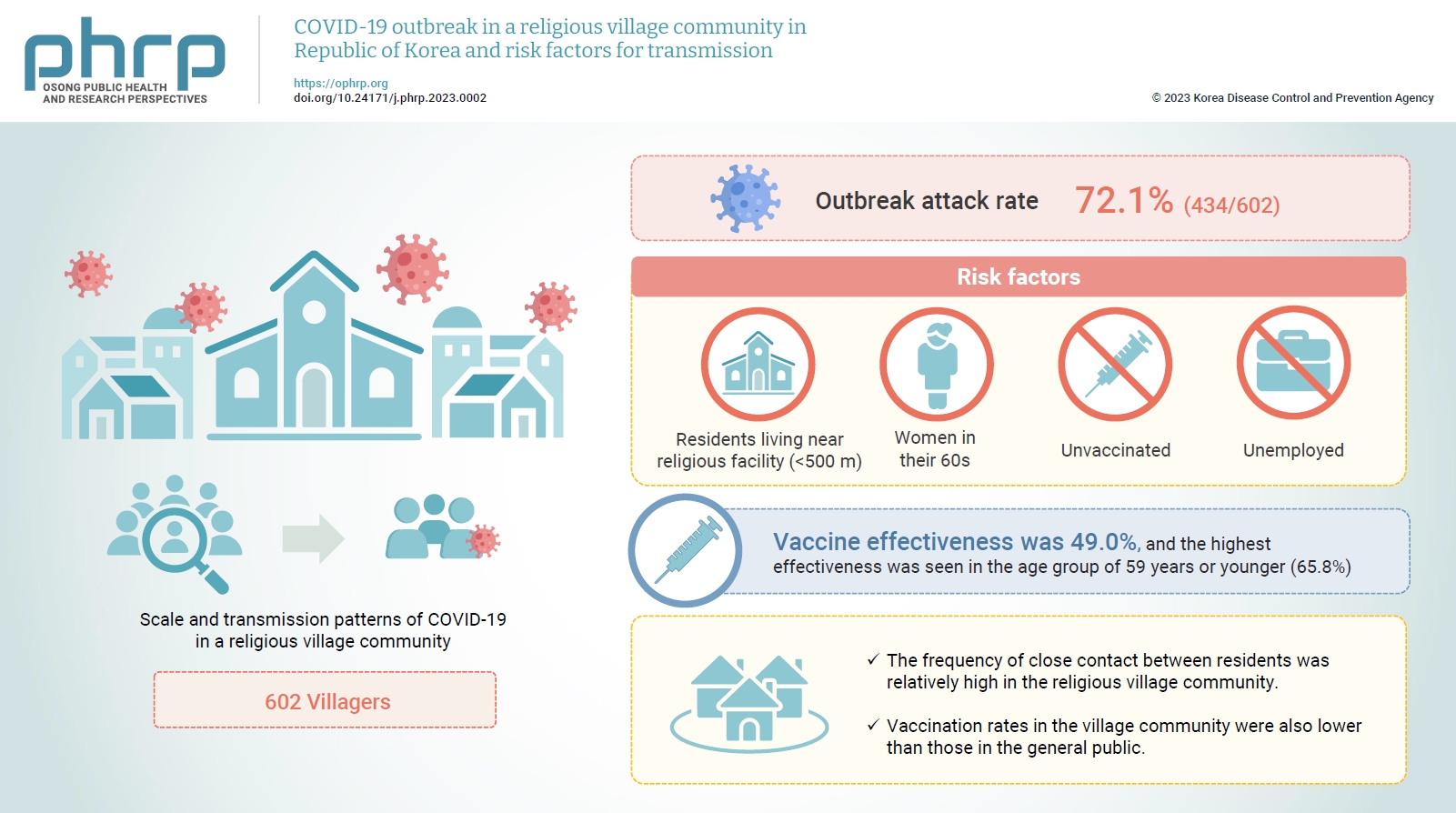
This study aimed to assess the scale and transmission patterns of coronavirus disease 2019 (COVID-19) in a religious village community in South Korea, to determine the risk factors of transmission, and to evaluate vaccine effectiveness. Methods An epidemiological survey was conducted, and data were collected and analyzed from 602 villagers in the religious village community. Multivariate logistic regression analysis was used to identify the risk factors for COVID-19 transmission and to evaluate vaccine effectiveness. Results The outbreak attack rate was 72.1% (434/602). The attack rate was high among women in their 60s, the unemployed, residents living near religious facility (<500 m), and the unvaccinated. Age, the distance between religious facility and residences, and the absence of vaccination were identified as risk factors for transmission. Vaccine effectiveness was 49.0%, and the highest effectiveness was seen in the age group of 59 years or younger (65.8%). Conclusion This village community was isolated, with little communication with the outside world. However, the frequency of close contact between residents was relatively high, contributing to the spread of COVID-19 in the village even with relatively short exposure. Vaccination rates in the village community were also lower than those in the general public. Public health authorities should consider the potential impact of cultural factors, including religion, that could lead to the exponential spread of COVID-19 in closed village communities. Citations
Citations to this article as recorded by
Objectives
On February 26, 2021, coronavirus disease 2019 (COVID-19) vaccination was started for high-priority groups based on the recommendation of the Advisory Committee on Immunization Practices with 2 available COVID-19 vaccines (AstraZeneca and Pfizer-BioNTech) in Korea. This report provides a summary of adverse events following COVID-19 vaccination as of April 30, 2021. Methods Adverse events following immunization are notifiable by medical doctors to the Korea Immunization Management System (KIMS) under the national surveillance system. We analyzed all adverse events reports following COVID-19 vaccination to the KIMS from February 26 to April 30, 2021. Results In total, 16,196 adverse events following 3,586,814 administered doses of COVID-19 vaccines were reported in approximately 2 months (February 26 to April 30, 2021). Of these, 15,658 (96.7%) were non-serious adverse events, and 538 (3.3%) were serious adverse events, including 73 (0.5%) deaths. The majority of adverse events (n=13,063, 80.7%) were observed in women, and the most frequently reported adverse events were myalgia (52.2%), fever (44.9%), and headache (34.9%). Of the 73 deaths following the COVID-19 vaccination, none were related to the vaccines. Conclusion By April 30, 3.6 million doses of the COVID 19 vaccine had been given in Korea, and the overwhelming majority of reports were for non-serious events. The Korea Disease Control and Prevention Agency continues to monitor the safety of COVID-19 vaccination. Citations
Citations to this article as recorded by
|
|


