

| Cheon Kwon Yoo | 3 Articles |

Objectives
We analyzed the correlation between the infectivity and transmissibility of the severe acute respiratory syndrome coronavirus 2 Omicron sublineages BA.1, BA. 2, BA.4, and BA.5. Methods: We assessed viral replication kinetics and infectivity at the cellular level. Nasopharyngeal and oropharyngeal specimens were obtained from patients with coronavirus disease 2019, confirmed using whole-genome sequencing to be caused by the Omicron sublineages BA.1, BA.2, BA.4, or BA.5. These specimens were used to infect Vero E6 cells, derived from monkey kidneys, for the purpose of viral isolation. Viral stocks were then passaged in Vero E6 cells at a multiplicity of infection of 0.01, and culture supernatants were harvested at 12-hour intervals for 72 hours. To evaluate viral replication kinetics, we determined the cycle threshold values of the supernatants using real-time reverse transcription polymerase chain reaction and converted these values to genome copy numbers. Results: The viral load was comparable between BA.2, BA.4, and BA.5, whereas BA.1 exhibited a lower value. The peak infectious load of BA.4 was approximately 3 times lower than that of BA.2 and BA.5, while the peak load of BA.2 and BA.5 was about 7 times higher than that of BA.1. Notably, BA.1 demonstrated the lowest infectivity over the entire study period. Conclusion: Our results suggest that the global BA.5 wave may have been amplified by the higher viral replication and infectivity of BA.5 compared to other Omicron sublineages. These analyses could support the rapid assessment of the impact of novel variants on case incidence. Citations
Citations to this article as recorded by

Objectives
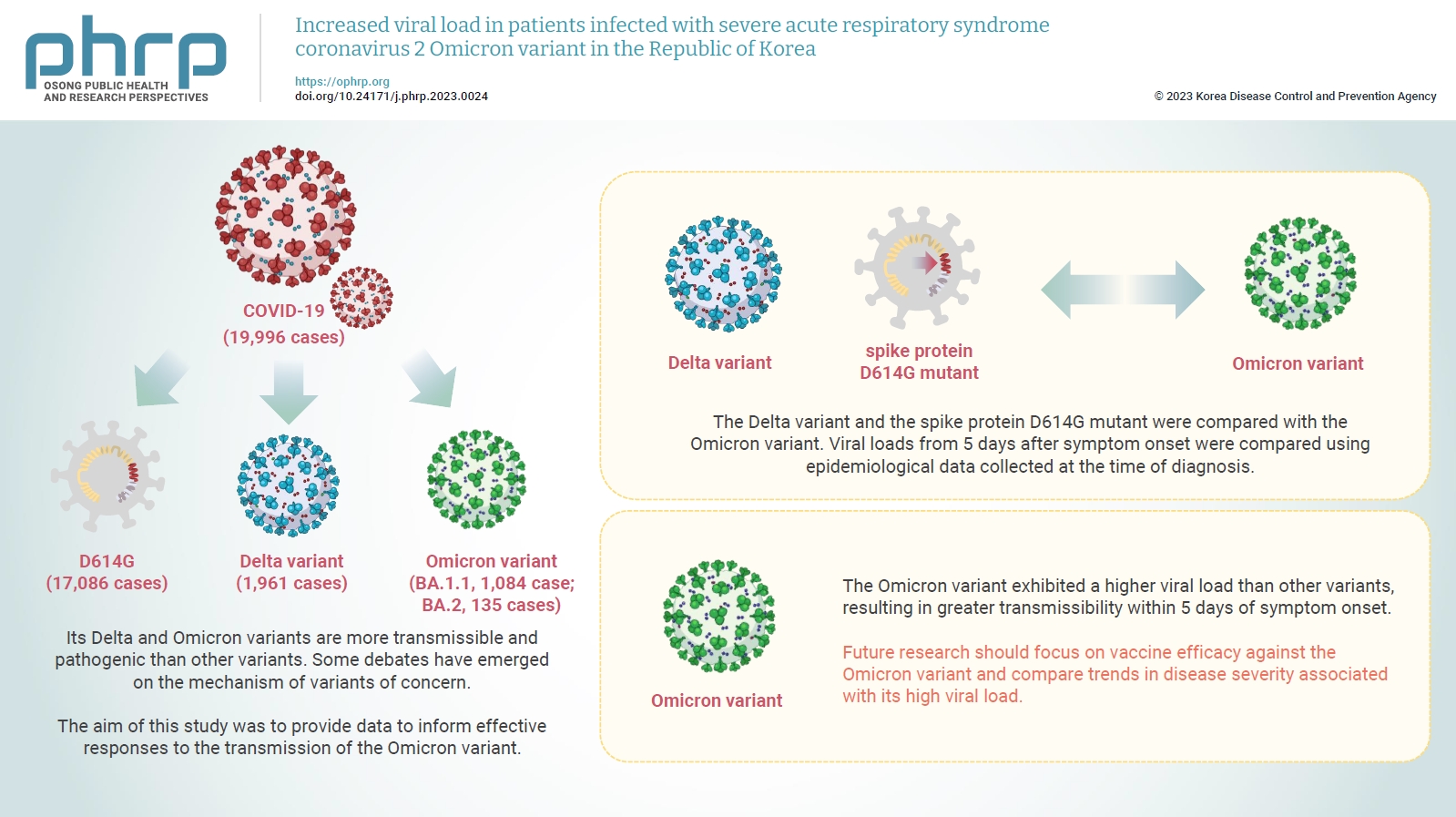
Coronavirus disease 2019 (COVID-19) has been declared a global pandemic owing to the rapid spread of the causative agent, severe acute respiratory syndrome coronavirus 2. Its Delta and Omicron variants are more transmissible and pathogenic than other variants. Some debates have emerged on the mechanism of variants of concern. In the COVID-19 wave that began in December 2021, the Omicron variant, first reported in South Africa, became identifiable in most cases globally. The aim of this study was to provide data to inform effective responses to the transmission of the Omicron variant. Methods The Delta variant and the spike protein D614G mutant were compared with the Omicron variant. Viral loads from 5 days after symptom onset were compared using epidemiological data collected at the time of diagnosis. Results The Omicron variant exhibited a higher viral load than other variants, resulting in greater transmissibility within 5 days of symptom onset. Conclusion Future research should focus on vaccine efficacy against the Omicron variant and compare trends in disease severity associated with its high viral load. Citations
Citations to this article as recorded by
<sec><title>Objectives</title>
<p>Coronavirus Disease-19 (COVID-19) is a respiratory infection characterized by the main symptoms of pneumonia and fever. It is caused by the novel coronavirus severe acute respiratory syndrome Coronavirus-2 (SARS-CoV-2), which is known to spread via respiratory droplets. We aimed to determine the rate and likelihood of SARS-CoV-2 transmission from COVID-19 patients through non-respiratory routes.</p></sec>
<sec><title>Methods</title>
<p>Serum, urine, and stool samples were collected from 74 hospitalized patients diagnosed with COVID-19 based on the detection of SARS-CoV-2 in respiratory samples. The SARS-CoV-2 RNA genome was extracted from each specimen and real-time reverse transcription polymerase chain reaction performed. CaCo-2 cells were inoculated with the specimens containing the SARS-COV-2 genome, and subcultured for virus isolation. After culturing, viral replication in the cell supernatant was assessed.</p></sec>
<sec><title>Results</title>
<p>Of the samples collected from 74 COVID-19 patients, SARS-CoV-2 was detected in 15 serum, urine, or stool samples. The virus detection rate in the serum, urine, and stool samples were 2.8% (9/323), 0.8% (2/247), and 10.1% (13/129), and the mean viral load was 1,210 ± 1,861, 79 ± 30, and 3,176 ± 7,208 copy/µL, respectively. However, the SARS-CoV-2 was not isolated by the culture method from the samples that tested positive for the SARS-CoV-2 gene.</p></sec>
<sec><title>Conclusion</title>
<p>While the virus remained detectable in the respiratory samples of COVID-19 patients for several days after hospitalization, its detection in the serum, urine, and stool samples was intermittent. Since the virus could not be isolated from the SARS-COV-2-positive samples, the risk of viral transmission via stool and urine is expected to be low.</p></sec>
Citations
Citations to this article as recorded by
|
|


