Objectives Climate variability, particularly ambient air temperature, is an emerging environmental determinant of blood pressure (BP); however, evidence from tropical lowand middle-income countries (LMICs) remains limited. We examined associations between monthly average ambient temperature with systolic BP (SBP) and diastolic BP (DBP) among adults in Bogor City, Indonesia. Methods: This longitudinal cohort analysis used secondary data collected between 2011 and 2018 from 1,648 participants with repeated BP measurements (19 assessments over 6 years). Average ambient temperature data were matched to the month of BP measurement. Generalized estimating equations models were used to assess the association between temperature and BP after adjustment for age, sex, education, and socioeconomic status. Results: Mean ambient temperature ranged from 24.6 °C to 28.9 °C. SBP varied more than DBP and tended to increase as ambient temperature decreased. The overall main effect of temperature on BP was not statistically significant. However, several visit-specific temperature–time interactions were negative and significant, suggesting inverse patterns between lower temperatures and higher SBP or DBP. Marginal effects plots demonstrated time-varying associations, with predicted SBP and DBP differences of approximately −4 to + 3 mmHg across follow-up visits at representative temperatures. Socioeconomic status and education were associated with SBP, whereas age and female sex were associated with DBP. Conclusion: Temperature variations were associated with time-varying BP changes among adults with hypertension in Bogor City during 2011–2018. Although the main temperature effect was non-significant, temperature–time interactions suggested modest inverse patterns within clinically plausible ranges. These findings support the need for updated, multi-site studies in tropical LMIC settings.
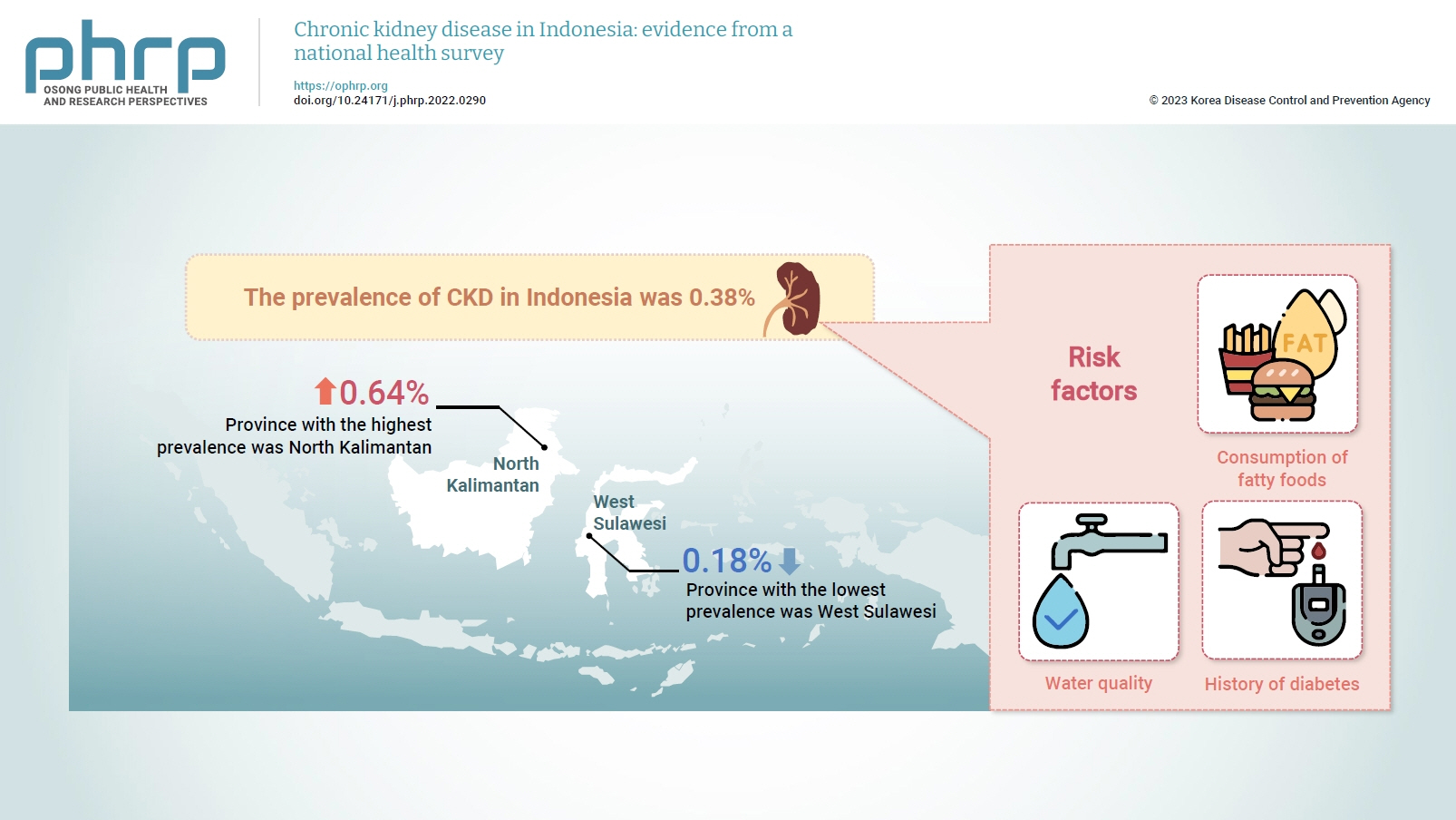
Objectives Several previous studies have stated that consuming certain foods and beverages might increase the risk of chronic kidney disease (CKD). This study aimed to examine the relationships of food and beverage consumption with other risk factors for CKD. Methods: Data sources included the 2018 Basic Health Research (Riskesdas) and the National Socio-Economic Survey (Susenas), which were analyzed using a cross-sectional design. The study samples were households from 34 provinces in Indonesia, and the analysis was performed with provincial aggregates. Data were analyzed using risk factor analysis followed by linear regression to identify relationships with CKD. Results: The prevalence of CKD in Indonesia was 0.38%. The province with the highest prevalence was North Kalimantan (0.64%), while the lowest was found in West Sulawesi (0.18%). Five major groups were formed from 15 identified risk factors using factor analysis. A linear regression model presented 1 significant selected factor (p=0.006, R2 =31%). The final model of risk factors included water quality, consumption of fatty foods, and a history of diabetes. Conclusion: Drinking water quality, fatty food consumption, and diabetes are associated with CKD. There is a need to monitor drinking water, as well as to promote health education and provide comprehensive services for people with diabetes, to prevent CKD.
Citations
Citations to this article as recorded by
Syndemic analysis of stroke in Indonesia Andi Alfian Zainuddin, Rais Reskiawan A. Kadir, Nurul Qalby, Hedi Kuswanto, Andi Afdal Abdullah, Takuro Furusawa, Haerani Rasyid, Irawan Yusuf The Lancet Regional Health - Western Pacific.2026; 69: 101849. CrossRef
Integrating Spirituality and Self-Transcendence in Chronic Kidney Disease Management: A Structural Equation Modeling Approach Siti Nurkholifah, Yurika Fauzia Wardhani, Minarti Minarti, Asep Hermawan, Eka Denis Machfutra, Doni Lasut Journal of Holistic Nursing.2026;[Epub] CrossRef
Clinical characteristics, medication use, and mortality outcomes in pediatric chronic kidney disease: A retrospective study at national hospital in Jakarta Aprilita Rina Yanti Eff, Selvia Yuliana, Nadiya Nurul Afifah, Ade Heryana Journal of Advanced Pharmaceutical Technology & Re.2026; 17(2): 108. CrossRef
Illness Perception and Social Support in Self-management Behavior of Older Adults with Chronic Diseases in Indonesia: A Cross-sectional Study Ira Suarilah, Joni Haryanto, Febi Fadilah Wanda Sari Zain, Intan Rismatul Azizah, Retno Indarwati, Dianis Wulan Sari Ageing International.2026;[Epub] CrossRef
Mixed Matrix Membrane Based on Cellulose Acetate and Activated Carbon from Plastic Waste for Urea Removal in Spent Dialysate Saiful Saiful, Mirzalisa Mirzalisa, Muliadi Ramli, Mutia Farida Jurnal Rekayasa Kimia & Lingkungan.2026; 21(1): 11. CrossRef
Enhanced detection of albumin-creatinine ratio in urine using gold nanoparticle-integrated 3D-connector microfluidic paper-based analytical devices for early diagnosis of chronic kidney disease Akhmad Sabarudin, Saidun Fiddaroini, Ahmad Luthfi Fahmi, Abdul Munir Roja’i, Isadora Evani Salsabila, Aulanni’am, Setyawan Purnomo Sakti, Hani Susianti Microchemical Journal.2025; 211: 113071. CrossRef
The Effect of Intravenous Oxyhydrogen Nanobubble on Chronic Kidney Disease: Case Series Olly Indrajani, Aditya T. Hernowo, Christyanita P. Ekasari, Ricki Yudhanata, Sutiman B. Sumitro Clinical Therapeutics.2025; 47(9): e13. CrossRef
Association between low-carbohydrate diet and chronic kidney disease in population with gestational diabetes mellitus history: based on the National Health and Nutrition Examination Survey database Junli Zhang, Youlian Dong Food & Nutrition Research.2025;[Epub] CrossRef
Hubungan Lama Hemodialisa dengan Kualitas Hidup Pasien Chronic Kidney Disease yang Menjalani Hemodialisa di Rumah Sakit TK II Kadek Dheana Novitayani W, Ni Putu Dita Wulandari, I Made Dwie Pradnya Susila, I Nyoman Sutresna Journal Center of Research Publication in Midwifer.2025; 9(2): 85. CrossRef




 First
 Prev


