

| Noor Edi Widya Sukoco | 2 Articles |

Objectives
Climate variability, particularly ambient air temperature, is an emerging environmental determinant of blood pressure (BP); however, evidence from tropical lowand middle-income countries (LMICs) remains limited. We examined associations between monthly average ambient temperature with systolic BP (SBP) and diastolic BP (DBP) among adults in Bogor City, Indonesia. Methods: This longitudinal cohort analysis used secondary data collected between 2011 and 2018 from 1,648 participants with repeated BP measurements (19 assessments over 6 years). Average ambient temperature data were matched to the month of BP measurement. Generalized estimating equations models were used to assess the association between temperature and BP after adjustment for age, sex, education, and socioeconomic status. Results: Mean ambient temperature ranged from 24.6 °C to 28.9 °C. SBP varied more than DBP and tended to increase as ambient temperature decreased. The overall main effect of temperature on BP was not statistically significant. However, several visit-specific temperature–time interactions were negative and significant, suggesting inverse patterns between lower temperatures and higher SBP or DBP. Marginal effects plots demonstrated time-varying associations, with predicted SBP and DBP differences of approximately −4 to + 3 mmHg across follow-up visits at representative temperatures. Socioeconomic status and education were associated with SBP, whereas age and female sex were associated with DBP. Conclusion: Temperature variations were associated with time-varying BP changes among adults with hypertension in Bogor City during 2011–2018. Although the main temperature effect was non-significant, temperature–time interactions suggested modest inverse patterns within clinically plausible ranges. These findings support the need for updated, multi-site studies in tropical LMIC settings.
Objectives
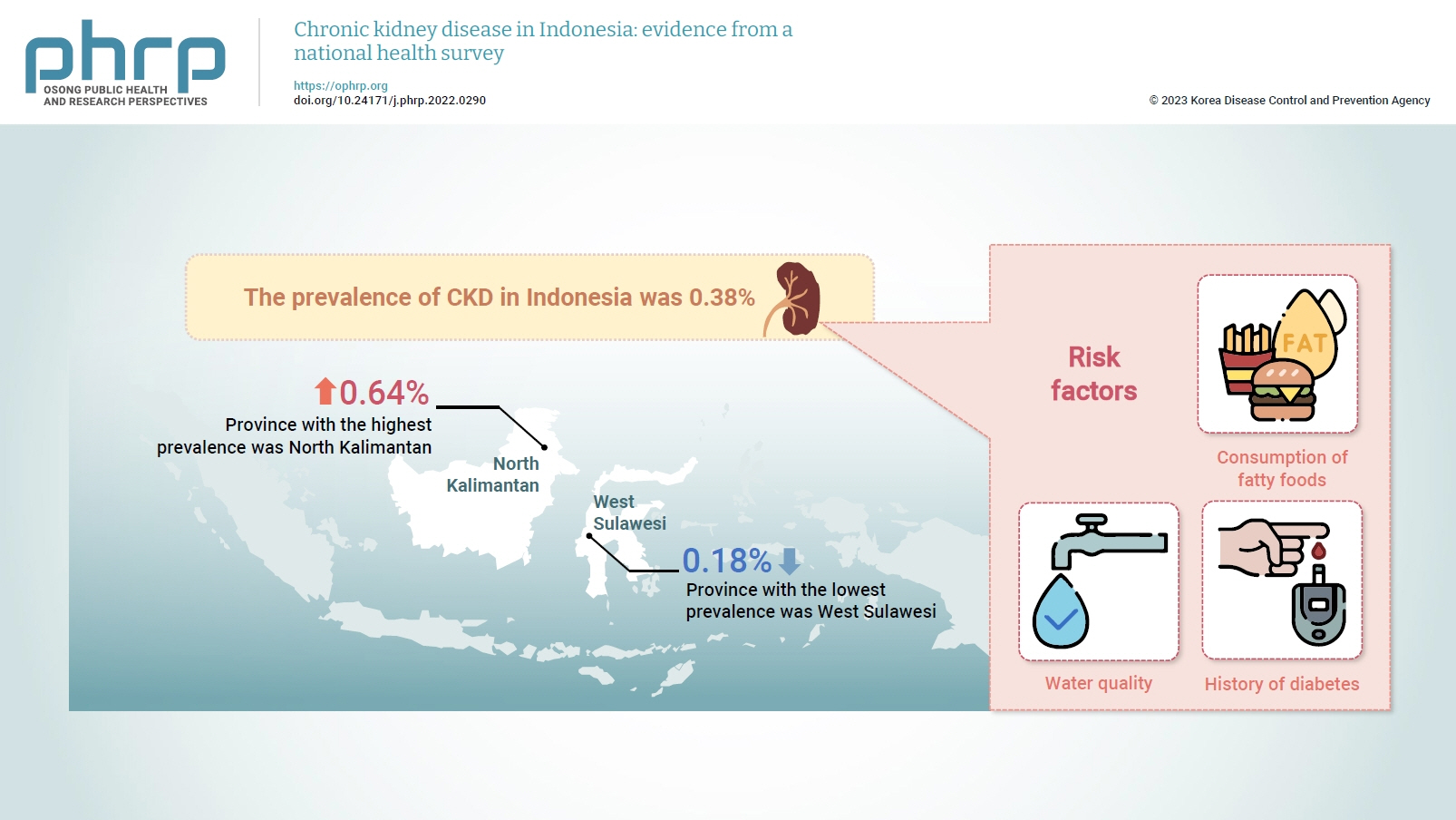
Several previous studies have stated that consuming certain foods and beverages might increase the risk of chronic kidney disease (CKD). This study aimed to examine the relationships of food and beverage consumption with other risk factors for CKD. Methods: Data sources included the 2018 Basic Health Research (Riskesdas) and the National Socio-Economic Survey (Susenas), which were analyzed using a cross-sectional design. The study samples were households from 34 provinces in Indonesia, and the analysis was performed with provincial aggregates. Data were analyzed using risk factor analysis followed by linear regression to identify relationships with CKD. Results: The prevalence of CKD in Indonesia was 0.38%. The province with the highest prevalence was North Kalimantan (0.64%), while the lowest was found in West Sulawesi (0.18%). Five major groups were formed from 15 identified risk factors using factor analysis. A linear regression model presented 1 significant selected factor (p=0.006, R2 =31%). The final model of risk factors included water quality, consumption of fatty foods, and a history of diabetes. Conclusion: Drinking water quality, fatty food consumption, and diabetes are associated with CKD. There is a need to monitor drinking water, as well as to promote health education and provide comprehensive services for people with diabetes, to prevent CKD. Citations
Citations to this article as recorded by

|
|


